Chimney Crown Repair in Connecticut

- May suit you if
- You see a stain or drip near the chimney after rain, there are pieces of concrete on the roof or in the gutters, or an inspection mentioned the crown.
- The assessment establishes
- Whether the crown is cracked, eroded or separated from the flue, whether water has already reached the brick below, and whether a seal or a new crown is the right fix.
- Next step
- A roof visit with photos, then a written scope and price. Nothing starts until you approve it.
The slab that keeps water out of the masonry
A chimney crown, sometimes called a chimney wash, is the sloped slab that covers the top of the masonry around the flue. Its job is simple: shed rain and snowmelt away from the brick and over the edge, so water never sits on the top course. A crown that does this well is made of concrete rather than mortar, slopes away from the flue, overhangs the brick with a drip edge underneath, and has a small flexible joint where it meets the flue tile, because the two expand at different rates.
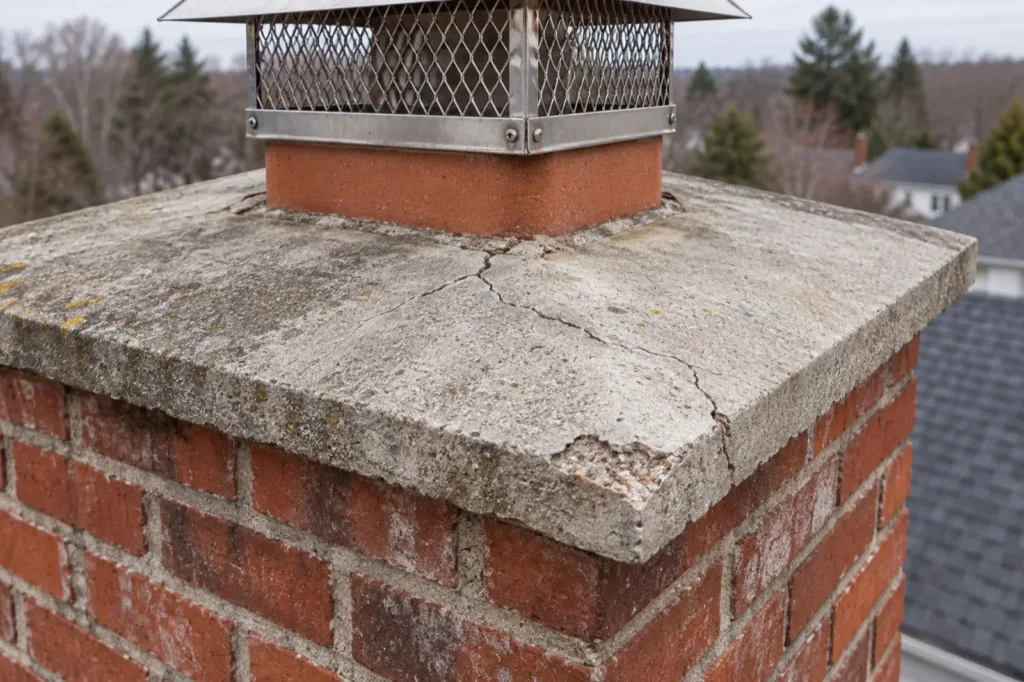
Many Connecticut chimneys were finished with a thin mortar wash instead. Mortar is softer than concrete, holds water, and cracks after a few freeze-thaw winters. Once a crack opens, every rain feeds the masonry below, and a small repair in autumn becomes repointing or a partial rebuild by spring. Crown repair restores the slab itself. It is not a cap, which is the metal cover over the flue opening, and not flashing, which is the metal where the chimney meets the roof. All three are checked together, because from indoors they leak the same way.
Related guide: Cracked chimney crown: why it happens and how it’s fixed
Cracked, eroded crown
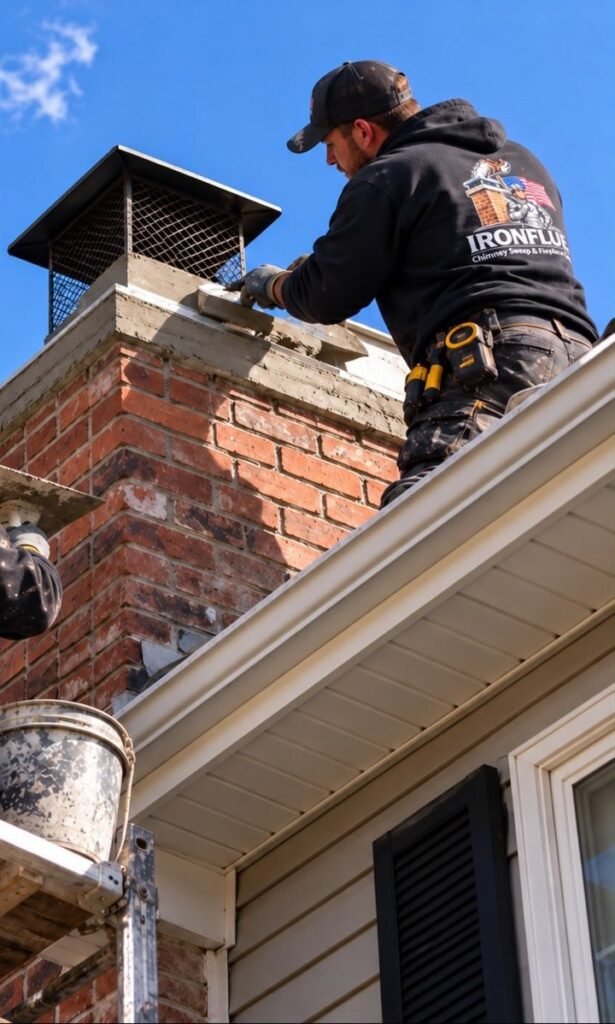
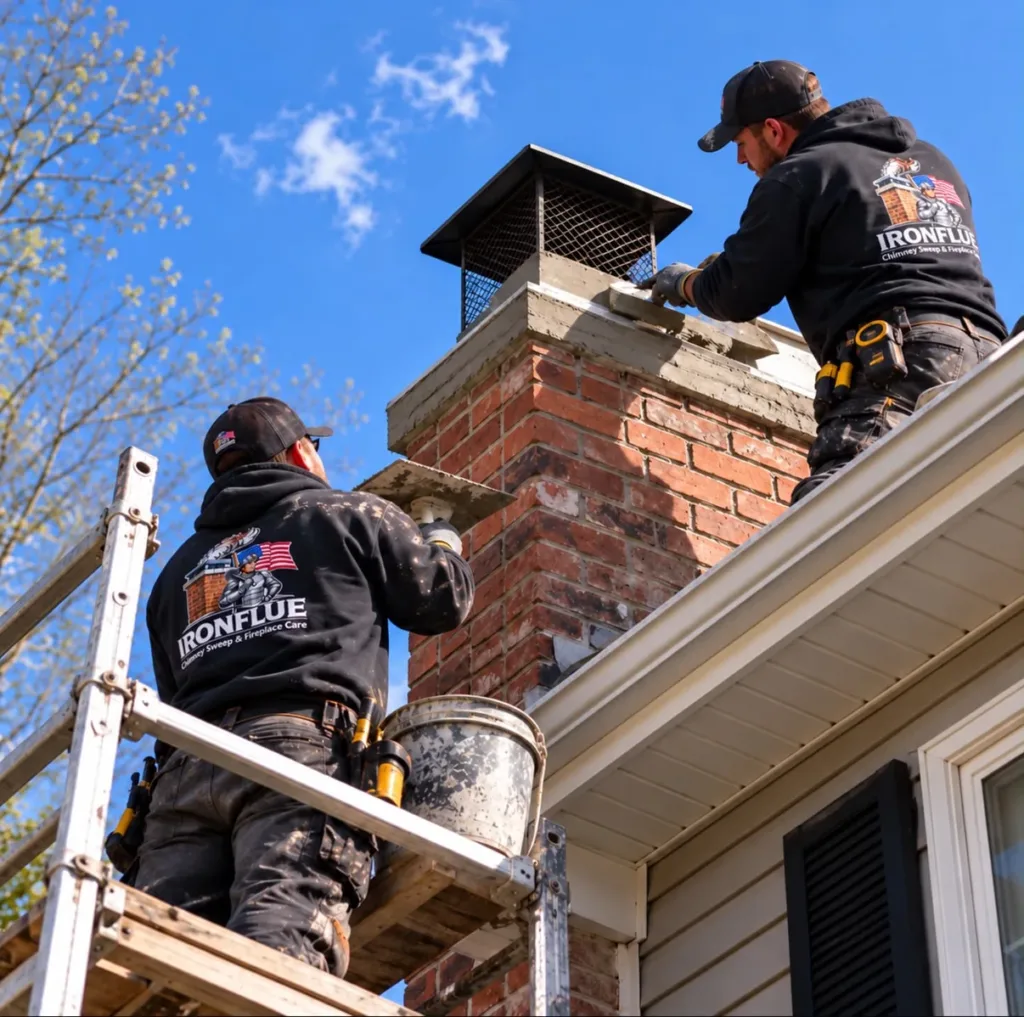
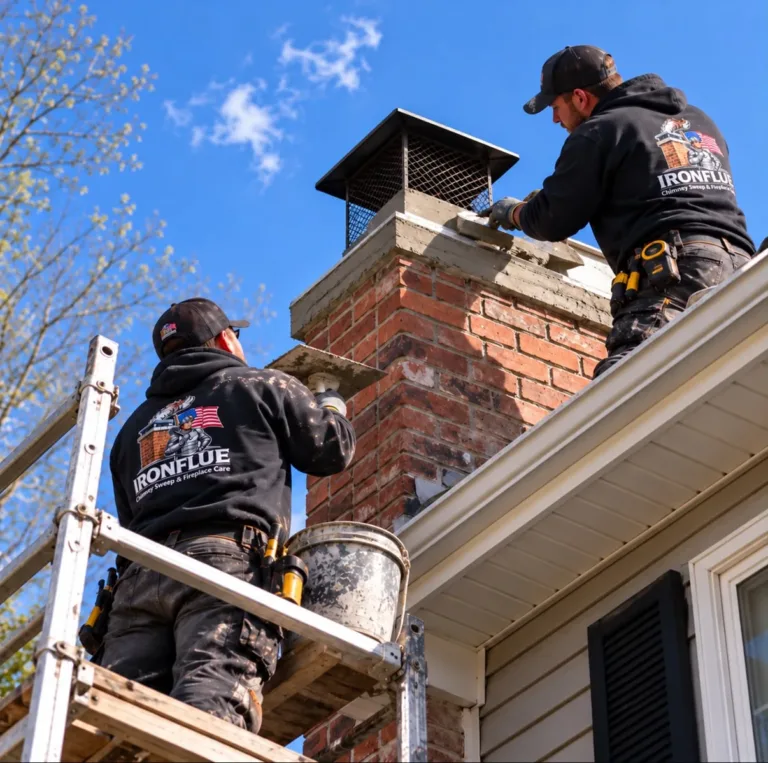
New concrete crown being finishedWhen a crown assessment may be useful

- 1A stain or drip after rain
On the ceiling or wall near the chimney, or inside the firebox, usually hours after rain or snowmelt rather than during a fire.
- 2Pieces of concrete or mortar on the roof
Small chunks in the gutter or on the shingles around the chimney are often crown edges breaking off.
- 3White staining on the top courses
Chalky deposits just below the crown mean water is moving through the brick there.
- 4Rust on the cap or damper
Water that gets past the crown often runs down the flue and shows up as rust lower down.
- 5An inspection flagged it
A report mentions cracks, gaps around the flue tile, or a crown that is “mortar, not concrete”.
Leaks near a chimney can also come from the flashing, a missing cap, or brick that has stopped shedding water. The assessment checks all four, so you hear which one is letting water in before anything is quoted.
What a crown repair covers
Included
- Assessment of the crown from the roof, with photos of every crack and of the joint at the flue
- Removal of loose, crumbling material and cleaning of the surface so new material bonds
- Sealing of hairline cracks with a flexible, weather-rated crown sealant, or forming and pouring a new concrete crown where the old one is beyond sealing
- A flexible expansion joint where the crown meets the flue tile
- Protection of the roof and gutters while we work, and cleanup with debris taken away
- Photos of the finished crown and a written note of what was done
Quoted separately
- A new chimney cap, if the existing one is missing or damaged
- Flashing repair, if water is also getting in at the roofline
- Repointing or rebuilding of brick courses below the crown, if the water has already done damage
- Waterproofing of the masonry, usually recommended after crown work
- Anything found on site that changes the scope: you hear about it first
How the visit goes
Crown work happens on the roof. Keep the area below the chimney clear so we can set a ladder safely.
We check the crown, the joint at the flue, the cap and the flashing, photograph what we find, and talk you through it from the ground.
You get a written scope and price. Once approved, the repair is scheduled for a dry stretch so the material can cure, and you get photos of the finished crown.
How the approach is chosen
- Seal
The crown is sound concrete with hairline cracks. The surface is cleaned and coated with a flexible crown sealant that bridges the cracks and sheds water.
- Patch and seal
Edges or corners have broken away but the slab is otherwise solid. Missing sections are rebuilt with a repair mortar made for the job, then the whole crown is sealed.
- Rebuild the crown
The crown is a thin mortar wash, badly cracked, or pulling away from the flue. The old material comes off, a form is set, and a new sloped concrete crown is poured with an overhang, a drip edge and a flexible joint at the flue.
Real work, shown honestly
Average from 81 Google reviews
- Licensed & insured
- 15 years of hands-on work
- National Chimney Sweep Guild member
Crown repair across Connecticut
We repair and rebuild chimney crowns in Fairfield, New Haven, Hartford, Middlesex, New London, Litchfield, Tolland and Windham counties. Connecticut’s freeze-thaw winters are hard on crowns: water in a crack freezes and widens it, so a crack caught in the fall is easier to fix than one found in the spring.
Local notes for Harwinton, Manchester, Norwalk, Plainville, Roxbury and South Windsor.
See your service area for local details.
What sets the price
Seal or rebuild
Sealing a sound crown is a short visit. Forming and pouring a new one is a day’s work and more material.
Chimney size
A wide chimney with two or three flues has a much larger crown than a single-flue stack.
Height and roof pitch
Steep roofs and tall chimneys need more staging and safety setup, and that is part of the price.
What the water already did
If the brick below the crown is spalling or the mortar joints are open, that repair is quoted alongside.
How the quote works
The roof assessment comes first. You then get a written scope and price for the crown, with any cap, flashing or masonry work listed separately, so you can decide piece by piece.
The price we quote is the price you pay.
Financing is available
Larger projects such as liners, rebuilds and major repairs can be financed. Ask when you request service and we’ll walk you through the options for your project.
About chimney crown work
Sun–Thu 8am–8pm · Fri 8am–4pm · Sat closed
What’s the difference between a chimney crown and a chimney cap?
The crown is the concrete slab across the top of the masonry. The cap is the metal cover over the flue opening that sits on top of it. The crown keeps water off the brick; the cap keeps rain, animals and debris out of the flue. Most chimneys need both, and we check both in the same visit.
Can a cracked crown be sealed, or does it need to be replaced?
It depends on what the crown is made of and how far the cracks go. A sound concrete crown with hairline cracks can usually be cleaned and sealed. A thin mortar wash, a crown broken into pieces, or one pulling away from the flue is rebuilt, because sealant over failing material does not last. We show you the photos and say which one you have.
How long does a chimney crown repair take?
Sealing is usually done in a single short visit. A rebuilt crown takes most of a day on the roof, and the new concrete then needs dry weather to cure before it is sealed. We schedule crown work around the forecast for that reason.
Can you repair a chimney crown in winter?
Sealants and concrete both need temperatures above freezing to cure, so most crown work in Connecticut runs from spring to late autumn. If a crown fails in winter, we can usually make a temporary fix to stop the water and schedule the proper repair for warmer weather.
Will fixing the crown stop my chimney leak?
If the crown is where the water is getting in, yes. Leaks often have more than one source, so we check the flashing, the cap and the brick at the same time and tell you what each one contributes. We don’t promise a single fix before we’ve looked.
Often assessed in the same visit

Chimney Repair
Masonry, flashing, caps, smoke chambers and waterproofing, and how to tell them apart.
See chimney repair →
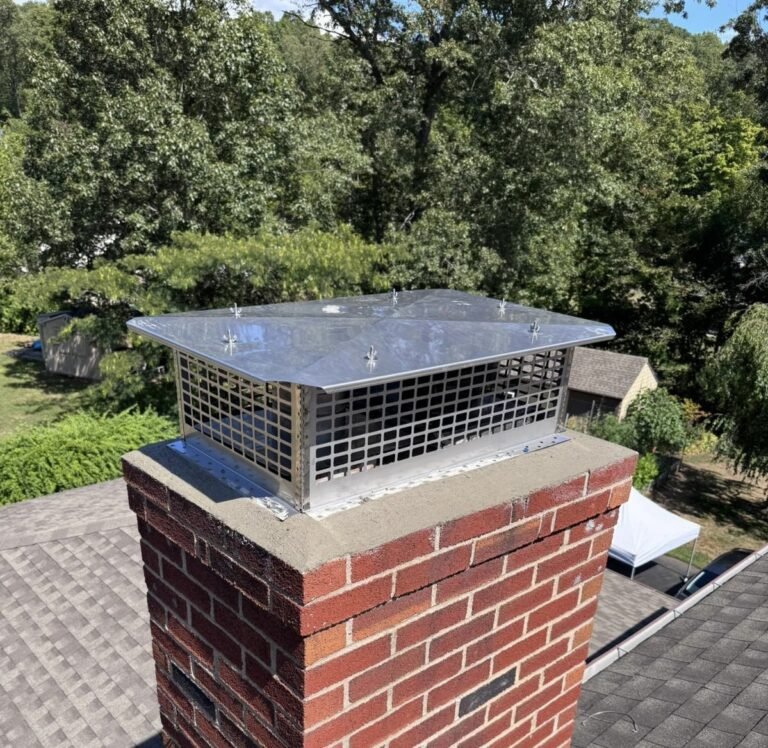
Caps & Dampers
A missing or damaged cap lets water straight into the flue, even under a sound crown.
Caps & dampers →
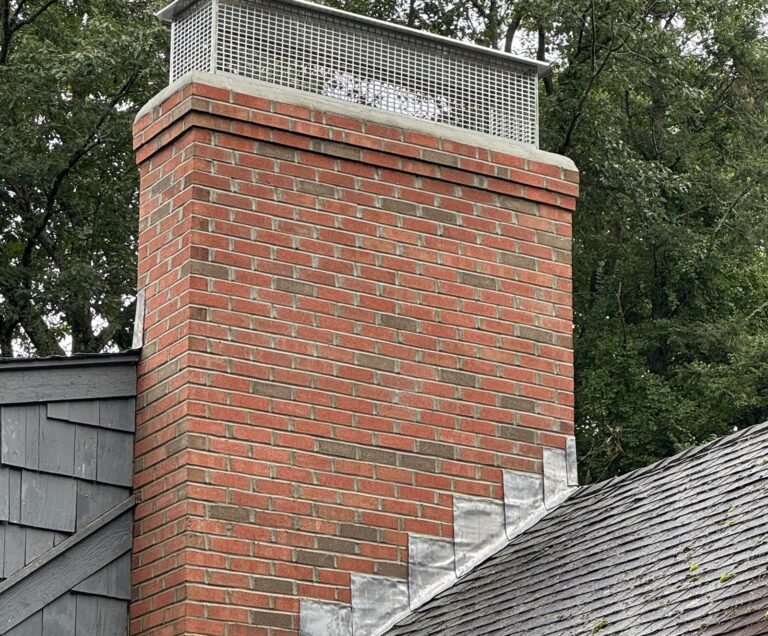
Flashing & Leak Repair
From indoors, water at the roofline looks exactly like a crown leak.
Flashing & leaks →
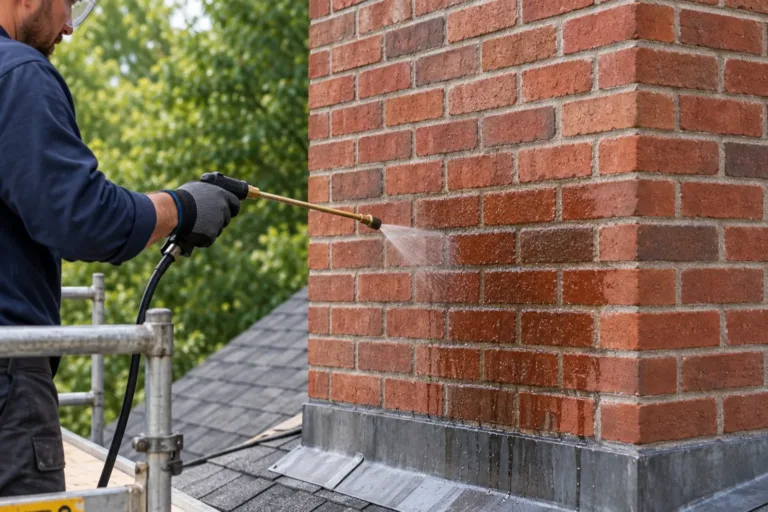
Waterproofing
Once the crown sheds water, a breathable treatment keeps the brick below from absorbing it.
Waterproofing →Request a crown assessment
Sun–Thu 8am–8pm · Fri 8am–4pm · Sat closed
- 1We call you back to talk through what you’re seeing.
- 2Together we set a visit time that works for you.
- 3On site we look, photograph and explain before anything is quoted.
No obligation. We never share your details.