Serving homes & businesses across Connecticut
Sun–Thu 8am–8pm · Fri 8am–4pm
Chimney Repair

Chimney Flashing & Leak Repair in Connecticut

Flashing is the metal that seals the joint where your chimney passes through the roof. When it lifts, rusts or loses its seal, rain runs into the roof deck, the attic and the ceilings below. We find where the water is actually getting in, show you photos, and reseal or replace the flashing so the joint stays dry.
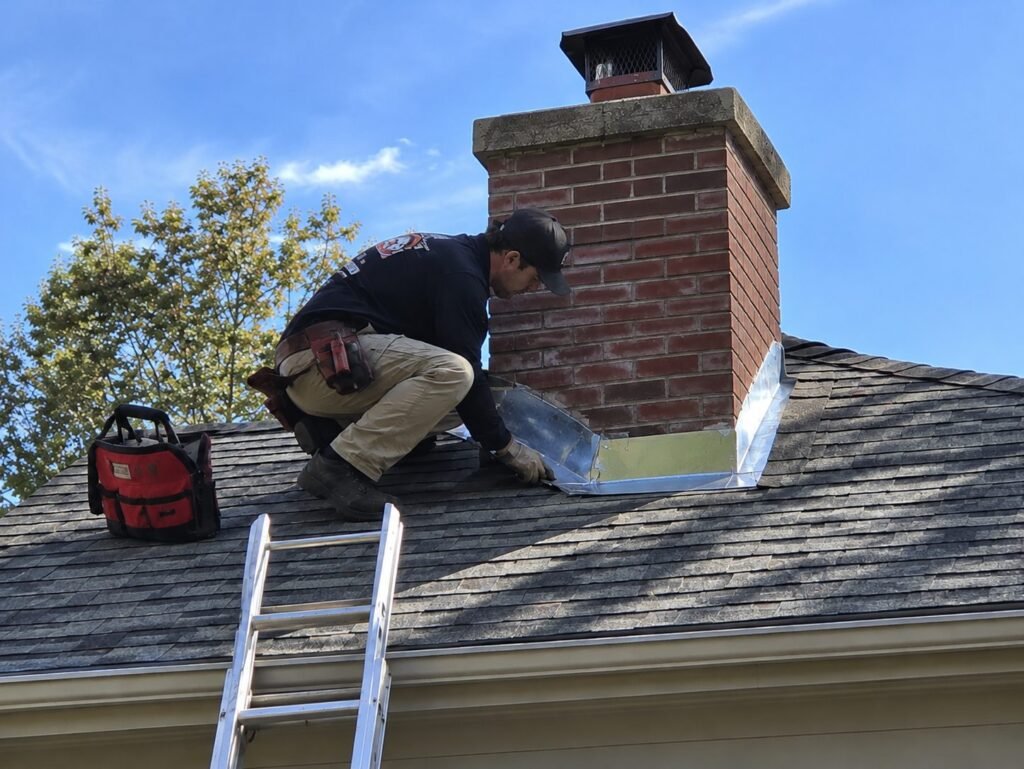
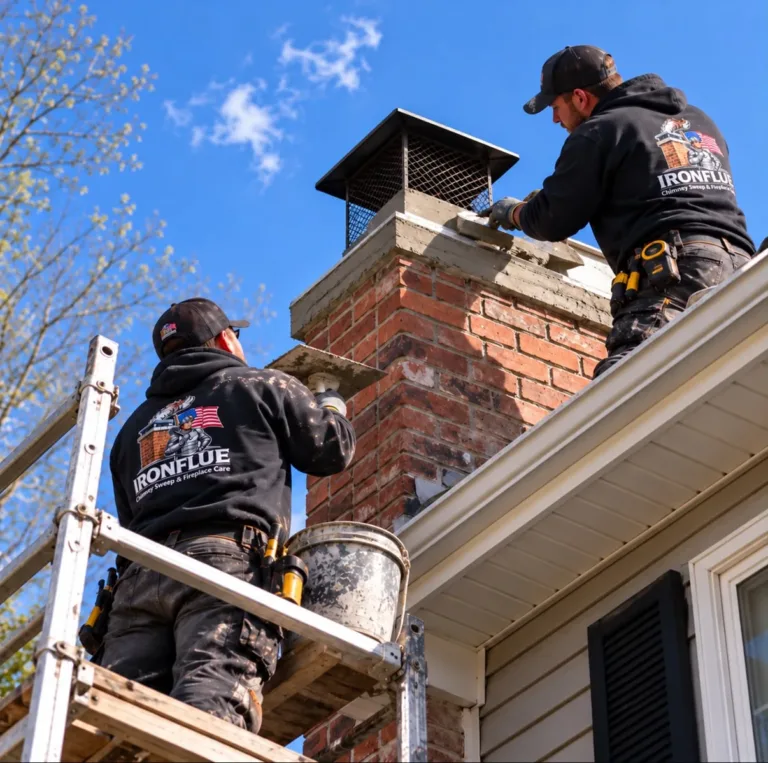
IronFlue Chimney technician installing metal flashing where a brick chimney meets the roof
May suit you if
You see a stain on the ceiling or wall beside the chimney, water in the attic after rain, or flashing that looks lifted, rusted or patched with tar.
The assessment establishes
Whether the flashing is the leak or only part of it, what condition the step and counter flashing are in, and whether a reseal or new flashing is the right fix.
Next step
A roof visit with photos, then a written scope and price. Nothing starts until you approve it.
The basics

The seal between the chimney and the roof

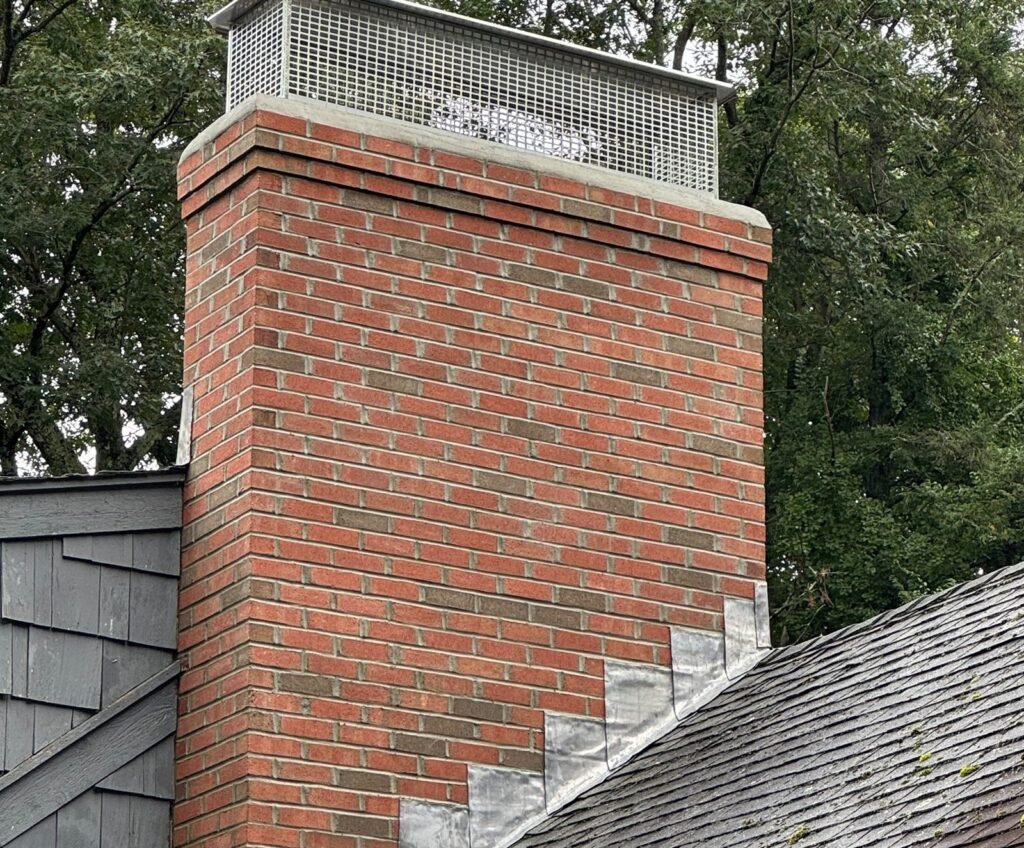
Where a chimney passes through the roof, there is a joint that shingles alone cannot seal. Flashing closes it in two layers. Step flashing is woven into the shingles along the sides of the chimney, one piece per course. Counter flashing is set into the mortar joints of the brick and folds down over the step flashing, so water running down the masonry lands on the roof instead of behind it. On the uphill side, a wide chimney also needs a cricket, a small peaked saddle that splits the water around it.

Most flashing leaks start small: a sealant bead that has dried out, counter flashing that has pulled out of its joint, or steel that has rusted. Connecticut winters make it worse, because snow and ice sit against the uphill side of the chimney for weeks. Water finds the gap and runs down the roof deck, often appearing on a ceiling some distance from the chimney itself. That is why a flashing visit also checks the crown, the cap and the brick: from inside, a leak from any of them looks the same.

Step flashing running along the side of a brick chimney where it meets the roofStep and counter flashing at the roofline
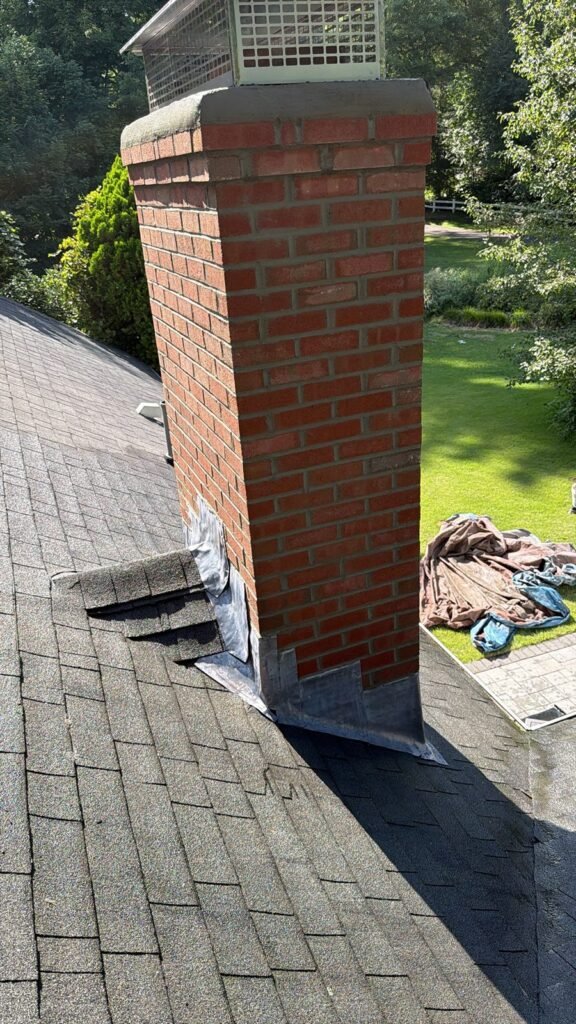
Step flashing along the side of a brick chimney, from an IronFlue Chimney job.
Signs worth a look

When a leak assessment may be useful

Any of these is a reason to have the flashing checked. None of them, on its own, proves the flashing is the cause.
Brick chimney with new metal flashing sealed at the roofline
  1. A stain on the ceiling or wall near the chimney

    Usually after heavy or wind-driven rain, and sometimes a few feet from the chimney, where the water finally drips.

  2. Water or damp wood in the attic

    Wet sheathing or rafters beside the chimney, or staining on the framing around it.

  3. Flashing that has lifted or rusted

    Metal pulling away from the brick, rusted through, or held down only by old caulk or roofing tar.

  4. A leak that comes and goes with the weather

    Dry for weeks, then a drip after a storm or during snowmelt, which points to a joint rather than a constant source.

  5. A new roof, but the same leak

    Old flashing reused under new shingles, or new shingles without new counter flashing, often leaves the joint open.

A leak near the chimney can also come from a cracked crown, a missing cap or brick that is absorbing water. The assessment checks all of them, so you hear which one is letting water in before anything is quoted.
What’s included

What a flashing repair covers

The written scope lists both columns for your chimney, so nothing is assumed.

Included

  • Assessment of the flashing from the roof and, where it can be reached, from the attic, with photos
  • Removal of failed sealant, tar patches and loose material
  • Resealing of sound flashing with a flexible, weather-rated sealant, or new step and counter flashing where the metal has failed
  • Counter flashing set into a cut joint in the brick, not only caulked to the face
  • Protection of the roof and gutters while we work, and cleanup with debris taken away
  • Photos of the finished flashing and a written note of what was done

Quoted separately

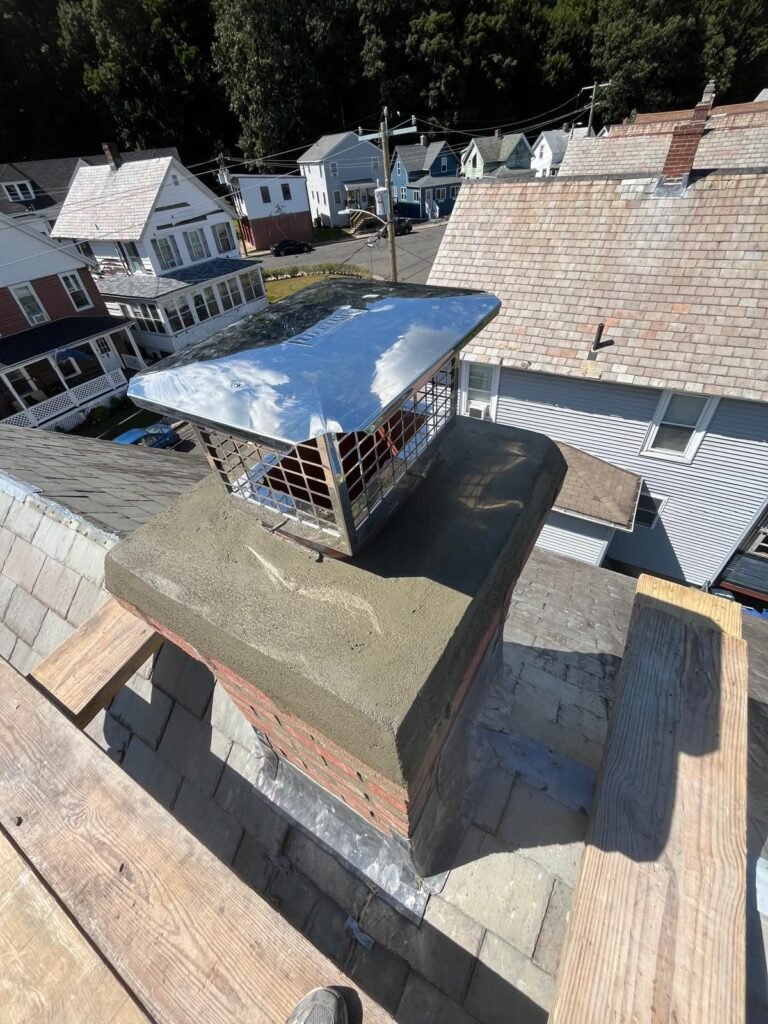
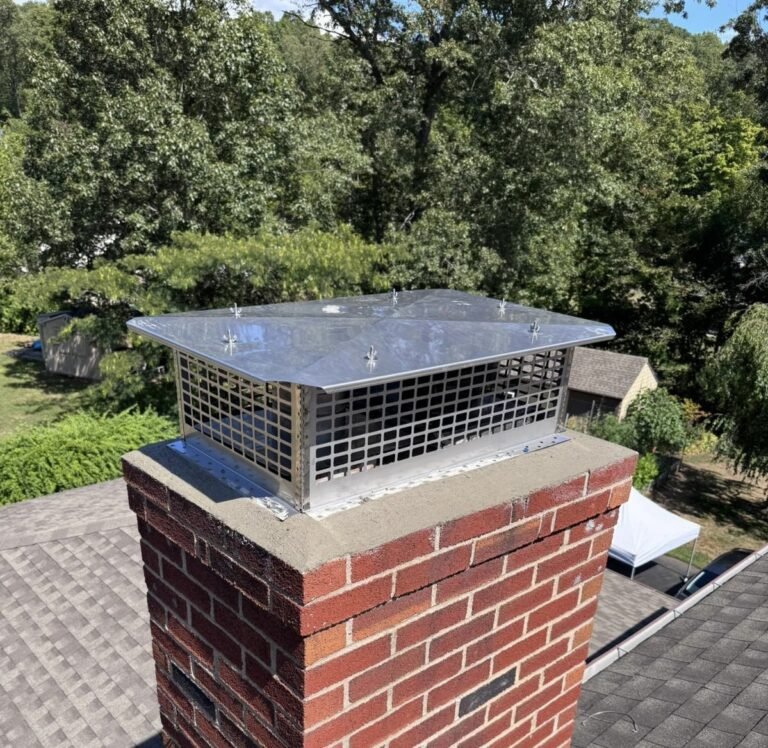
  • Crown repair or a new chimney cap, if water is also getting in at the top
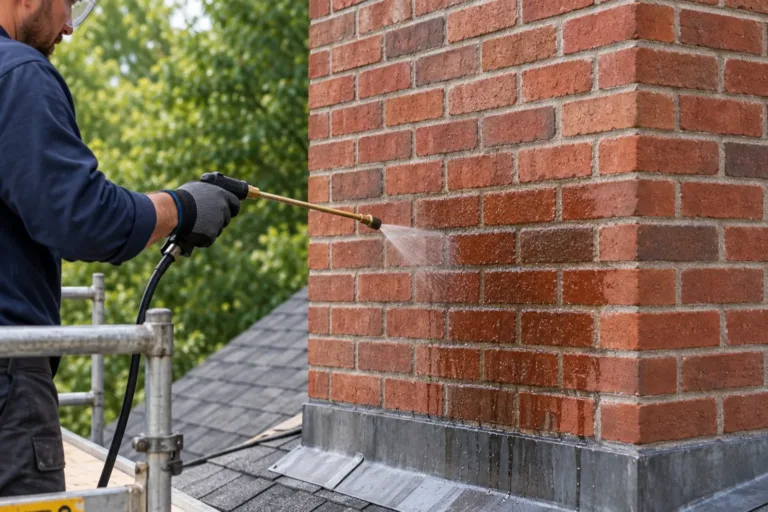
  • Repointing or brick repair above the roofline
  • Roofing work beyond the shingles directly around the chimney
  • Interior repairs to ceilings, drywall or paint
  • Anything found on site that changes the scope: you hear about it first
Options and process

How the visit goes

The method depends on how the flashing was installed, what it is made of, and whether the leak is coming from it at all. We tell you which applies to your chimney, and why, before quoting.
Before the visit
Note when it leaks

Tell us when you see water: during rain, after wind from one direction, or during snowmelt. If you can, clear a path to the attic.

Leak history
During the visit
Assess, photograph, explain

We check the flashing, the crown, the cap and the brick from the roof, look at the attic side where we can, and talk you through the photos.

Photos
After the visit
Written scope, then the work

You get a written scope and price. Once approved, the work is scheduled for dry weather, and you get photos of the finished flashing.

Written quote

How the approach is chosen

  • Reseal

    The flashing is sound and correctly installed, but the sealant has failed. Old material comes off and the joints are resealed.

  • Repair and reseal

    Some sections have lifted or pulled out of the mortar. Those pieces are refastened or replaced, then the whole joint is resealed.

  • New flashing

    The metal has rusted through, was installed without counter flashing, or is held on with tar. The old flashing comes off and new step and counter flashing goes in.

Evidence

Real work, shown honestly

5.0
★★★★★

Average from 81 Google reviews

  • Licensed & insured
  • 15 years of hands-on work
  • National Chimney Sweep Guild member
Read all reviews on Google

Flashing and leak repair across Connecticut

We find and fix chimney leaks in Fairfield, New Haven, Hartford, Middlesex, New London, Litchfield, Tolland and Windham counties. Heavy rain and snowmelt test flashing every season, and many leaks first show up in early spring, when snow on the roof melts against the chimney.

See your service area for local details.

Cost

What sets the price

We don’t publish a flat price, because resealing sound flashing and replacing it are different jobs. These four things move the quote.

Reseal or replace

Resealing is a short visit. New flashing means lifting shingles and setting new metal on every side.

Chimney size and position

A wide chimney, or one on the slope rather than at the ridge, has more flashing to work on.

Height and roof pitch

Steep roofs and tall chimneys need more staging and safety setup, and that is part of the price.

What else is letting water in

If the crown, the cap or the brick is also part of the leak, that work is quoted alongside.

How the quote works

The roof assessment comes first. You then get a written scope and price for the flashing, with any crown, cap or masonry work listed separately, so you can decide piece by piece.

The price we quote is the price you pay.

Questions about a quote?
(959) 666-6406

Sun–Thu 8am–8pm · Fri 8am–4pm · Sat closed

Financing

Financing is available

Larger projects such as liners, rebuilds and major repairs can be financed. Ask when you request service and we’ll walk you through the options for your project.

Questions

About chimney flashing and leaks

What people ask before booking a leak assessment.

Sun–Thu 8am–8pm · Fri 8am–4pm · Sat closed

How do I know if my chimney leak is coming from the flashing?

You usually can’t tell from inside, because water from the flashing, the crown, the cap or the brick ends up in the same places. Flashing is the likely source when the stain sits on the ceiling below the roof joint rather than around the fireplace, and when it shows up during wind-driven rain. We confirm it from the roof before quoting.

Can leaking flashing just be resealed with caulk?

Sometimes, if the metal is sound and correctly installed and only the sealant has failed. Caulk or tar spread over loose, rusted or missing counter flashing usually fails again within a season, so we only reseal when the flashing underneath is worth keeping.

Do I need a roofer or a chimney company for flashing?

The counter flashing is set into the brick, which is masonry work, and a chimney company can check the crown, the cap and the brick on the same visit. That matters, because they leak the same way. Larger roofing work beyond the chimney is a job for a roofer.

Should the flashing be replaced when the roof is replaced?

That is the right time to check it. Reusing old step flashing under new shingles, or skipping the counter flashing, is a common reason a new roof still leaks at the chimney. If you are planning a new roof, we can assess the chimney before the roofers arrive.

Can flashing be repaired in winter?

Sealants need dry, above-freezing conditions to bond properly. If the roof is safe to work on, a temporary fix can stop the water during winter, with the permanent repair scheduled for a dry stretch.

Request service

Request a leak assessment

Tell us where you see the water and when it appears, especially after which kind of weather. If you have photos of the stain or the roof, say so and we’ll ask for them on the call.

Sun–Thu 8am–8pm · Fri 8am–4pm · Sat closed

After you send it
  1. 1We call you back to talk through what you’re seeing.
  2. 2Together we set a visit time that works for you.
  3. 3On site we look, photograph and explain before anything is quoted.

Sending a request doesn’t book an appointment. We’ll call you back to talk it through and confirm a time.

No obligation. We never share your details.