Wood Stove & Fireplace Insert Service in Connecticut

- May suit you if
- A wood stove or wood-burning fireplace insert that is due for its yearly check, smokes when the door opens, blackens its glass quickly, or is about to be used for the first time in a while.
- The assessment establishes
- How much creosote is in the flue and the connector, whether the door seals and the baffle is sound, and whether the stove is venting the way its maker intended.
- Next step
- A report with photos, and a price for any sweeping, parts or repairs. Nothing is replaced until you approve it.
How a stove or insert vents, and where it wears
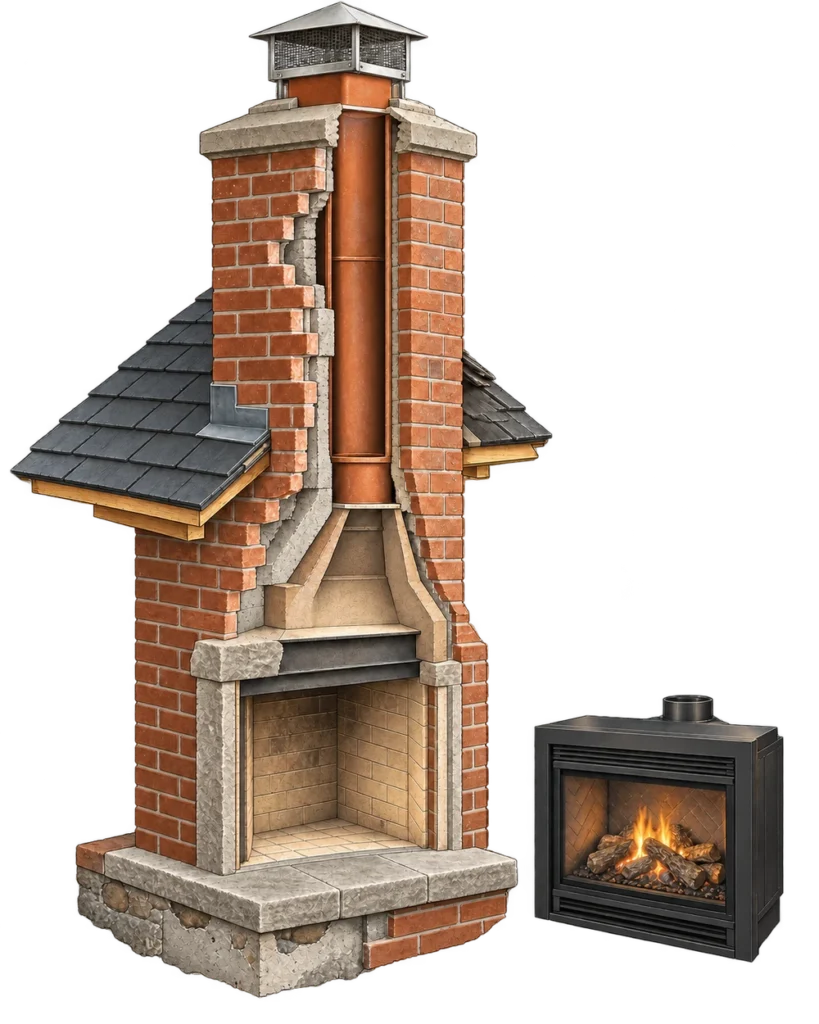
A freestanding wood stove sends its smoke through a connector pipe, the stovepipe, into a chimney or a factory-built flue. A fireplace insert sits inside an existing fireplace, and most insert makers call for a stainless steel liner from the insert to the top of the chimney, because the old masonry flue is usually far larger than the insert needs. Either way, the smoke takes a smaller, cooler path than it does from an open fireplace, and creosote builds up faster when the fire is kept low.
Inside the stove, a baffle plate or a catalytic combustor sits above the fire and burns off more of the smoke before it leaves. Baffles warp, secondary air tubes burn through, and combustors wear out over time. The door and the glass are sealed with rope gaskets that harden and flatten, and once they stop sealing, the stove pulls in air you can’t control and burns faster and dirtier.
Related guide: How to prepare your fireplace for winter in Connecticut
The flue the smoke has to travelWhen a stove or insert should be looked at

- 1Smoke when the door opens
Smoke rolls into the room when you open the door to add wood, even with the air control open, which usually means the draft is weak or the flue is restricted.
- 2The glass blackens quickly
The glass is dark within a fire or two, even with dry wood, which points to a low burn, a leaking gasket or a draft problem.
- 3The stove is hard to control
The fire races even with the air turned down, or won’t stay going, both of which can mean a gasket or a baffle has failed.
- 4Flaky or tar-like buildup
Black flakes falling from the connector, or a glazed, shiny coating you can see in the pipe or the flue.
- 5It hasn’t been used in a while
A stove or insert that sat unused for a season or more, or came with a house you just bought.
If you hear a loud roar from the stovepipe, see the pipe glowing, or see flames or sparks at the top of the chimney, that can be a chimney fire. Close the stove’s door and air controls if you can do so safely, get everyone out and call 911.
What stove and insert service covers
Included
- Protection of the hearth and the floor, with the stove cold before work starts
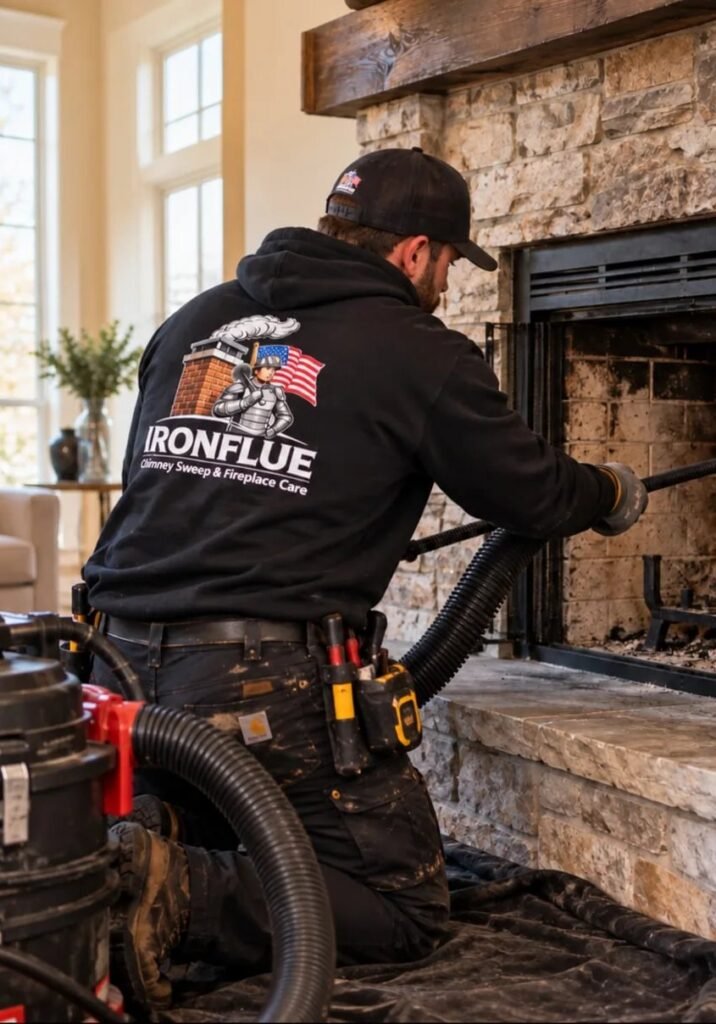
- Checking the flue and the connector or liner for creosote and damage
- Checking the baffle, the secondary air tubes or the catalytic combustor, and the firebrick inside the stove
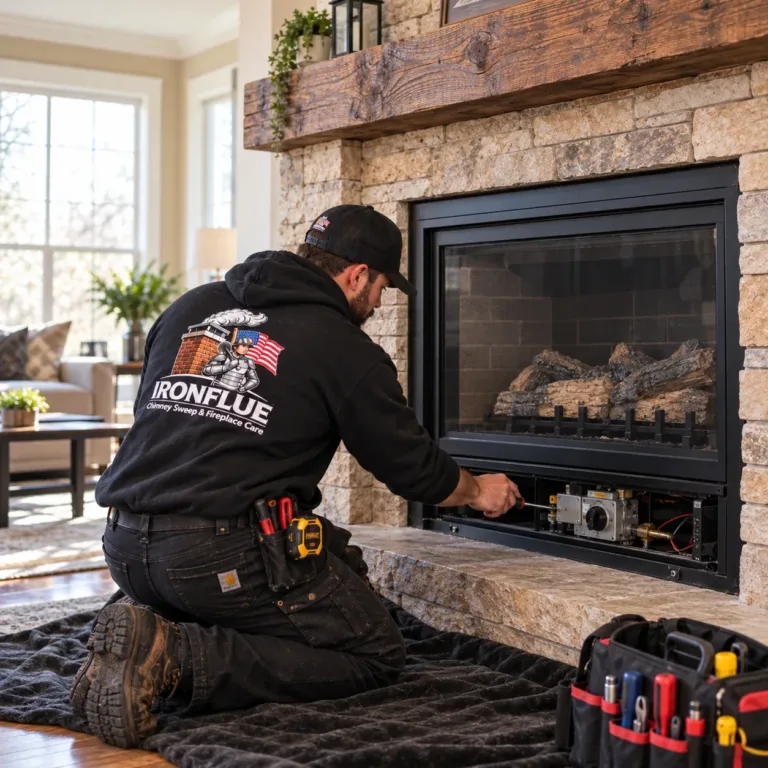
- Checking the door and glass gaskets, the glass and the door latch
- Looking over the connector pipe, its joints and its connection to the chimney, and the cap at the top
- A report with photos of what was found
Quoted separately
- Sweeping the flue and cleaning the stove, booked separately
- Installing a new stove or insert
- Parts that have to be ordered for your model, quoted before they are fitted
- Relining the chimney, if the liner is missing, damaged or the wrong size
- Chimney masonry, crown or flashing repair, quoted separately
- Anything found on site that changes the scope: you hear about it first
How the visit goes
No fires for 24 hours beforehand, and clear a path to the stove. If you know the make and model, tell us when you book.
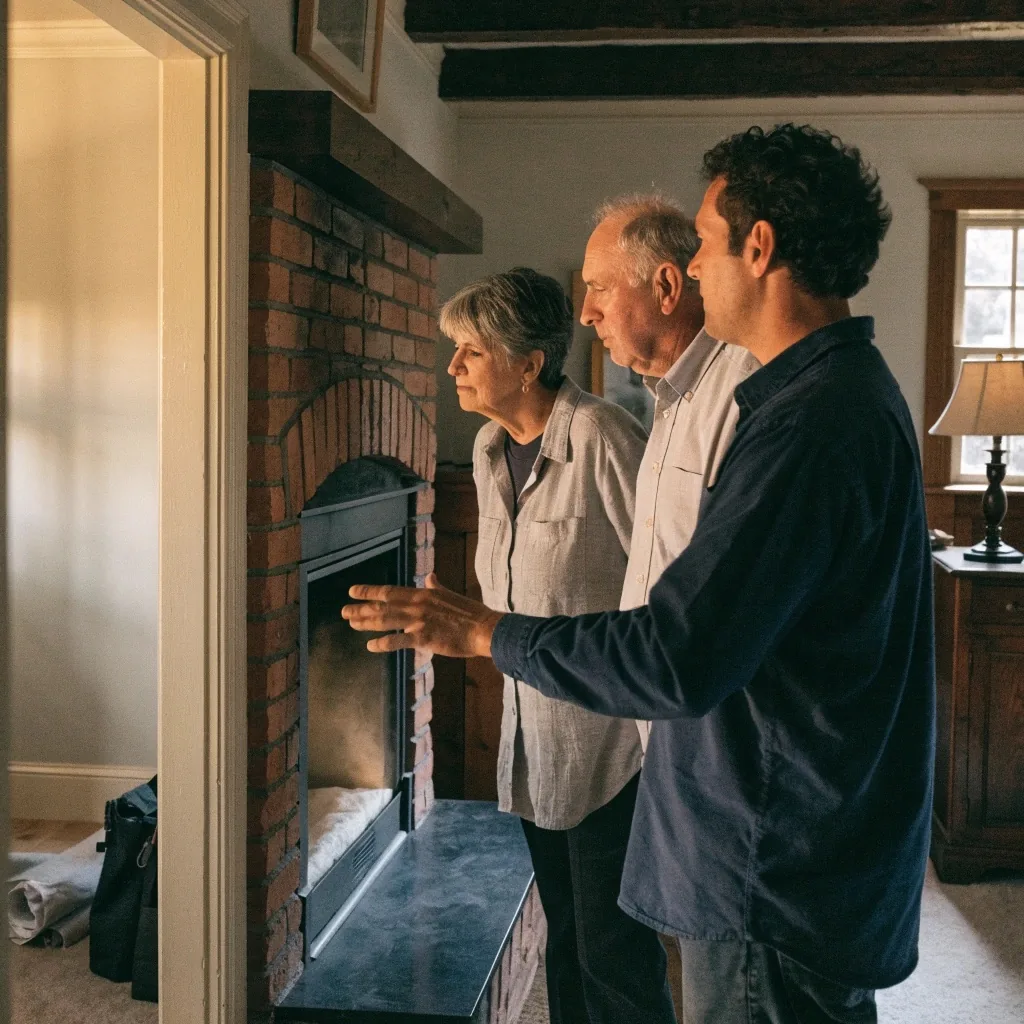
We inspect the flue and the connector or liner, check the baffle, gaskets, glass and pipe, and show you anything worth your attention. The inspection doesn’t include sweeping or cleaning.
You get a report with photos. If the stove needs sweeping, a part or a repair, you get the price and the lead time before anything is booked.
How the fix is chosen
- Sweep and adjust
Most problems with draft and dirty glass start with buildup in the flue or the connector, or a baffle that has slipped out of place. Sweeping and resetting fix many of them.
- Replace a worn part
Gaskets, glass, baffles, air tubes and catalytic combustors wear out. They are replaced with parts made for that model, so the stove seals and burns as it was designed to.
- Fix the venting
If the connector is the wrong size or poorly joined, or an insert has no liner or the wrong one, the venting is put right before the stove is used again.
Real work, shown honestly
Average from 81 Google reviews
- Licensed & insured
- 15 years of hands-on work
- National Chimney Sweep Guild member
Wood stove and insert service across Connecticut
We inspect and service wood stoves and fireplace inserts in Fairfield, New Haven, Hartford, Middlesex, New London, Litchfield, Tolland and Windham counties. A stove or insert that heats the house all winter works its flue hardest, so a check before the season tells you it’s ready when you need it most.
Town pages with local detail: Burlington, Canaan, Monroe, Newtown, Trumbull and Warren.
See your service area for local details.
What sets the price
Stove or insert
A freestanding stove is reached through its pipe. Some inserts have to be pulled out of the fireplace to see the liner properly.
How much buildup
Light soot comes out with a standard sweep. Heavy or glazed creosote takes more work to remove.
Parts for your model
Gaskets, glass, baffles and combustors are model-specific, and some take time to order.
Height and roof access
A tall chimney or a steep roof takes more setup to sweep from the top.
How the quote works
The inspection is priced before we come. If the visit turns up a part, a liner or a repair, you get it in writing with the price and lead time, and decide before anything is ordered.
The price we quote is the price you pay.
Financing is available
Larger projects such as liners, rebuilds and major repairs can be financed. Ask when you request service and we’ll walk you through the options for your project.
About wood stove and insert service
Sun–Thu 8am–8pm · Fri 8am–4pm · Sat closed
How often should a wood stove or insert be swept?
NFPA 211 and the Chimney Safety Institute of America recommend an inspection every year, with sweeping as needed. A stove or insert used through the whole heating season usually needs a sweep at least once a year, and sometimes more often if the fire is often kept low or the wood isn’t fully dry.
How can I tell if the door gasket needs replacing?
Close the door on a strip of paper and pull it out. If it slides out easily, the gasket isn’t sealing at that spot. Try it at a few points around the door. A gasket that is hard, flat or frayed should be replaced, because a leaking door makes the stove burn faster and harder to control.
Why does smoke come out when I open the stove door?
Opening the air control fully for a minute before you open the door, and then opening the door slowly, helps. If smoke still spills out, the draft is weak: the flue or the connector may be restricted by creosote, the cap may be blocked, or the flue may be the wrong size for the stove.
Does a fireplace insert need a chimney liner?
In most cases, yes. Most insert makers call for a stainless steel liner from the insert to the top of the chimney, sized for the insert. Without one, the smoke spreads out in a flue that is too big, cools, and leaves more creosote behind, and the insert may not draw properly.
What is a catalytic combustor, and does it need service?
Some stoves have a catalytic combustor, a honeycomb-like part above the fire that burns off smoke at a lower temperature. It should be checked during the yearly service, and replaced when it is clogged, cracked or no longer working, following the stove maker’s instructions.
What wood should I burn in my stove?
Dry, seasoned wood. The EPA recommends wood with a moisture content of 20% or less, and a moisture meter will tell you. Wet wood smokes, blackens the glass and leaves more creosote. Don’t burn trash, cardboard, or painted or treated wood.
Do you service pellet stoves?
We clean pellet stoves and their vent pipes, because fly ash builds up in both even though pellets burn cleaner than wood. We don’t replace a pellet stove’s internal parts; for those, the stove’s dealer or maker is the right contact.
Often booked with stove service

Fireplace Services
Wood-burning fireplace repair, gas fireplace venting and glass service, and wood stove and insert care, and how to tell them apart.
See fireplace services →
Chimney Sweep
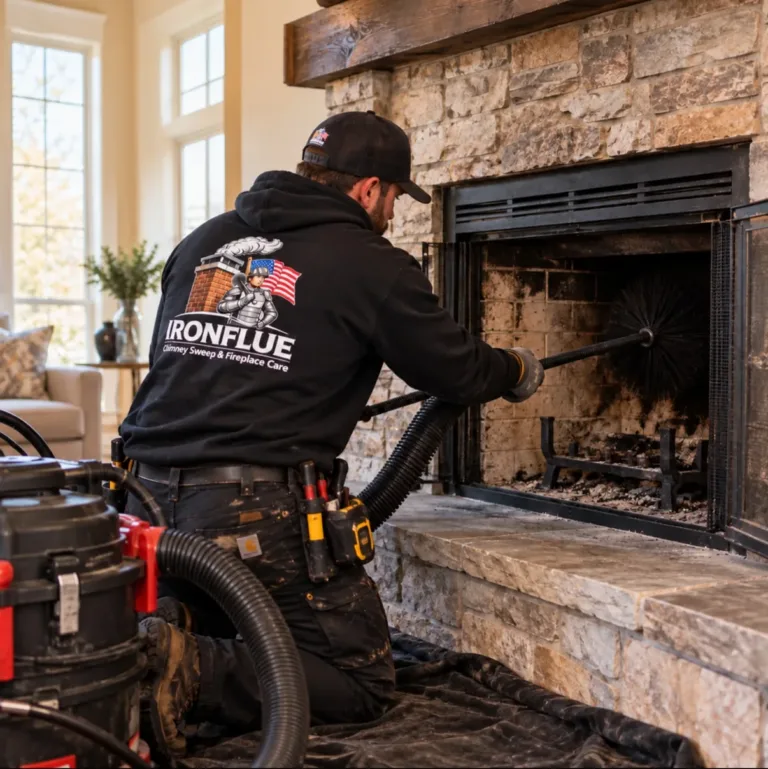
Soot and creosote cleared from the whole flue, with your room protected while we work.
Explore sweeping →
Chimney Liners
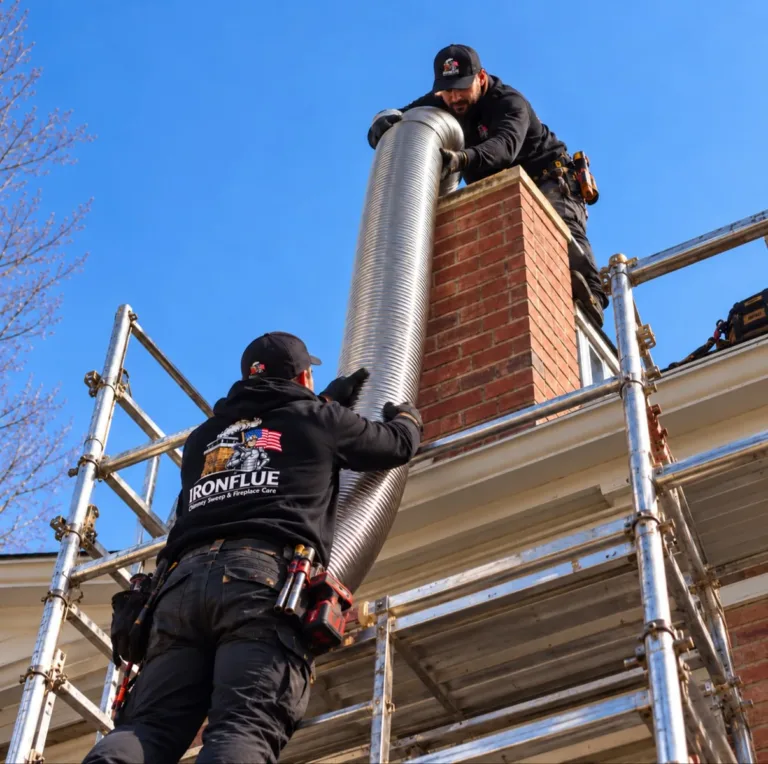
An insert vents best into a stainless liner sized for it, and a damaged liner is worth fixing before the next fire.
Explore liners →
Chimney Inspection
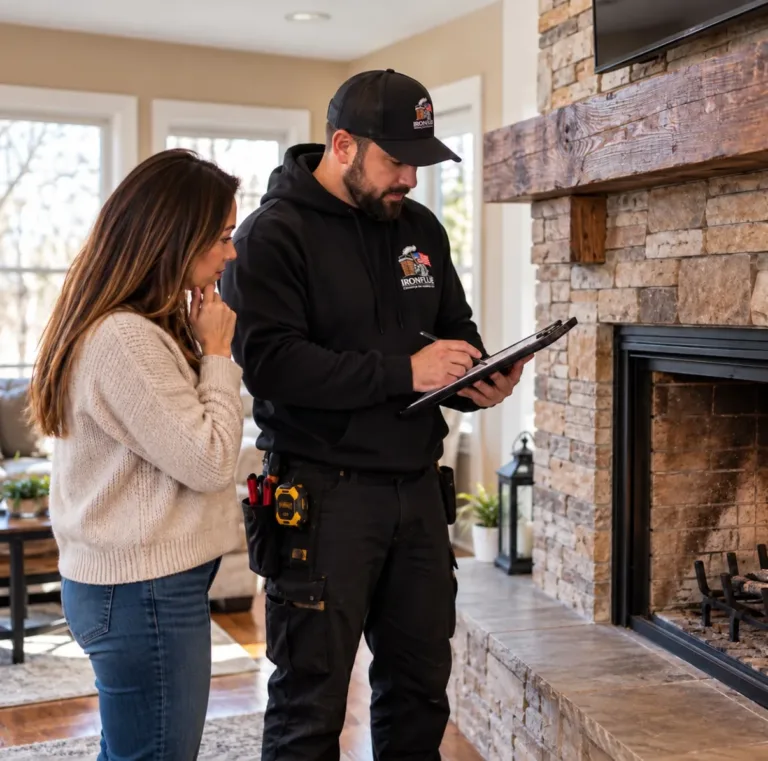
A Level 2 inspection checks whether the chimney suits a new stove or insert before it goes in.
Chimney inspection →Request stove or insert service
Sun–Thu 8am–8pm · Fri 8am–4pm · Sat closed
- 1We call you back to talk through what you’re seeing.
- 2Together we set a visit time that works for you.
- 3On site we look, photograph and explain before anything is quoted.
No obligation. We never share your details.