Serving homes & businesses across Connecticut
Sun–Thu 8am–8pm · Fri 8am–4pm
Chimney Repair

Chimney Caps & Dampers in Connecticut

The cap covers the top of the flue and keeps out rain, animals and debris. The damper closes the flue when the fireplace isn’t in use. When either one is missing, rusted or stuck, you get water, nests, drafts or smoke. We check both, show you photos, and repair or replace what needs it.
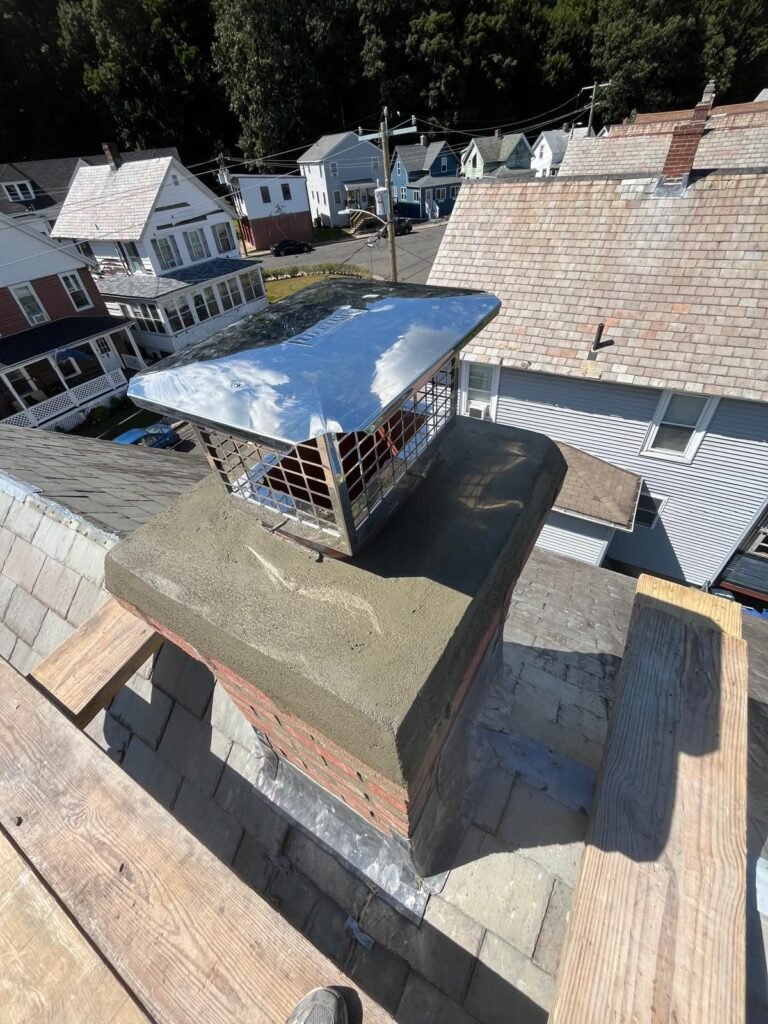
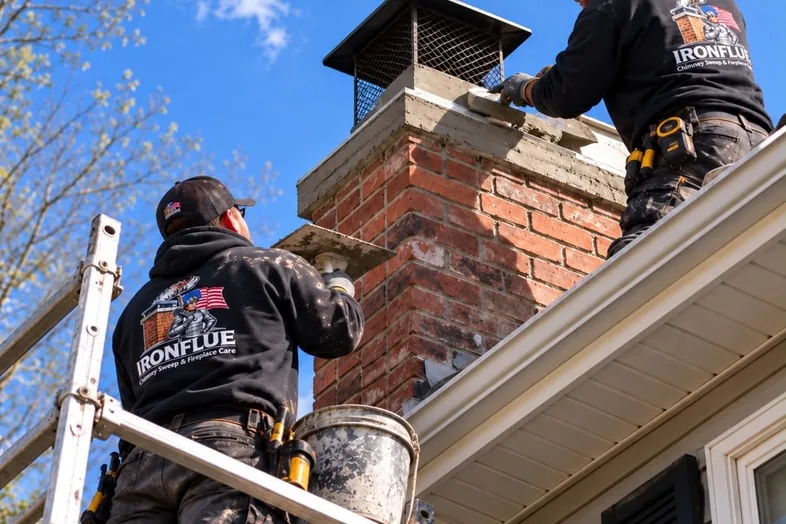
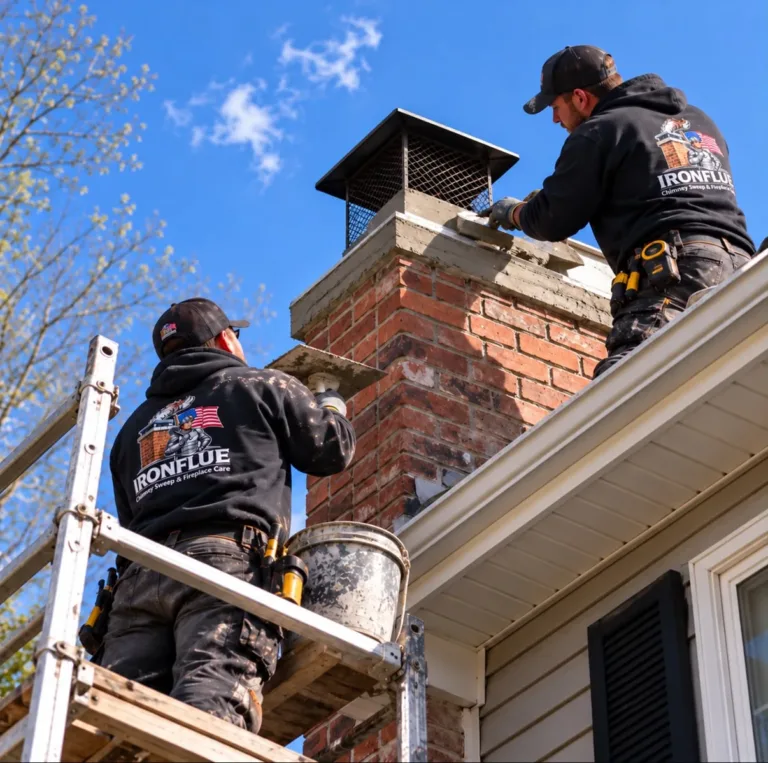
IronFlue Chimney technician finishing a new concrete chimney crown under a stainless steel chimney cap
May suit you if
A cap is missing or damaged, animals or debris have got into the chimney, the damper sticks or won’t close, or you feel cold air coming from the fireplace.
The assessment establishes
The condition of the cap and the damper, whether either one is causing what you noticed, and whether repair or replacement makes sense.
Next step
A visit with photos, then a written scope and price. Nothing starts until you approve it.
The basics

Two closures, at the top and the bottom of the flue

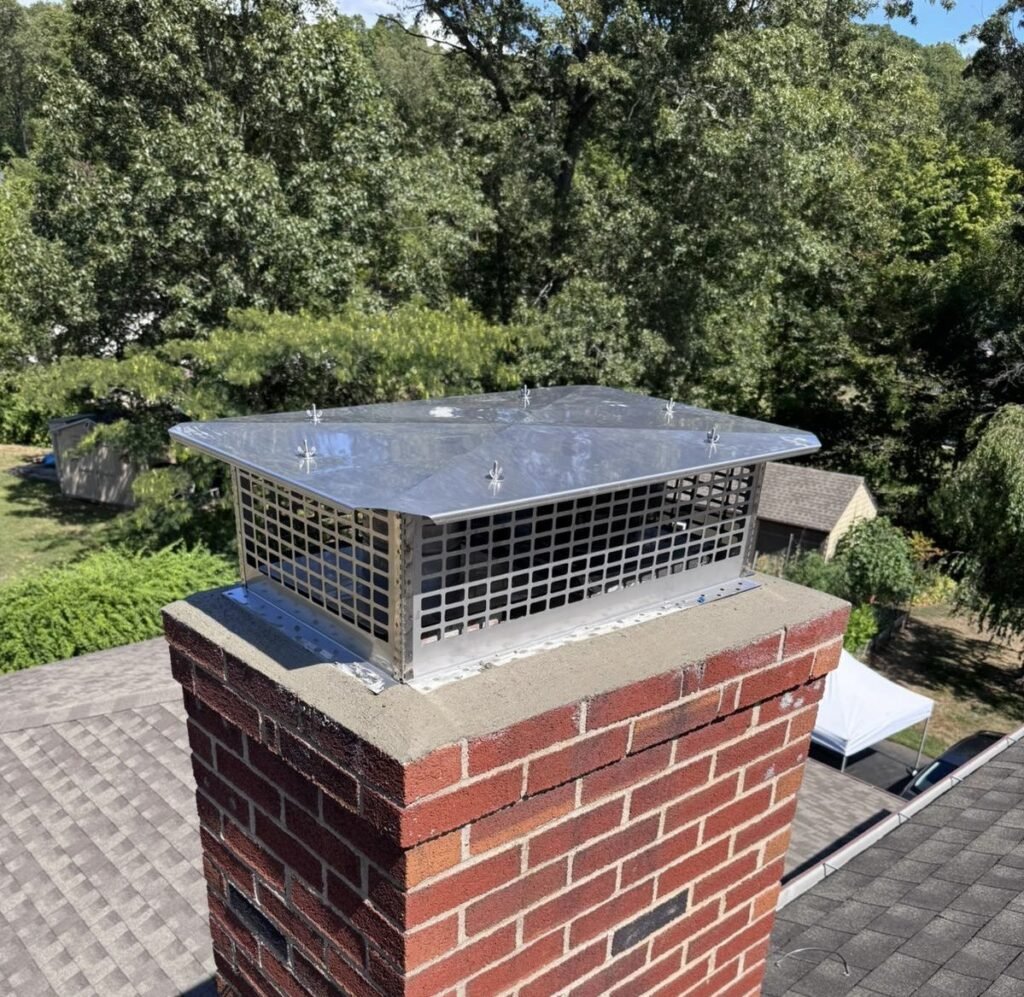
A chimney cap sits on top of the flue, above the crown. Its hood sheds rain and snow, and its mesh sides keep out birds, squirrels and raccoons and catch larger embers before they leave the flue. Caps are usually stainless steel or copper; galvanized steel costs less but rusts sooner in a wet climate. A chimney with more than one flue can take a single cap that covers the whole crown.

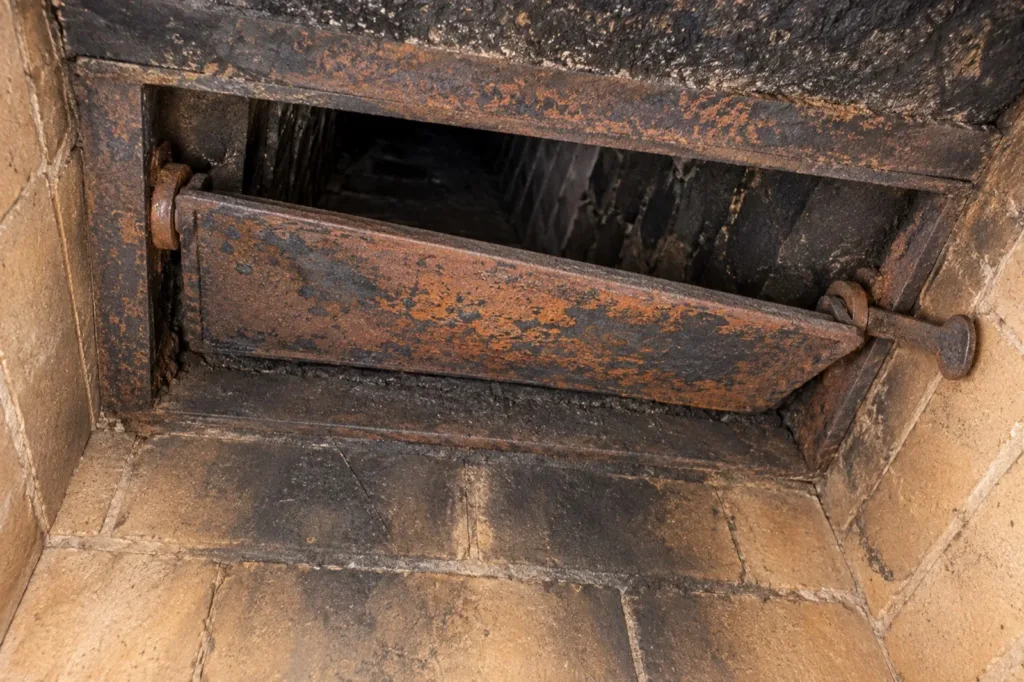
The damper is the plate that closes the flue. A throat damper sits just above the firebox and is worked by a handle or chain, and after years of heat and moisture it can rust, warp or seize. A top-sealing damper replaces it at the top of the flue: a cap with a gasket-sealed lid that you open and close with a cable from the fireplace. Closed, it seals better than a throat damper, keeping warm air in the house and rain and animals out of the flue.

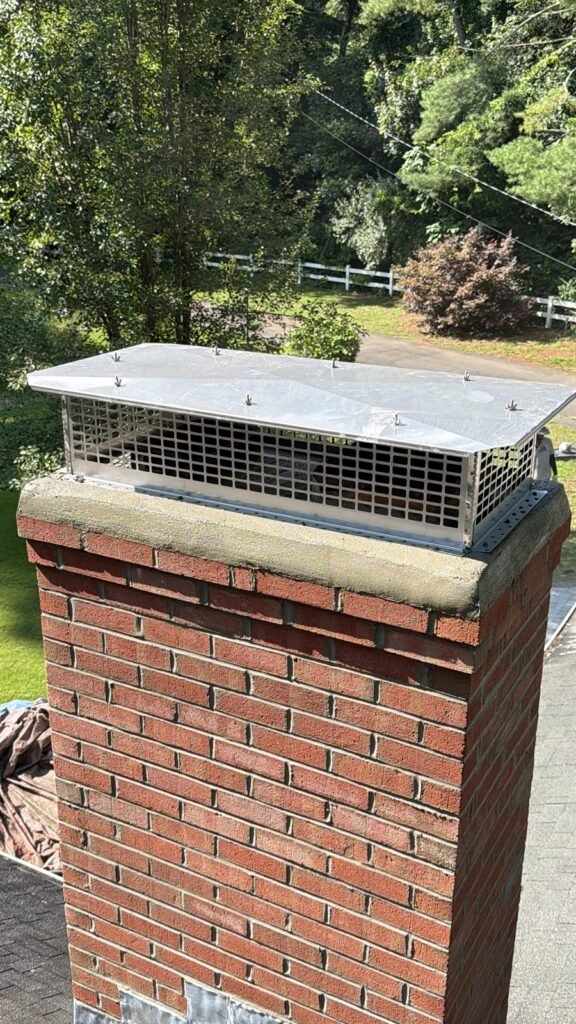
Stainless steel mesh chimney cap on a concrete crown atop a red brick chimneyCap: over the flue
A rusted throat damper above a firebox (illustration)Damper: above the firebox
Left: a stainless steel cap over the flue, from an IronFlue Chimney job. Right: illustration of a rusted throat damper, not a completed IronFlue Chimney job.
Signs worth a look

When a cap or damper check may be useful

Any of these is a reason to have the cap and damper looked at. None of them, on its own, says which one is the problem.
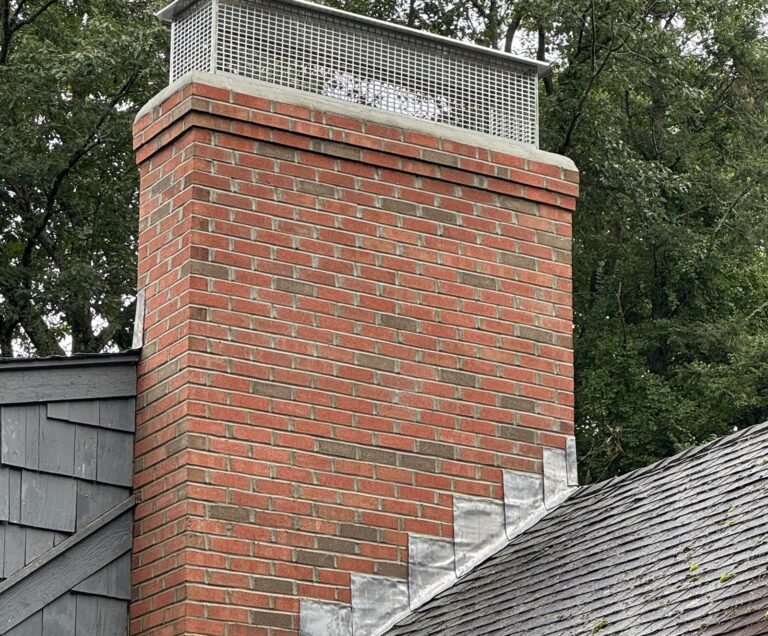
Stainless steel chimney cap installed on a brick chimney above a shingle roof
  1. Animals or nests in the chimney

    Scratching, chirping or debris falling into the firebox, often in spring, when birds and raccoons look for a sheltered spot.

  2. Water in the firebox

    Puddles, damp ash or rust stains at the back of the fireplace after rain, which often means a missing or damaged cap.

  3. A damper that sticks or won’t close

    The handle won’t move, the plate drops shut on its own, or you can see daylight with it closed.

  4. Cold drafts or smells from the fireplace

    Air moving into the room when the fireplace isn’t in use, or a sooty smell in humid weather.

  5. Rust on the cap or damper

    Orange streaks on the crown below the cap, or flakes of rust falling onto the hearth.

Water in the firebox can also come from a cracked crown or the flashing, and smoke problems can come from the flue or the smoke chamber. The visit checks the whole path, so you hear what is actually causing it before anything is quoted.
What’s included

What cap and damper work covers

The written scope lists both columns for your chimney, so nothing is assumed.

Included

  • Assessment of the cap from the roof and the damper from the firebox, with photos
  • Measuring the flue or the crown so a new cap fits properly
  • Supply and fitting of a new cap, or refastening a sound cap that has come loose
  • Repair or adjustment of a throat damper where it can be saved, or fitting a top-sealing damper
  • Protection of the hearth, the roof and the gutters while we work, and cleanup with debris taken away
  • Photos of the finished work and a written note of what was done

Quoted separately

  • A chimney sweep, or nest and blockage removal further down the flue
  • Crown repair, if the cap sits on a cracked or failing crown
  • Flashing repair, if water is also getting in at the roofline
  • Liner repair or relining, if the flue tiles are damaged
  • Anything found on site that changes the scope: you hear about it first
Options and process

How the visit goes

Caps and dampers are checked together, because they close the same flue. We tell you what each one needs, and why, before quoting.
Before the visit
Let the fireplace go cold

No fires for 24 hours beforehand, so the damper and the flue can be checked safely. Clear a path to the hearth.

24 hours
During the visit
Check the top and the bottom

We look at the cap from the roof and the damper from the firebox, measure what needs measuring, and talk you through the photos.

Photos
After the visit
Written scope, then the work

You get a written scope and price. Once approved, the parts are ordered to size and fitted, and you get photos of the finished work.

Written quote

How the approach is chosen

  • Repair or refasten

    The cap or the damper is sound but loose, bent or sticking. It is refastened, adjusted or freed, and nothing is replaced.

  • Replace the cap

    The cap is missing, rusted through or the wrong size. A new cap is measured and fitted over the flue, or over the whole crown on a multi-flue chimney.

  • Add a top-sealing damper

    The throat damper is seized, warped or rusted beyond repair. A top-sealing damper is fitted at the top of the flue instead, with a cable down to the fireplace.

Evidence

Real work, shown honestly

5.0
★★★★★

Average from 81 Google reviews

  • Licensed & insured
  • 15 years of hands-on work
  • National Chimney Sweep Guild member
Read all reviews on Google

Caps and dampers across Connecticut

We fit chimney caps and repair dampers in Fairfield, New Haven, Hartford, Middlesex, New London, Litchfield, Tolland and Windham counties. Birds, squirrels and raccoons look for sheltered spots every spring, so an uncapped flue rarely stays empty for long.

See your service area for local details.

Cost

What sets the price

We don’t publish a flat price, because a loose cap and a new top-sealing damper are very different jobs. These four things move the quote.

Size and number of flues

A single-flue cap is a small part. A cap that covers a multi-flue crown is made to measure.

Material

Stainless steel and copper last longer than galvanized steel and cost more up front.

Height and roof pitch

Steep roofs and tall chimneys need more staging and safety setup, and that is part of the price.

What the flue needs first

If nests, debris or a sweep have to come first, that work is quoted alongside.

How the quote works

The assessment comes first. You then get a written scope and price for the cap and the damper, with any sweep, crown or liner work listed separately, so you can decide piece by piece.

The price we quote is the price you pay.

Questions about a quote?
(959) 666-6406

Sun–Thu 8am–8pm · Fri 8am–4pm · Sat closed

Financing

Financing is available

Larger projects such as liners, rebuilds and major repairs can be financed. Ask when you request service and we’ll walk you through the options for your project.

Questions

About chimney caps and dampers

What people ask before booking a cap or damper visit.

Sun–Thu 8am–8pm · Fri 8am–4pm · Sat closed

Does every chimney need a cap?

Almost every working chimney benefits from one. Without a cap, rain falls straight down the flue, rusting the damper and soaking the firebox, and animals have an open door. It is one of the least expensive ways to protect the rest of the chimney.

What’s the difference between a chimney cap and a top-sealing damper?

A cap is a fixed cover with a mesh screen that stays open. A top-sealing damper adds a lid with a gasket that you close from the fireplace when it isn’t in use, so one part does the cap’s job and the damper’s job.

Can a rusted throat damper be repaired?

If the plate and the frame are sound, it can often be cleaned, freed and adjusted. If the plate is warped or the frame has rusted away, it won’t seal again, and a top-sealing damper is usually the better fix.

There’s an animal in my chimney. What should I do?

Keep the damper closed so the animal can’t get into the house, and don’t light a fire to drive it out. Call us and describe what you hear. Getting the animal out and fitting a cap so it can’t come back are separate steps, and we explain both.

Will a new cap stop water in my fireplace?

If the water is coming down the flue, yes. If it is getting in through a cracked crown, the flashing or the brick, a cap alone won’t stop it, so we check those on the same visit.

Request service

Request a cap or damper visit

Tell us what you’re noticing: water, animals, drafts or a damper that won’t move. If you have photos of the top of the chimney, say so and we’ll ask for them on the call.

Sun–Thu 8am–8pm · Fri 8am–4pm · Sat closed

After you send it
  1. 1We call you back to talk through what you’re seeing.
  2. 2Together we set a visit time that works for you.
  3. 3On site we look, photograph and explain before anything is quoted.

Sending a request doesn’t book an appointment. We’ll call you back to talk it through and confirm a time.

No obligation. We never share your details.