Partial Chimney Rebuild in Connecticut

- May suit you if
- A chimney with loose, cracked or missing bricks near the top, crumbling masonry above the roofline, storm or tree damage, or a leak that keeps coming back after repairs.
- The assessment establishes
- How far down the damage goes, whether the masonry below it is sound, and what the rebuilt section needs: brick, crown, flashing, cap and liner.
- Next step
- A visit with photos, then a written scope, price and schedule. Nothing starts until you approve it.
Why the top fails first, and how far down a rebuild goes
Above the roofline, a chimney is exposed on every side to rain, snow, wind and sun. Water soaks into the brick and mortar, freezes, expands and thaws again, and over Connecticut winters that cycle breaks mortar joints and splits brick faces. A cracked crown or failed flashing lets in more water and speeds it up. By the time bricks are loose or falling, repointing alone can’t make the top sound again.
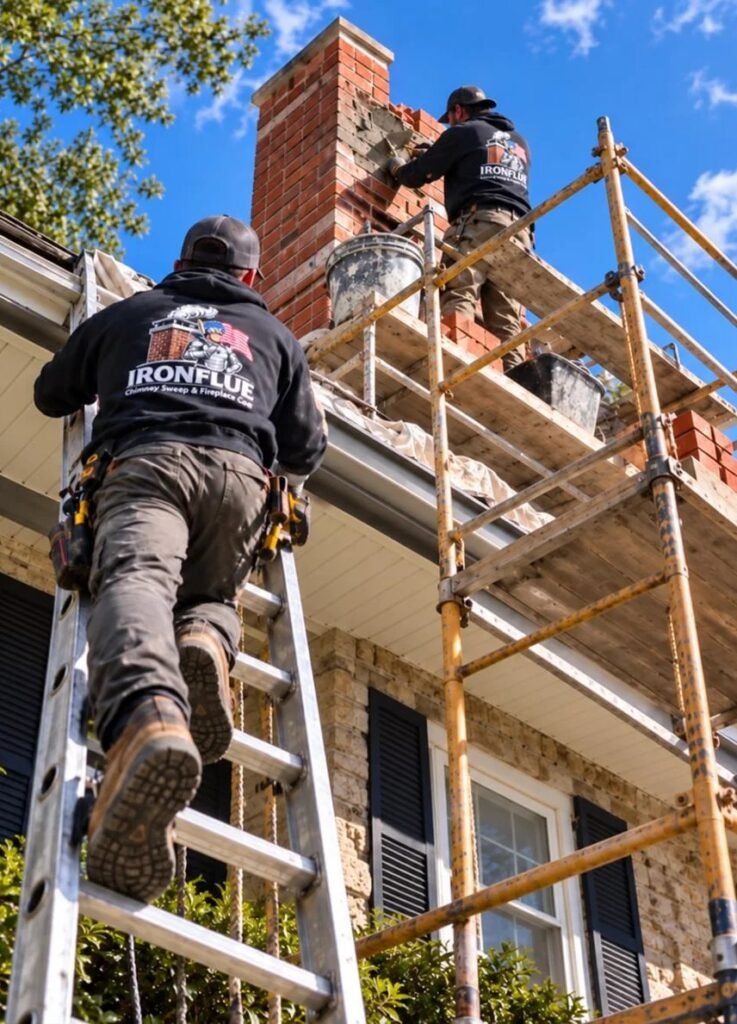
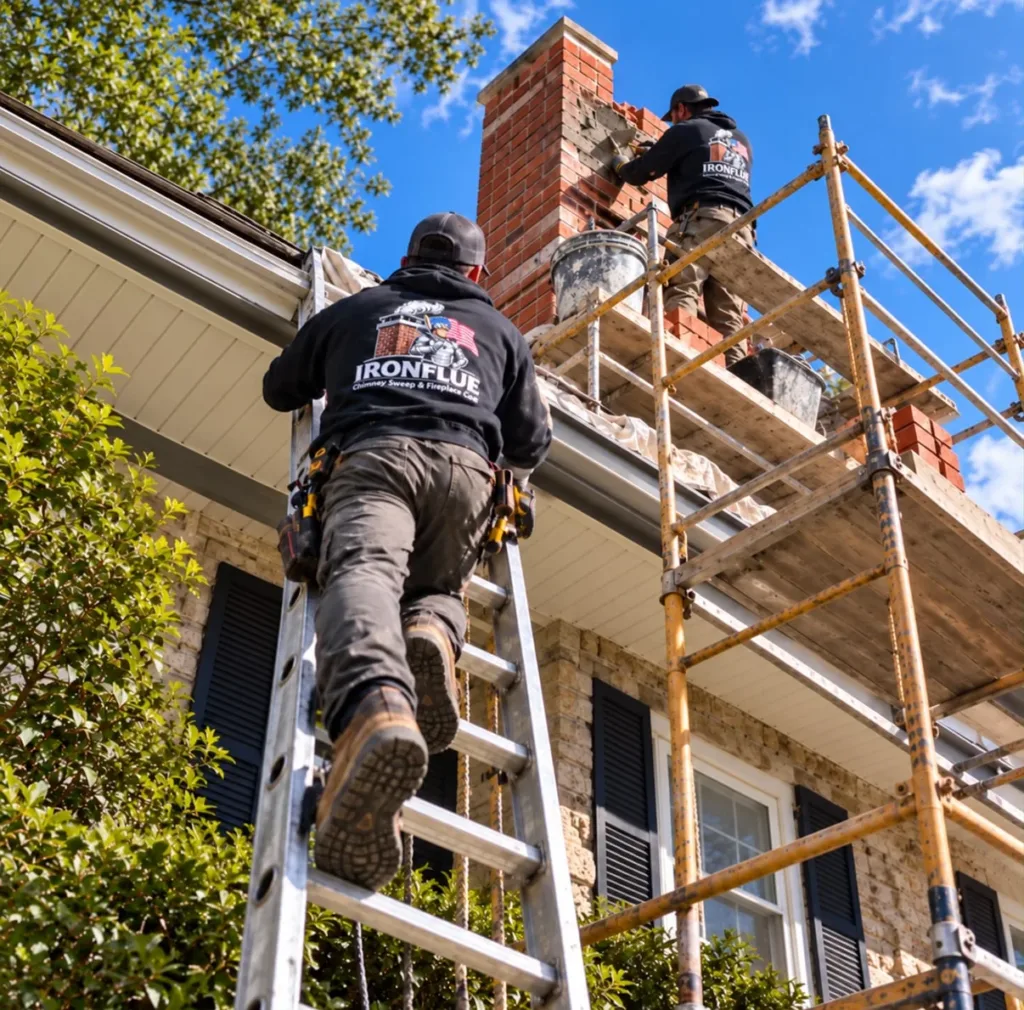
A partial rebuild takes the chimney down course by course until the masonry below is solid, then rebuilds it with brick and mortar matched to the original. The mortar is matched to the brick as well as to its color, because older brick is often softer and a mortar harder than the brick can damage it. The rebuilt section is finished with a new crown, new flashing at the roof, and usually a new cap, and the flue liner in that section is dealt with while the chimney is open.
Related guide: Chimney repair or rebuild? How to tell which one you need
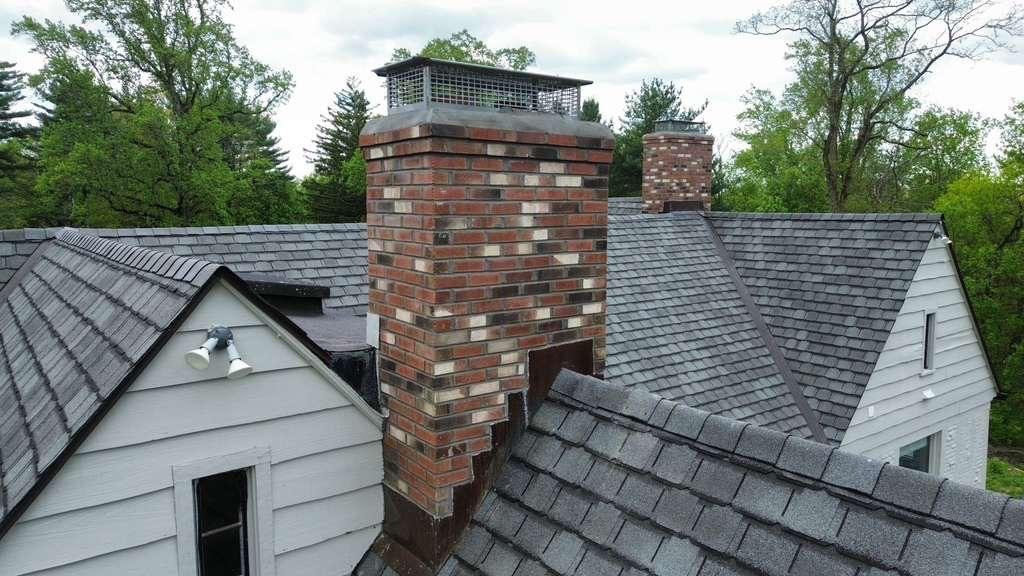
Rebuilt above the roof, with a new crown and capWhen a partial rebuild may be needed

- 1Loose or falling bricks
Bricks that move, have dropped onto the roof or the ground, or are cracked right through.
- 2Crumbling masonry above the roof
Mortar washed out of the joints and brick faces flaking away, mostly in the courses above the roofline.
- 3Storm, tree or lightning damage
A top knocked loose, cracked or out of line by a falling branch, high winds or a lightning strike.
- 4A leak that keeps coming back
Water in the house near the chimney after the crown, cap and flashing have already been repaired.
- 5A crown sitting on broken brick
A crown that can’t be repaired properly because the brick under it is no longer sound.
If bricks are falling, keep people, pets and cars clear of the area below the chimney, and don’t use the fireplace until the top has been assessed.
What a partial rebuild covers
Included
- Assessment of the chimney from the roof, with photos and measurements
- Taking the chimney down course by course to sound masonry
- Rebuilding with brick and mortar matched to the original as closely as possible
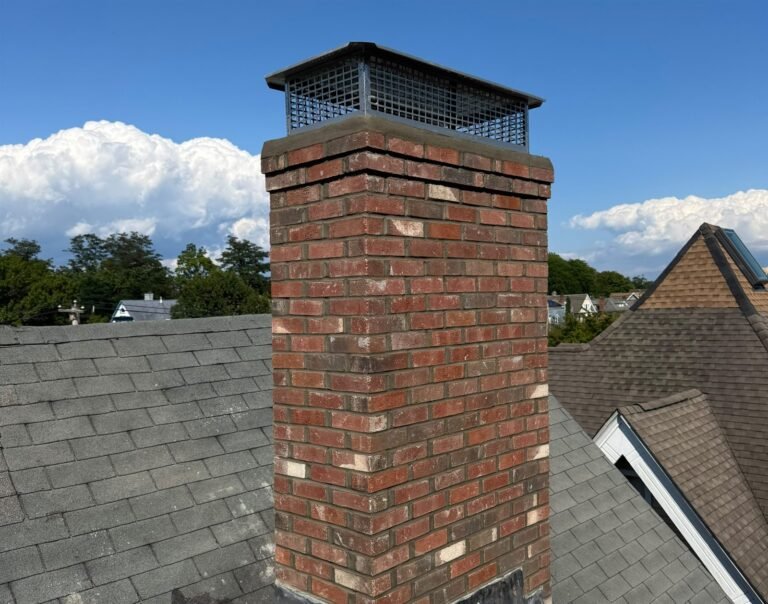
- A new crown, new flashing where the chimney meets the roof, and a cap
- Dealing with the flue liner in the rebuilt section while the chimney is open
- Protection of the roof and the grounds, cleanup and removal of debris, and photos of the finished work
Quoted separately
- Masonry below the rebuilt section, if it only needs repointing (quoted separately)
- Relining the full height of the flue, if the liner below is also damaged
- Roof repairs beyond the flashing and the area around the chimney
- Interior repairs to walls or ceilings damaged by past leaks
How the job goes
Tell us about falling brick, leaks or storm damage, and send photos if you have them. No fires for 24 hours before the visit.
We check how far down the damage goes, the crown, flashing and liner, and measure and photograph the chimney.
You get a written scope, price and schedule, including any permit your town requires. Once approved, the work is booked around the weather.
How the approach is chosen
- Repoint instead
If the bricks are sound and only the joints have failed, repointing is enough, and no rebuild is needed.
- Rebuild the top
Loose, cracked or spalled brick above the roofline is taken down to sound masonry and rebuilt, with a new crown, flashing and cap.
- Rebuild further down
If the damage runs below the roofline, or the chimney leans, the rebuild goes deeper, up to a full rebuild from a solid base.
Real work, shown honestly
Average from 81 Google reviews
- Licensed & insured
- 15 years of hands-on work
- National Chimney Sweep Guild member
Partial chimney rebuilds across Connecticut
We rebuild the tops of chimneys in Fairfield, New Haven, Hartford, Middlesex, New London, Litchfield, Tolland and Windham counties. New mortar needs mild, dry weather to cure, so most rebuilds here are scheduled from spring to late fall, and winter work waits for the forecast.
For the houses and weather in your town, see Colebrook, Danbury, Derby, Enfield, Hamden and Kent.
See your service area for local details.
What sets the price
How many courses
How far down the damage goes decides how much of the chimney is rebuilt.
Size of the chimney
A wider chimney or one with several flues has more brick to lay.
Height and roof pitch
Tall chimneys and steep roofs need scaffolding and more safety setup.
Crown, cap, flashing, liner
What the rebuilt section needs on top and inside, listed line by line.
How the quote works
The assessment comes first. You then get a written scope, price and schedule, with any repointing below the rebuild or liner work listed separately, so you can decide piece by piece.
The price we quote is the price you pay.
Financing is available
Larger projects such as liners, rebuilds and major repairs can be financed. Ask when you request service and we’ll walk you through the options for your project.
About partial chimney rebuilds
Sun–Thu 8am–8pm · Fri 8am–4pm · Sat closed
Why is my chimney falling apart only above the roof?
Above the roofline, the chimney is exposed to weather on every side, while the part inside the house is protected. Water soaks in, freezes and thaws, and breaks the mortar and brick faces. That is why the top usually fails first, and why a partial rebuild is often all that is needed.
How do you decide how far down to rebuild?
The chimney is taken down course by course until the brick and mortar below are sound: bricks that sit firm and joints that hold. The assessment gives an estimate, and the scope explains what happens if the damage turns out to go deeper once the work is open.
Is repointing enough, or does the chimney need rebuilding?
If the bricks are sound and only the mortar joints have worn, repointing is enough. If bricks are loose, cracked through or have lost their faces, they can’t be held together by new mortar alone, and that section needs rebuilding.
Can a chimney be rebuilt in winter?
New mortar must not freeze while it cures, so masonry work needs mild, dry weather. In cold months we schedule around the forecast, and we tell you if the work should wait for warmer weather.
Will a partial rebuild stop my chimney leak?
If the water is getting in through the damaged top, yes: the rebuild comes with a new crown and flashing, which close the most common entry points. If the leak has another source, such as the roof, we tell you during the assessment.
Do I need a permit for a partial rebuild?
Rebuilding a chimney generally needs a building permit from your town, and requirements vary from town to town. We tell you what applies to your address before work starts, and it is listed in the written scope.
Other rebuilding work, and what goes with it

Chimney Rebuilding
Partial rebuilds, full rebuilds, and tuckpointing and masonry, and how to tell them apart.
See chimney rebuilding →
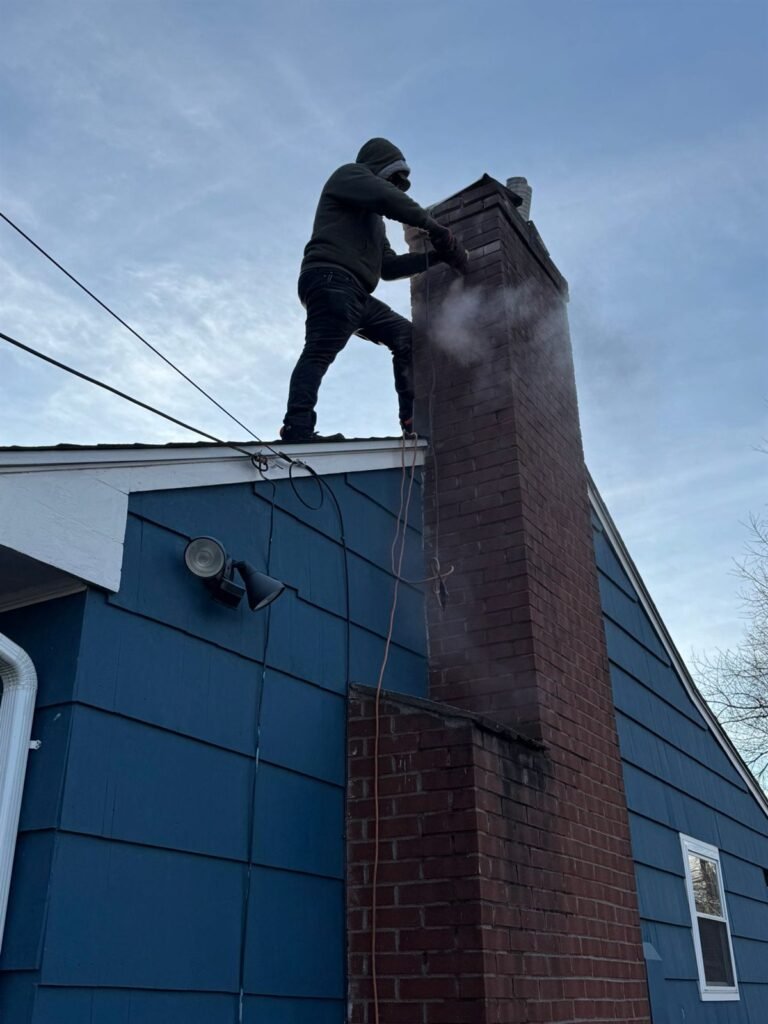
Tuckpointing & Masonry
When only the mortar has worn, repointing keeps the chimney sound without a rebuild.
Tuckpointing & masonry →
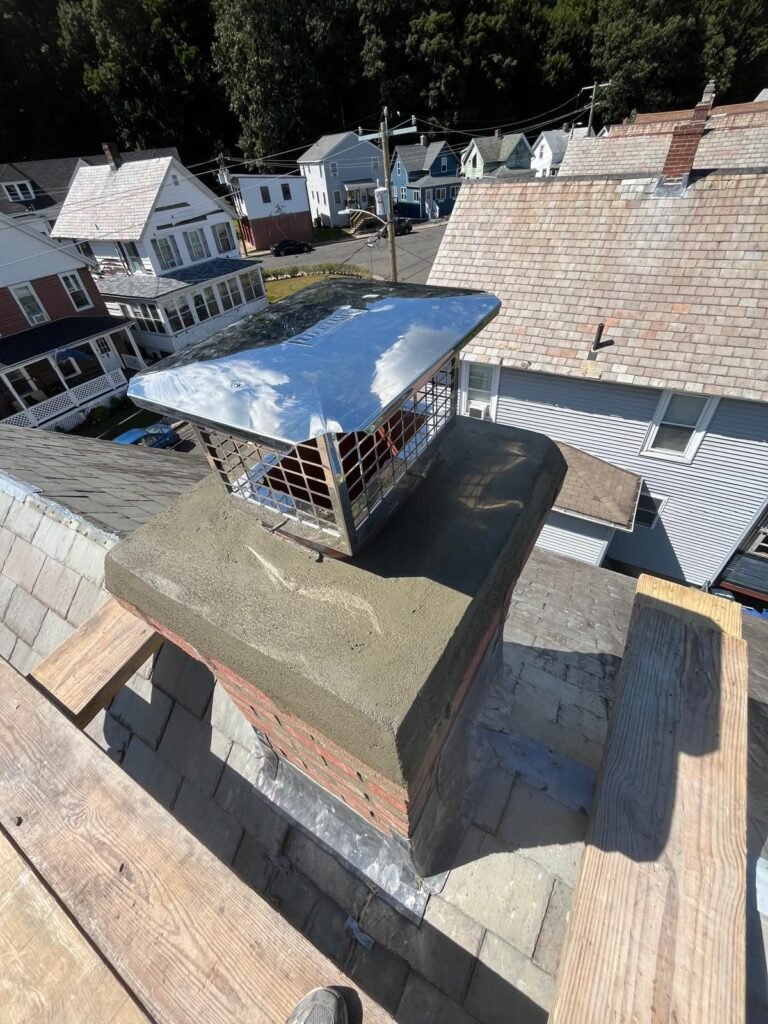
Crown Repair
The crown sheds water off the top of the chimney, and a rebuild finishes with a new one.
Crown repair →
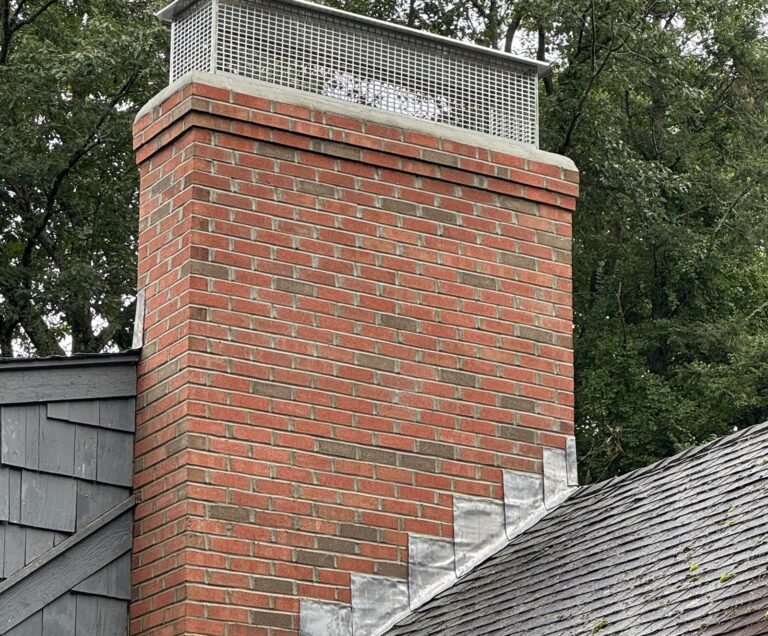
Flashing & Leak Repair
New flashing seals the rebuilt chimney to the roof, where many leaks start.
Flashing & leaks →Request a rebuild assessment
Sun–Thu 8am–8pm · Fri 8am–4pm · Sat closed
- 1We call you back to talk through what you’re seeing.
- 2Together we set a visit time that works for you.
- 3On site we look, photograph and explain before anything is quoted.
No obligation. We never share your details.