Chimney Sweep & Cleaning in Connecticut

- May suit you if
- A wood-burning fireplace, stove or insert that was used last season, a chimney that smells of soot or tar, a fireplace that has started to smoke, or one that hasn’t been swept in a year or more.
- The assessment establishes
- How much soot and creosote has built up, what kind it is, and whether anything we see while sweeping needs a closer look.
- Next step
- A clean flue and a written note with photos. Anything beyond the sweep is quoted separately, so you decide.
What builds up in a chimney, and why it matters
Wood smoke cools as it rises, and some of it condenses on the inside of the flue as soot and creosote. Creosote is flammable. It starts as a dry, sooty layer that brushes off easily, can turn into crunchy, flaky deposits, and in its worst form becomes a hard, shiny glaze that takes much more work to remove. Low, smouldering fires, wet wood and a flue that is too big for the appliance all make it build up faster.
The Chimney Safety Institute of America recommends that an open masonry fireplace be swept when sooty buildup reaches about 1/8 inch, and sooner if glazed creosote is present. A sweep clears the flue from top to bottom, along with the smoke chamber and the smoke shelf above the damper, where debris and soot collect and can’t be seen from the room.
Related guides: Chimney sweep vs chimney inspection: what’s the difference? and Signs of a chimney fire: loud, silent, and what to do next
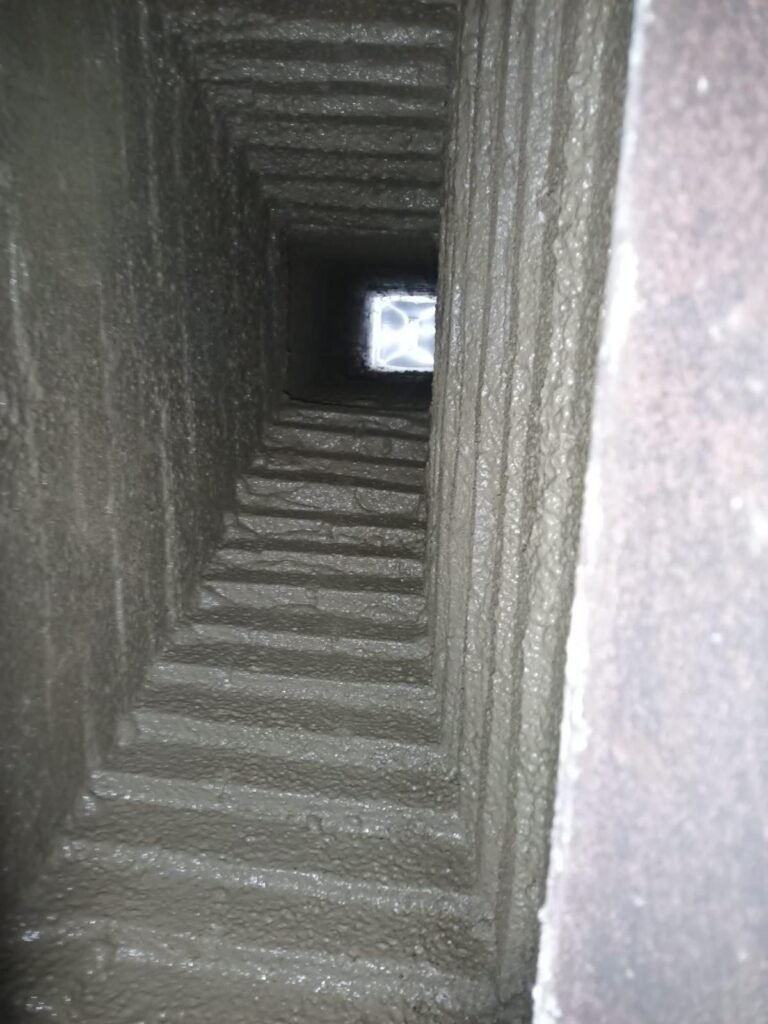
Soot in the smoke chamber, above the damperWhen it’s time for a sweep

- 1A year of regular fires
A fireplace or stove used through a Connecticut winter usually needs sweeping at least once a year.
- 2A smoky or tar-like smell
Often strongest in humid summer weather, when air moving down the chimney carries the smell of creosote into the room.
- 3Smoke in the room
Smoke spilling out of the fireplace when the damper is open, which can mean buildup or a blockage in the flue.
- 4Black flakes in the firebox
Flakes or crumbs of creosote falling onto the hearth or into the ash.
- 5A fireplace you haven’t used in years
A new home, or a fireplace nobody has lit in a long time, should be swept and checked before the first fire.
If you hear a loud roar from the chimney, see dense smoke or flames at the top, or the chimney or stovepipe is unusually hot, that can be a chimney fire. Get everyone out and call 911, and don’t use the fireplace again until the chimney has been inspected.
What a chimney sweep covers
Included
- Protection of the hearth and the floor, and the fireplace opening sealed off while we work
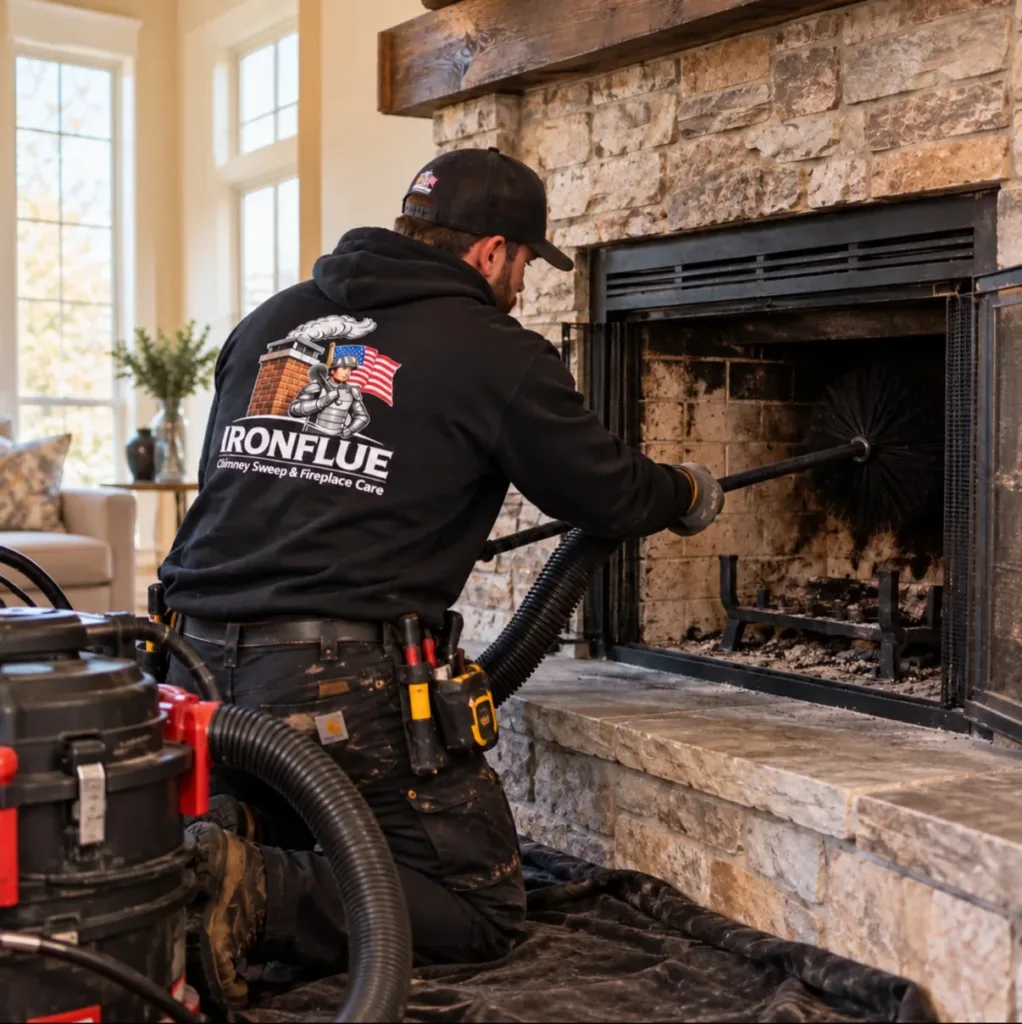
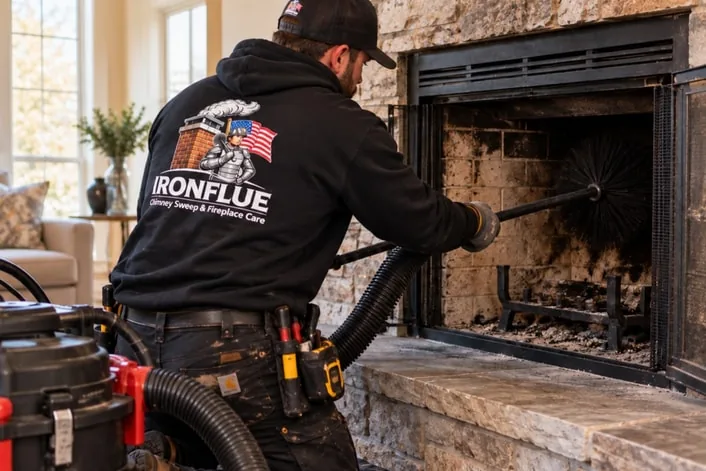
- Sweeping the flue from top to bottom with brushes sized to the flue, and a vacuum running throughout
- Cleaning the smoke chamber, the smoke shelf and the damper area
- Clearing soot and ash from the firebox
- A look at the parts of the chimney we can see while sweeping, and photos of anything worth your attention
- A written note of what was cleaned and what we found
Quoted separately
- Removing heavily glazed creosote, which takes extra work and is quoted separately
- Nests, animals or blockages beyond normal debris (see Animal & Blockage Removal)
- Repairs to the liner, the crown, the cap or the masonry
- A full Level 1 or Level 2 inspection, unless it is booked with the sweep
How the visit goes
No fires for 24 hours beforehand, and clear a path to the fireplace or stove. Tell us every appliance that vents into the chimney.
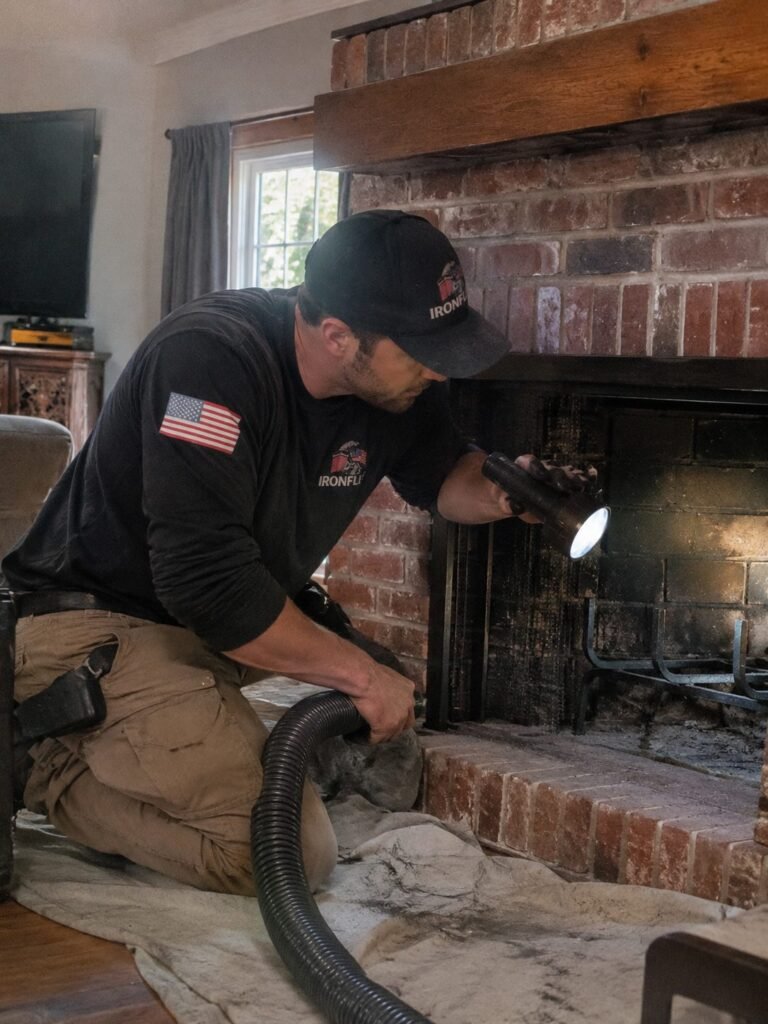
We cover the hearth and floor, seal off the opening, sweep the flue, smoke chamber and firebox with a vacuum running, and photograph what we see.
You get a note of what was cleaned and found. If something needs repair or a closer look, it is quoted separately.
How the clean is chosen
- Standard sweep
Dry soot and flaky creosote come off with brushes sized to the flue, from the top, the bottom or both, depending on the chimney.
- Heavy or glazed creosote
Hard, shiny creosote doesn’t brush off. It needs extra passes or a removal treatment, which is explained and quoted before we start.
- Sweep with an inspection
When the flue’s condition needs to be documented, the sweep is booked with a Level 1 or a Level 2 inspection on the same visit.
Real work, shown honestly
Average from 81 Google reviews
- Licensed & insured
- 15 years of hands-on work
- National Chimney Sweep Guild member
Chimney sweeping across Connecticut
We sweep chimneys in Fairfield, New Haven, Hartford, Middlesex, New London, Litchfield, Tolland and Windham counties. Most Connecticut homes burn from late fall into early spring, so late summer and early fall are the best time to book a sweep, before the first fire.
Local notes for Bethany, Canton, Darien, Granby, Hartland and Middlebury.
See your service area for local details.
What sets the price
How much buildup
Light soot comes out with a standard sweep. Heavy or glazed creosote takes more time and is quoted separately.
Number of flues
A fireplace, a stove and a furnace on one chimney mean several flues to clean.
Height and roof access
Tall chimneys and steep roofs take more setup to sweep from the top.
Booked with an inspection
A Level 1 or Level 2 on the same visit saves a second trip.
How the quote works
The sweep is priced before we come. If the visit turns up glazed creosote, a blockage or something that needs repair, it is quoted separately with photos, so you decide.
The price we quote is the price you pay.
Financing is available
Larger projects such as liners, rebuilds and major repairs can be financed. Ask when you request service and we’ll walk you through the options for your project.
About chimney sweeping
Sun–Thu 8am–8pm · Fri 8am–4pm · Sat closed
How do I know if my chimney needs sweeping?
The simplest check is the inside of the flue: if the soot is about 1/8 inch thick, the Chimney Safety Institute of America recommends sweeping an open masonry fireplace, and sooner if there is shiny, glazed creosote. If you can’t see it, a yearly inspection will tell you, and a fireplace used through the winter usually needs a sweep at least once a year.
What is creosote, and why is it dangerous?
Creosote is what wood smoke leaves on the inside of the chimney as it cools. It is flammable, and a thick layer can catch fire and burn very hot inside the flue. Keeping it swept away is the most direct way to prevent a chimney fire.
What is glazed creosote?
It is the hardest form of creosote: a shiny, tar-like coating that sets hard on the flue. It doesn’t brush off like soot, and removing it takes extra work, so we explain what it needs and quote it before we start.
Will a chimney sweep make a mess in my house?
It shouldn’t. We cover the hearth and the floor, seal off the fireplace opening, and run a vacuum while we work, so the soot comes out of the chimney and into the vacuum, not into your room.
Should I burn creosote-removing logs instead of having the chimney swept?
They aren’t a replacement for a sweep. Some products can loosen creosote and make it easier to remove, but the deposits still have to be swept out, and the flue still needs to be checked.
Is a chimney sweep the same as an inspection?
No. A sweep cleans the chimney, and an inspection checks its condition. We look at what we can see while sweeping and tell you about it, but a full Level 1 or Level 2 inspection is a separate service that can be booked on the same visit.
Often booked with a sweep

Chimney Sweep
Chimney sweeping and cleaning, and animal and blockage removal, and how to tell them apart.
See chimney sweep →
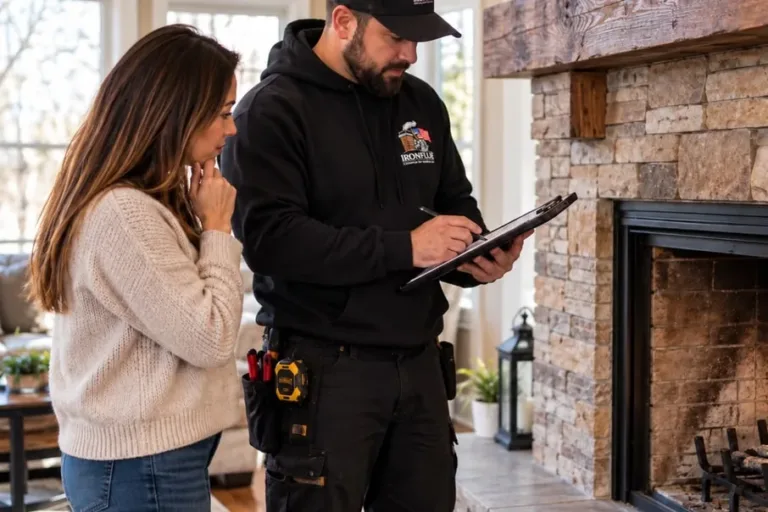
Level 1 Inspection
The yearly inspection that tells you whether a sweep is due, often done on the same visit.
Level 1 inspection →
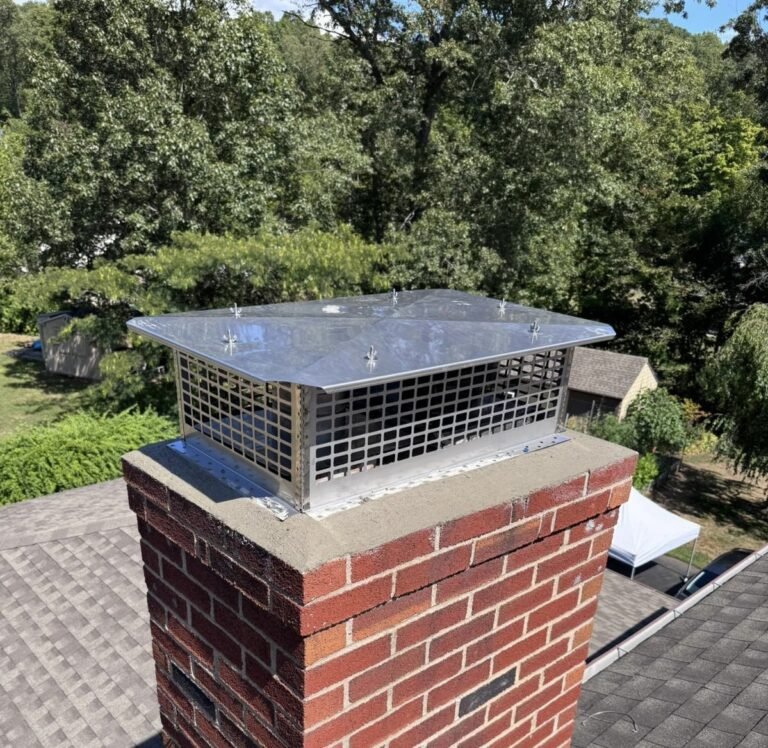
Animal & Blockage Removal
Nests, animals and debris cleared from the flue, with a cap fitted so they can’t come back.
Animal & blockage removal →
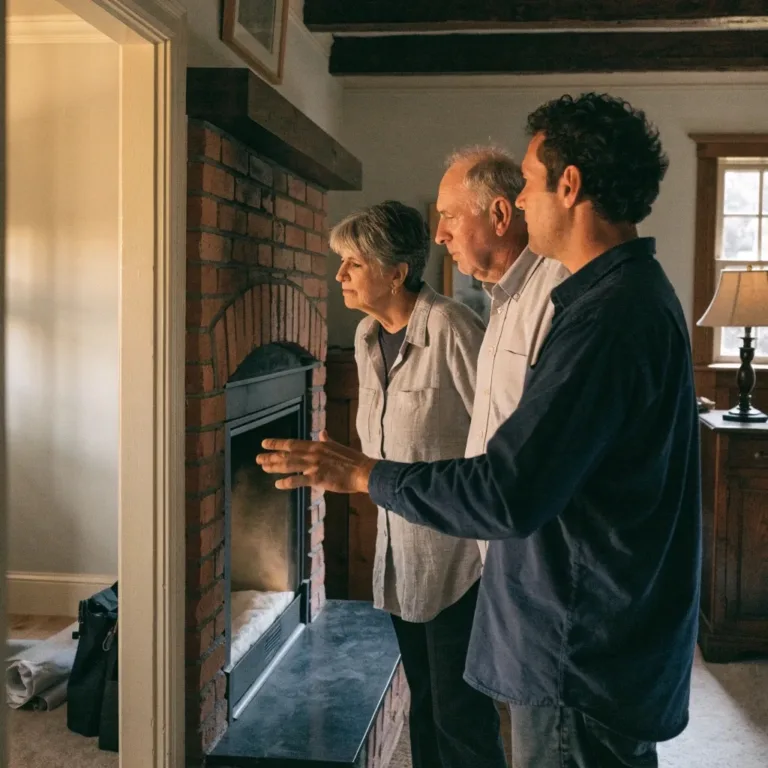
Wood Stove & Insert Service
A stove or insert needs its connector or liner swept, and its gaskets and baffle checked.
Stove & insert service →Request a chimney sweep
Sun–Thu 8am–8pm · Fri 8am–4pm · Sat closed
- 1We call you back to talk through what you’re seeing.
- 2Together we set a visit time that works for you.
- 3On site we look, photograph and explain before anything is quoted.
No obligation. We never share your details.