Serving homes & businesses across Connecticut
Sun–Thu 8am–8pm · Fri 8am–4pm
Chimney Repair

Chimney Waterproofing in Connecticut

Brick and mortar soak up water, and in a Connecticut winter that water freezes and breaks the masonry apart. Waterproofing is a breathable water repellent applied to sound brick after any repairs, so the chimney sheds rain but still lets moisture out. We check that the masonry is ready, show you photos, and treat it properly.
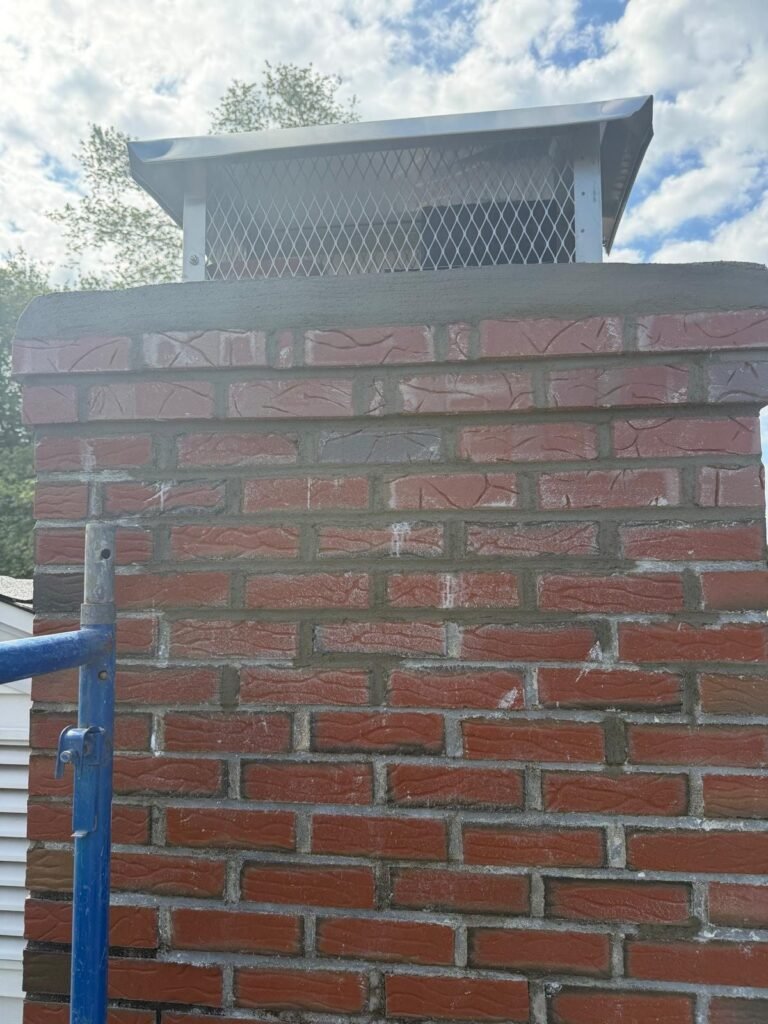
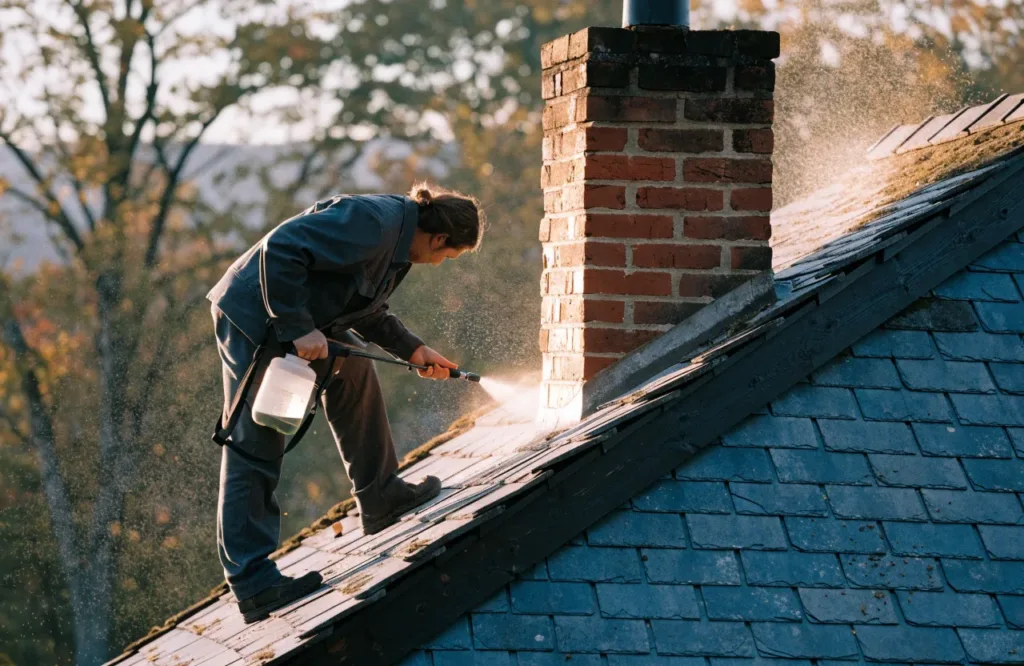
Waterproofing treatment applied to a brick chimney
May suit you if
Your chimney has white staining, damp patches or flaking brick faces, you’ve just had masonry or crown repairs, or the chimney has never been treated.
The assessment establishes
Whether the brick and mortar are sound enough to treat, what is letting water in, and whether repairs need to come first.
Next step
A roof visit with photos, then a written scope and price. Nothing starts until you approve it.
The basics

Keeping water out while letting moisture escape

Brick and mortar are porous. In every rain, a chimney above the roofline absorbs water, and when that water freezes it expands inside the masonry. Over enough winters, brick faces flake off, mortar joints crumble and water starts reaching the inside of the house. A chimney stands exposed to wind-driven rain on every side, so it takes in more water than the walls of the house below it.

Chimney waterproofing is a penetrating water repellent made for masonry. It soaks into the brick and mortar and lines the pores, so liquid water beads off while water vapor can still escape from inside. That breathability matters: paint, ordinary sealers and many hardware-store coatings form a film that traps moisture in the brick, and the trapped water does the same freeze-thaw damage from behind. Waterproofing protects sound masonry. It does not fix a cracked crown, open joints or failed flashing, which is why it goes on after those repairs, not instead of them.

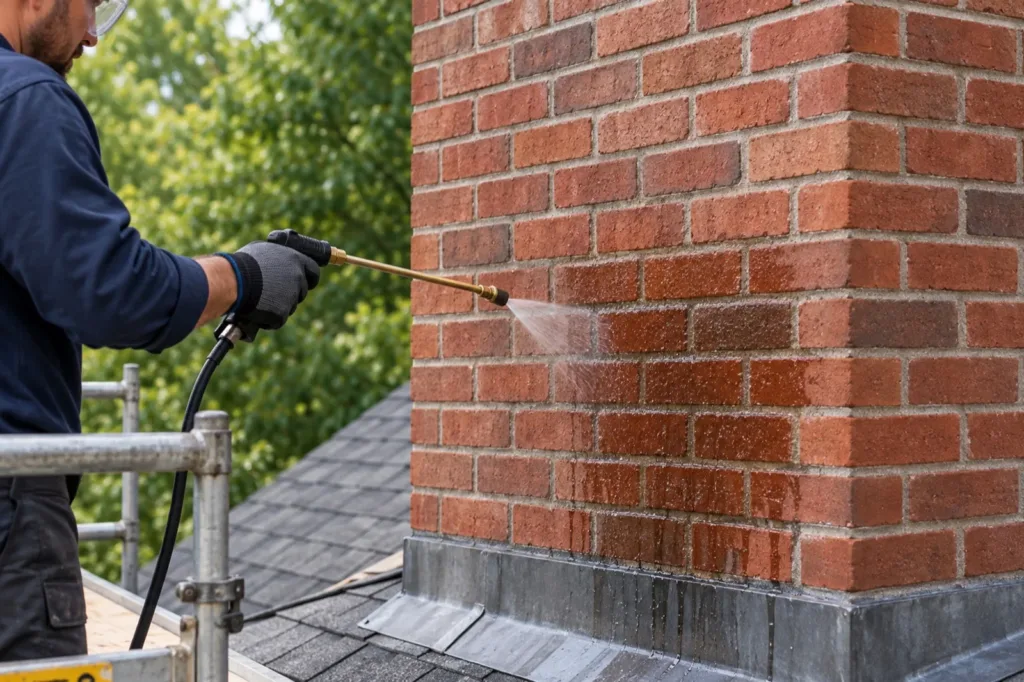
Water repellent being sprayed on a brick chimney (illustration)Breathable repellent on sound brick
Illustration of a water repellent being applied to a brick chimney, not a completed IronFlue Chimney job.
Signs worth a look

When a waterproofing assessment may be useful

Any of these is a reason to have the masonry checked. None of them, on its own, says waterproofing is the answer.
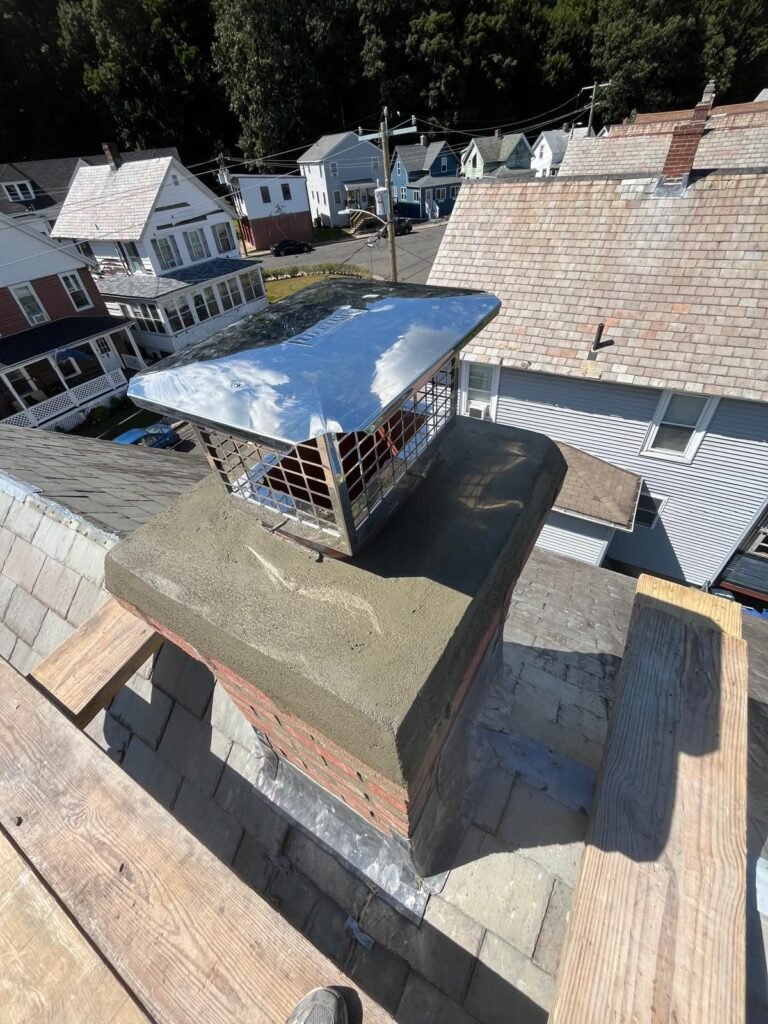
Close view of a brick chimney with fresh mortar joints under a stainless steel cap
  1. White, chalky staining on the brick

    Efflorescence: salts left behind when water moves through the masonry and dries on the surface.

  2. Flaking or crumbling brick faces

    Spalling, where the face of a brick breaks off after water inside it freezes.

  3. Brick that stays dark long after rain

    Patches that hold water after the rest of the house has dried.

  4. Repairs that have just been finished

    New repointing or a new crown is the right moment to protect the masonry before the next winter.

  5. Damp or stains inside near the chimney

    Water that soaks through the brick can show up on walls and ceilings, just like a leak from the crown or the flashing.

Before any treatment, we find out where the water is getting in. If the cause is a cracked crown, failed flashing or open mortar joints, those come first; a treatment over them would not stop the leak.
What’s included

What chimney waterproofing covers

The written scope lists both columns for your chimney, so nothing is assumed.

Included

  • Assessment of the brick, the mortar and the crown above the roofline, with photos
  • Cleaning of the masonry surface so the treatment can soak in
  • Protection of the roof, the gutters and nearby surfaces
  • Application of a breathable, masonry-specific water repellent to every exposed face of the chimney
  • Photos of the finished chimney and a written note of the product used

Quoted separately

  • Repointing or brick replacement, if the masonry needs repair first
  • Crown repair or a new chimney cap
  • Flashing repair at the roofline
  • Removal of old paint or film-forming coatings, if a previous treatment has to come off
  • Anything found on site that changes the scope: you hear about it first
Options and process

How the visit goes

A water repellent only works on sound, dry masonry, so the visit starts by checking whether the chimney is ready. We tell you what applies to your chimney, and why, before quoting.
Before the visit
Nothing to prepare indoors

The work happens on the roof. Keep the area below the chimney clear so we can set a ladder safely.

Roof access
During the visit
Assess, photograph, explain

We check the brick, the mortar, the crown and the flashing, find where water is getting in, and talk you through the photos.

Photos
After the visit
Written scope, then the work

You get a written scope and price. The treatment goes on in dry weather, after any repairs, and you get photos of the finished chimney.

Written quote

How the approach is chosen

  • Treat now

    The masonry is sound and the crown and the flashing are in good shape. The chimney is cleaned and treated.

  • Repair, then treat

    Some joints are open or the crown is cracked. Those repairs are done first, and the treatment follows once the new work has cured.

  • Hold off

    The masonry is too far gone for a treatment to help, or the chimney needs rebuilding above the roofline. We say so, and quote the repair instead.

Evidence

Real work, shown honestly

5.0
★★★★★

Average from 81 Google reviews

  • Licensed & insured
  • 15 years of hands-on work
  • National Chimney Sweep Guild member
Read all reviews on Google

Chimney waterproofing across Connecticut

We waterproof chimneys in Fairfield, New Haven, Hartford, Middlesex, New London, Litchfield, Tolland and Windham counties. Water repellents need dry, mild weather to go on and cure, so most waterproofing here is scheduled from late spring to early fall.

See your service area for local details.

Cost

What sets the price

We don’t publish a flat price, because chimneys differ in size, exposure and condition. These four things move the quote.

Chimney size

The exposed area of brick above the roofline sets how much material and time the treatment takes.

Condition of the masonry

Sound brick is cleaned and treated. Open joints or spalling are repaired first and quoted alongside.

Height and roof pitch

Steep roofs and tall chimneys need more staging and safety setup, and that is part of the price.

Old coatings

A chimney that was painted or sealed with a film-forming product may need that coating removed first.

How the quote works

The assessment comes first. You then get a written scope and price for the treatment, with any repairs listed separately, so you can decide piece by piece.

The price we quote is the price you pay.

Questions about a quote?
(959) 666-6406

Sun–Thu 8am–8pm · Fri 8am–4pm · Sat closed

Financing

Financing is available

Larger projects such as liners, rebuilds and major repairs can be financed. Ask when you request service and we’ll walk you through the options for your project.

Questions

About chimney waterproofing

What people ask before booking a waterproofing assessment.

Sun–Thu 8am–8pm · Fri 8am–4pm · Sat closed

Is chimney waterproofing the same as sealing or painting the brick?

No. Paint and many sealers form a film on the surface that traps moisture inside the brick. A masonry water repellent soaks in and keeps liquid water out while letting water vapor escape, which is what brick needs to get through freeze-thaw winters.

Can waterproofing fix a leaking chimney?

Only if the brick itself is where the water gets in. Most chimney leaks come from the crown, the flashing or a missing cap, and a treatment won’t seal those. We find the source first and tell you what will actually stop the water.

How long does chimney waterproofing last?

It depends on the product and on how exposed the chimney is. A good masonry repellent lasts for years, not months. We tell you what to expect from the product we use, and we check it whenever we’re back for other work.

Should waterproofing be done right after repointing?

Not on the same day. New mortar needs time to cure before it is treated, so waterproofing follows the repairs once the new work has set, in dry weather.

Will waterproofing change how my chimney looks?

A breathable repellent soaks into the brick rather than sitting on it, so the chimney should keep its normal look. The brick can look darker for a while as the treatment dries.

Request service

Request a waterproofing assessment

Tell us what you’re noticing on the brick and whether any repairs have been done recently. If you have photos of the chimney, say so and we’ll ask for them on the call.

Sun–Thu 8am–8pm · Fri 8am–4pm · Sat closed

After you send it
  1. 1We call you back to talk through what you’re seeing.
  2. 2Together we set a visit time that works for you.
  3. 3On site we look, photograph and explain before anything is quoted.

Sending a request doesn’t book an appointment. We’ll call you back to talk it through and confirm a time.

No obligation. We never share your details.