Featured guide
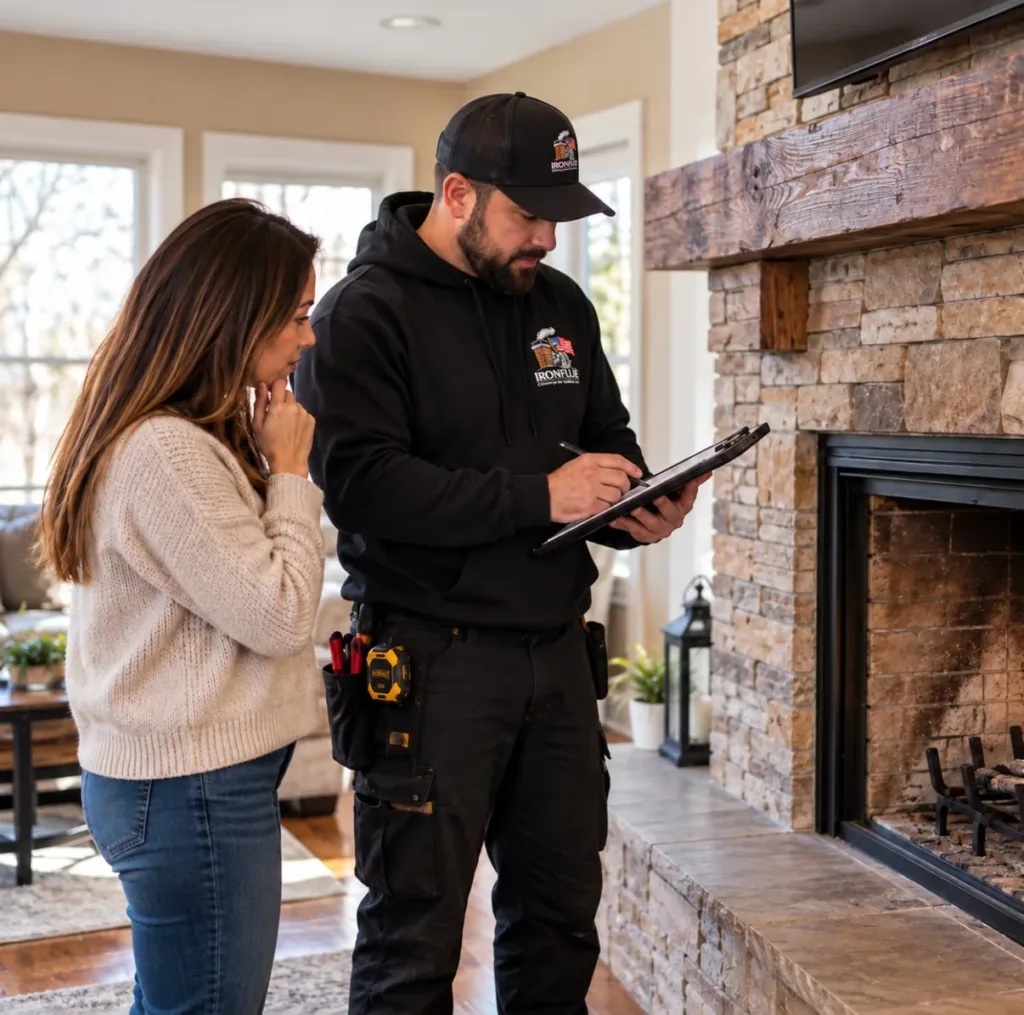
How often should a chimney be inspected? Levels 1 and 2 explained
Once a year is the standard, even for a fireplace you rarely use. Here’s what Level 1 and Level 2 inspections mean and what should move your date up.

Once a year is the standard, even for a fireplace you rarely use. Here’s what Level 1 and Level 2 inspections mean and what should move your date up.
Showing all 13 guides
Clear filters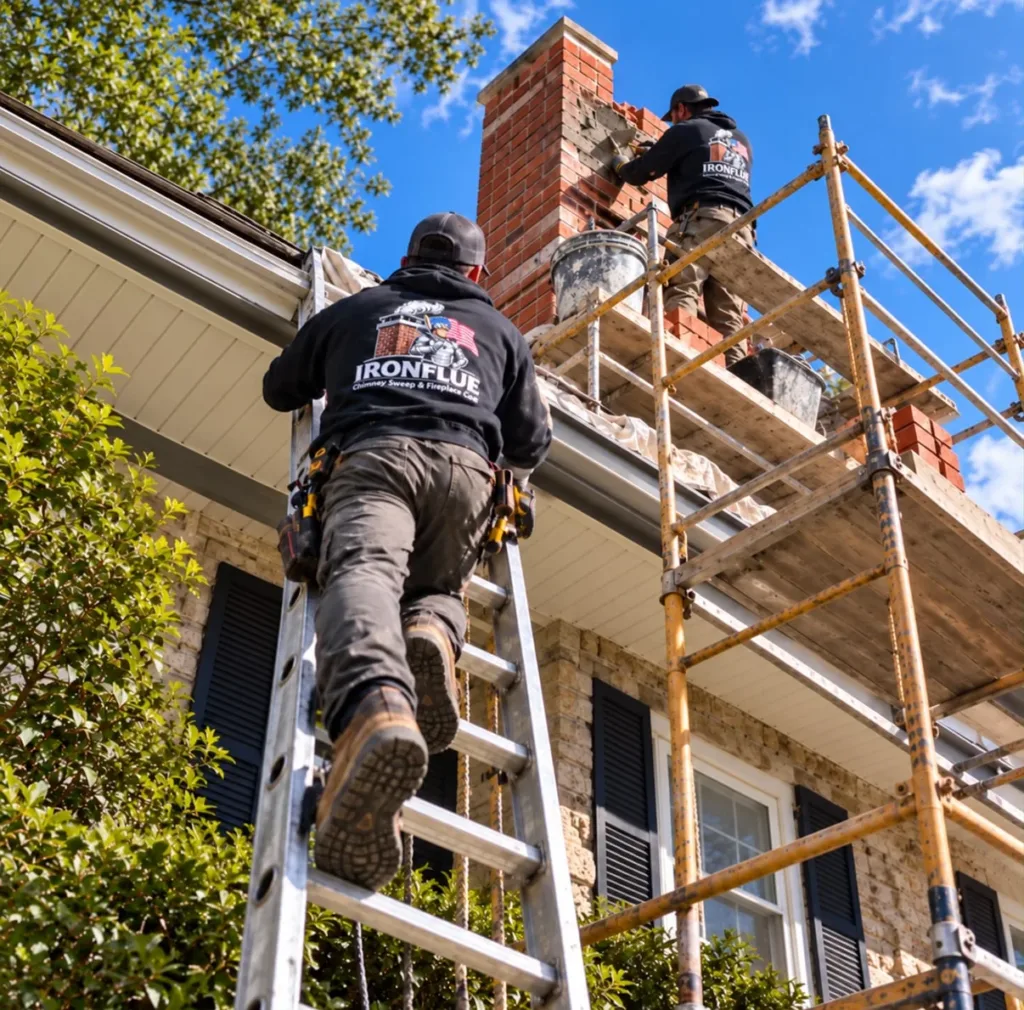
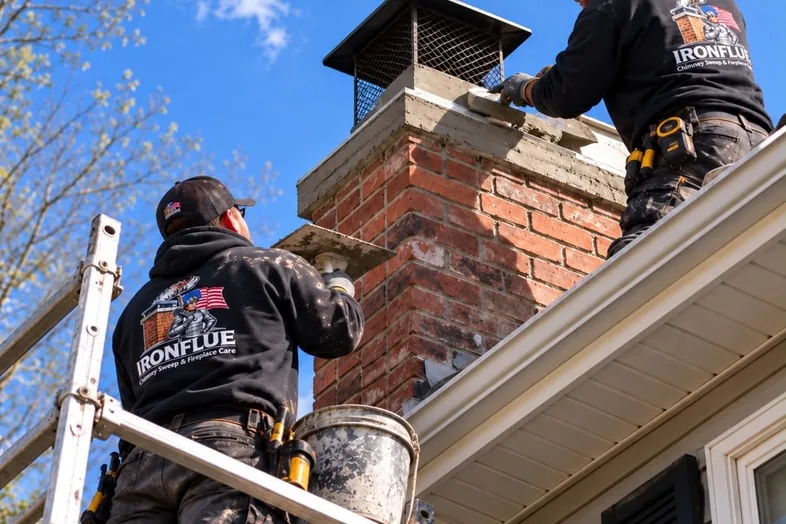
How to tell whether a damaged chimney needs repointing, a partial rebuild or a full rebuild, and what a rebuilt chimney has to meet in Connecticut.
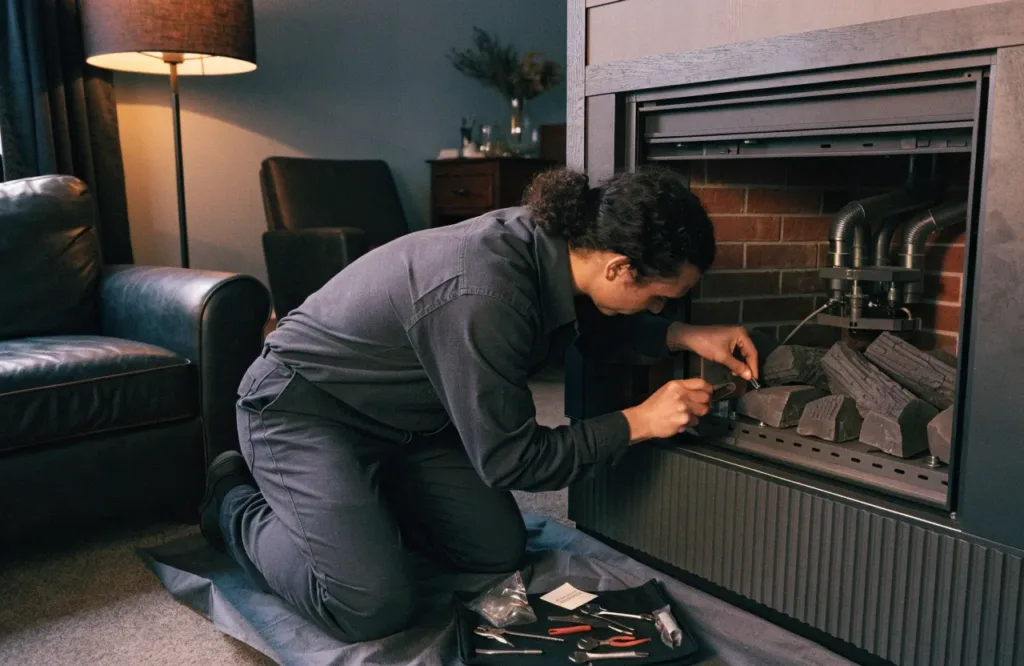
What a yearly gas fireplace service covers, how the pilot and glass work, and which jobs are yours, the technician’s or the gas company’s.
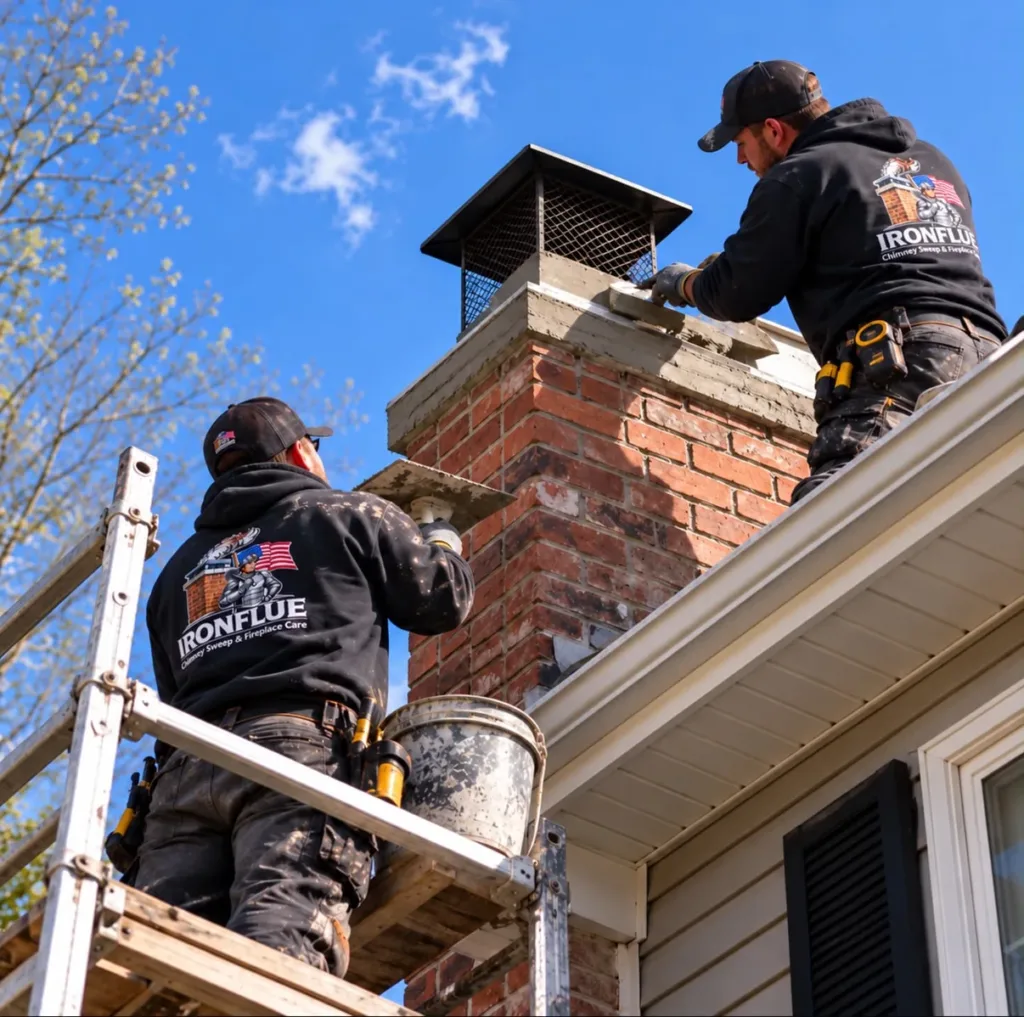
What the crown on top of your chimney is for, what a properly built one looks like, why crowns crack and when sealing is enough.
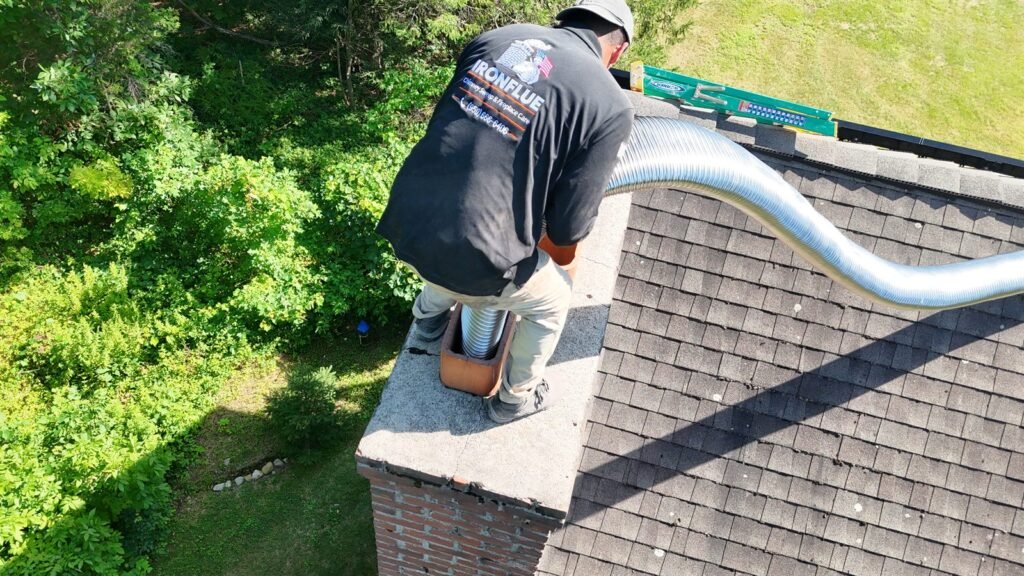
What a chimney liner does, how clay, stainless and cast-in-place liners differ, and the changes that mean your chimney needs a new one.
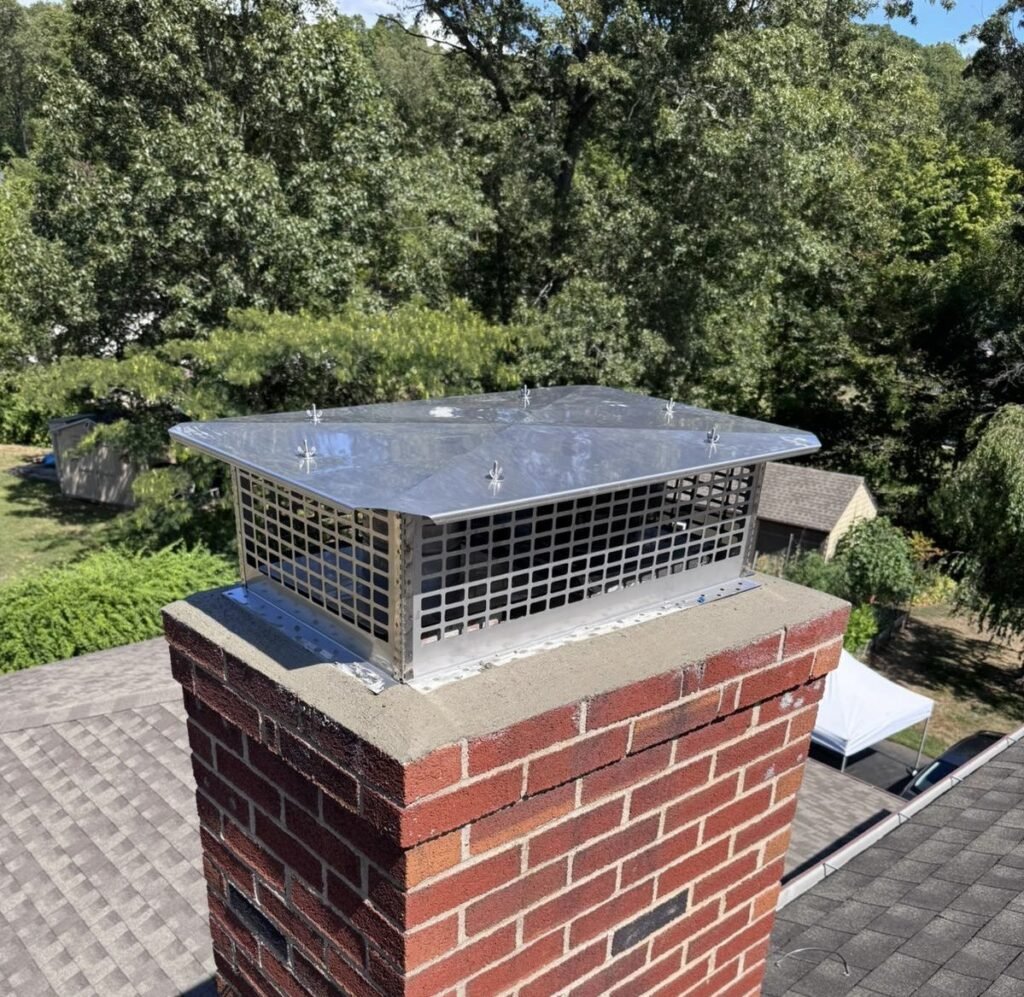
Chirping in the flue or nest material in the firebox? How to tell which animal it is, what the law allows, and how to keep the next one out.
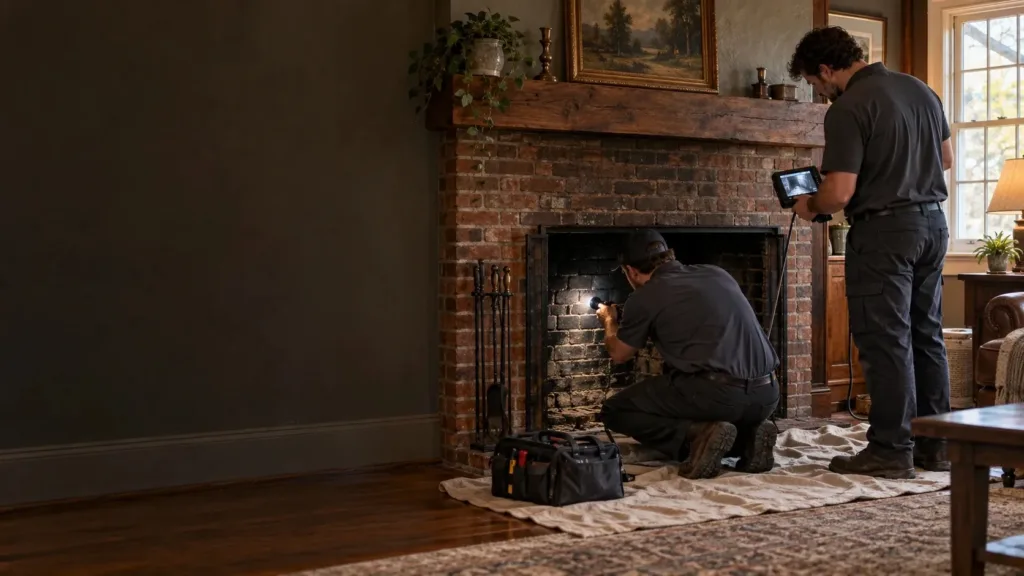
Smoke in the room usually comes down to air: a closed damper, a cold flue, a house pulling against the chimney, or a flue that’s blocked or the wrong size.
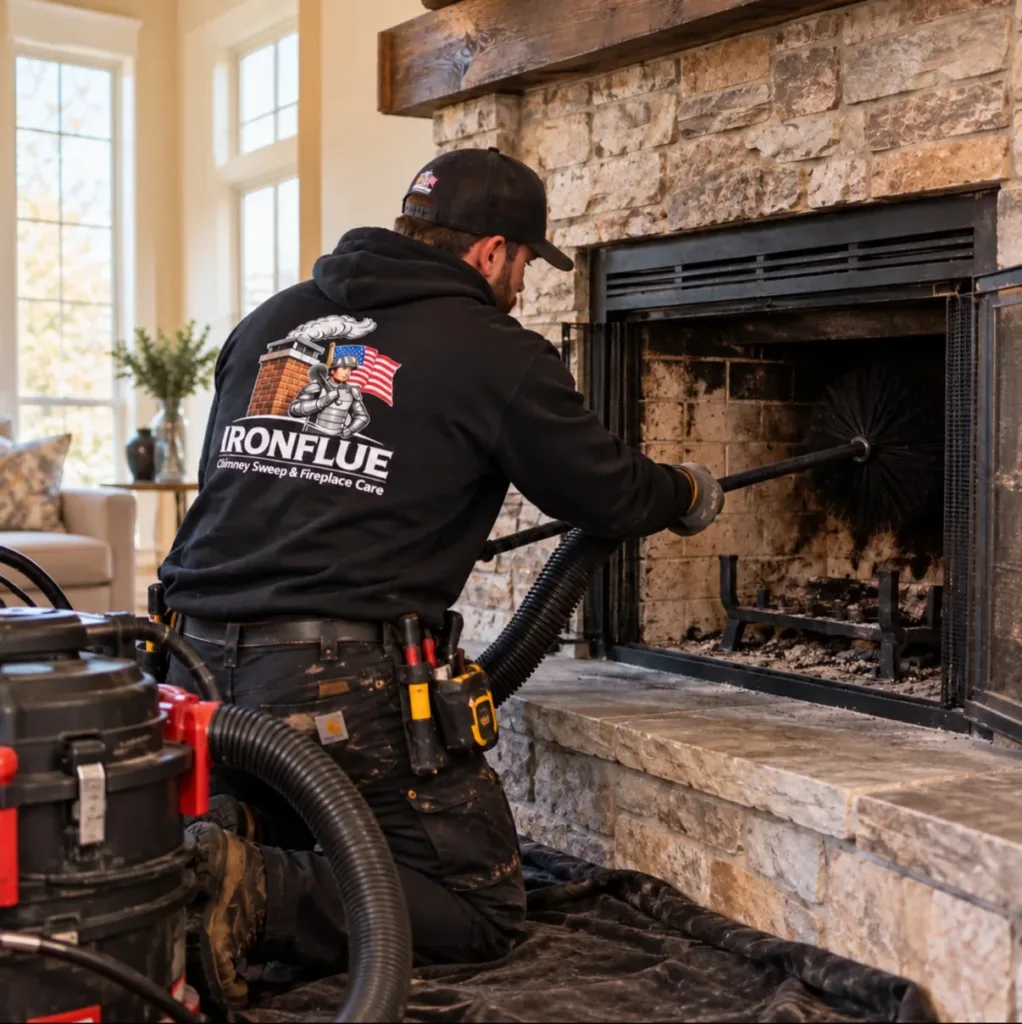
Some chimney fires roar; others burn quietly and leave clues. How to recognize both, what to do in the moment, and what must happen before the next fire.
Once a year is the standard, even for a fireplace you rarely use. Here’s what Level 1 and Level 2 inspections mean and what should move your date up.
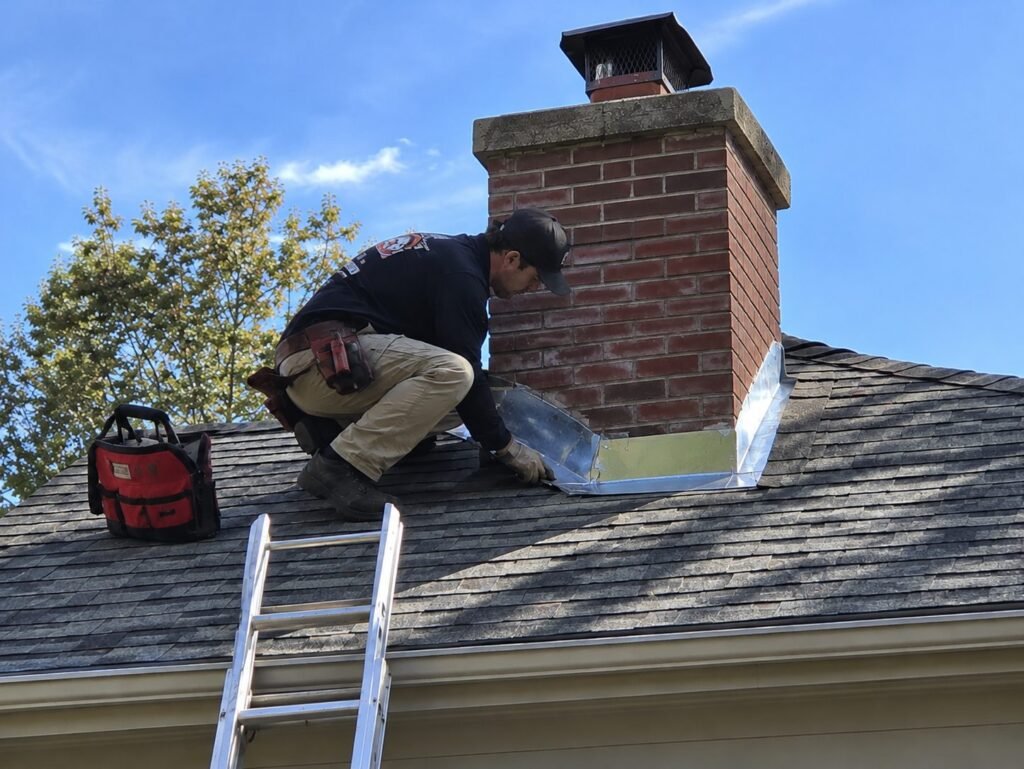
Stains, rust, white deposits and flaking brick: what each sign of a chimney leak looks like and where the water is probably getting in.
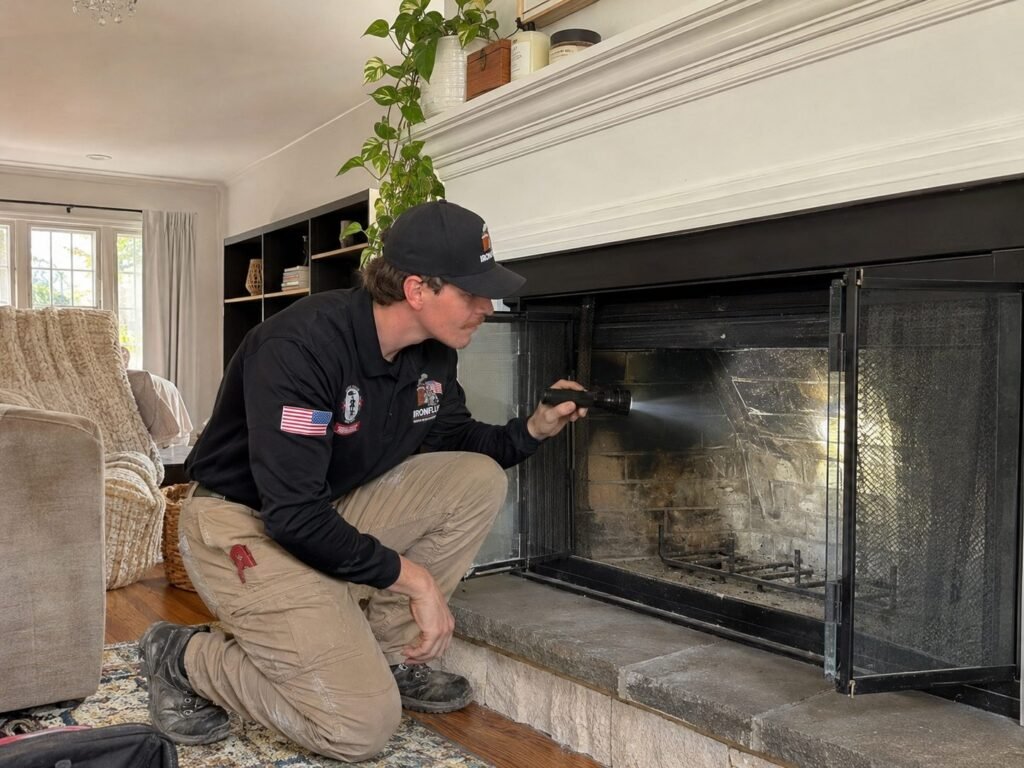
A fall checklist for Connecticut fireplaces: what to book, what to check yourself, and how to buy, stack and burn firewood that’s actually dry.
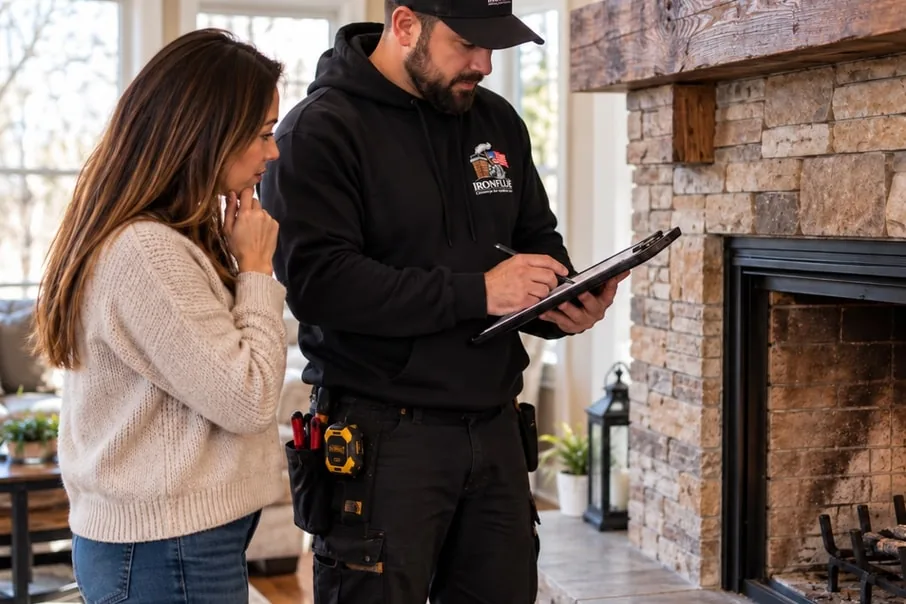
What a general home inspector checks on a chimney, what they don’t, and how to fit a Level 2 chimney inspection into a Connecticut purchase.
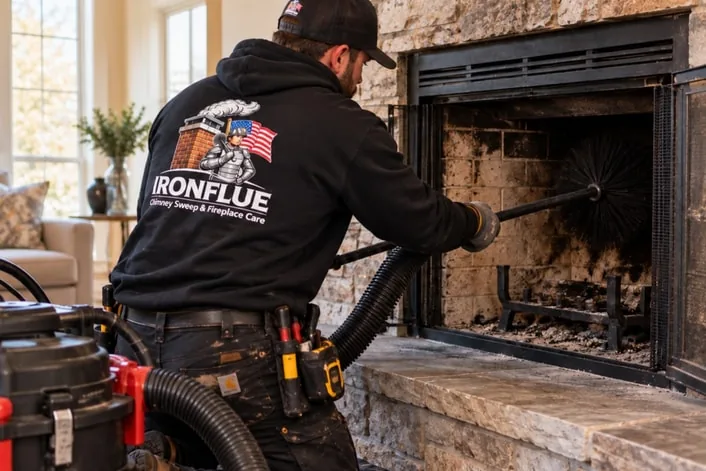
A sweep removes soot and creosote; an inspection judges whether the chimney is safe to use. Here’s what each covers and how often you need each one.
Findings, scope, materials, permits, dates and warranty: how to read a chimney repair estimate, plus Connecticut contract rules to check before signing.