A chimney repair estimate turns an inspection report into a plan and a price. A good one lets you see what’s being fixed, why, and what each part costs. A thin one, such as a single line reading “chimney repair” and a total, leaves you guessing what you’re buying and makes a second opinion almost impossible to compare.
Here’s what a solid written estimate contains, line by line, how to compare two of them, and the Connecticut consumer rules worth checking before you sign anything.
What should a chimney repair estimate include?
Read the estimate with your inspection report open beside it. Each of the following belongs in writing.
Findings, with photos
Every proposed repair should trace back to a specific finding: a cracked crown, lifted flashing, eroded mortar joints, a broken flue tile. Photos make the link easy to follow. CSIA’s Level 2 inspection procedure has the inspector discuss the findings with the homeowner and hand over a copy of the report, so a recommendation shouldn’t have to be taken on faith. If a line on the estimate doesn’t match anything in the report, ask why it’s there.
Scope, one component at a time
A chimney is several parts, and a clear estimate treats each one separately: the crown (the concrete slab on top), the flashing (the metal seal where the chimney meets the roof), the cap, the masonry (brick and mortar joints), the flue liner (the channel that carries smoke and gases out), the smoke chamber (the sloped area above the fireplace damper) and the damper. For each one, look for what’s coming out, what’s going in, and how much of the chimney is involved. “Replace the crown with a cast crown that overhangs each side” or “repoint the mortar joints above the roofline on all four sides” tells you far more than “masonry repair.”
Materials, by name or grade
Connecticut’s Department of Consumer Protection (DCP) says a home improvement contract should set out the whole agreement, including the quality or brand of materials. On a chimney job, that means the crown material, the flashing metal, the cap, and the mortar or sealant products.
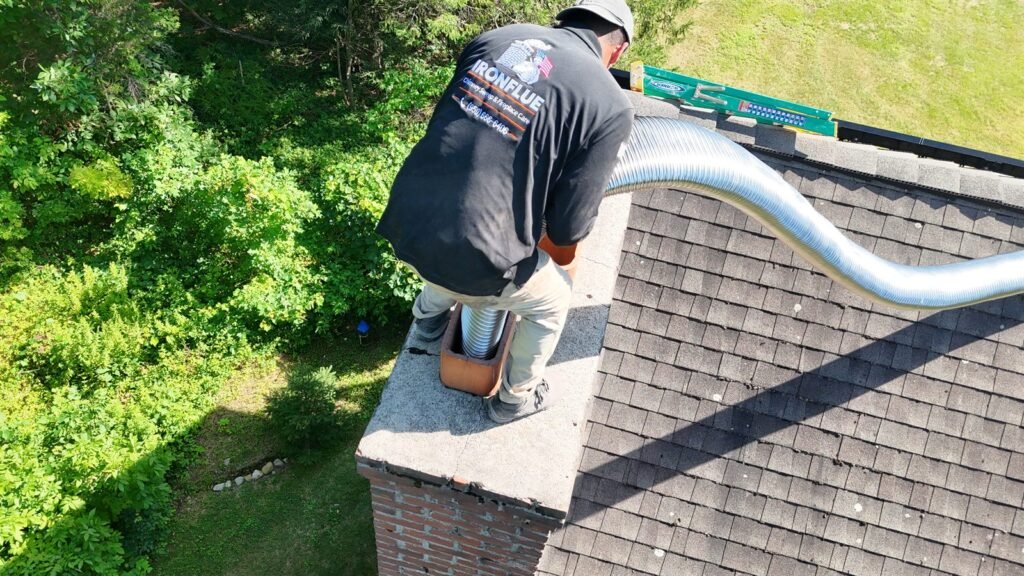
If the work includes a new flue liner, look for the make, model and size. The 2021 IRC portion of Connecticut’s State Building Code accepts listed and labeled chimney lining systems that comply with UL 1777, the standard for chimney liners, and requires listed liners to be installed according to their listing and the manufacturer’s instructions. Size matters too: CSIA’s procedure has the inspector confirm that a flue is properly sized for the appliance it serves. (IronFlue Chimney installs stainless steel chimney liners.)
Exclusions and assumptions
What isn’t included matters as much as what is. Look for a plain statement of anything left out, such as roofing work around new flashing, interior plaster or paint after a leak, or work on a second flue, and of how the contractor will handle damage that only becomes visible once work starts.
Permits, dates and cleanup
DCP lists more items a contract should settle: who obtains any building permits from the town, who cleans up the worksite, and four dates (when you sign, when work starts, when it should be finished, and the last day you can cancel). If the contractor is pulling the permit, DCP’s 2026 guidance suggests calling your local building official to confirm the correct permit was issued.
Price and payment schedule
The total should be broken down by component, so you can see what each repair costs and decide whether to do everything now or stage the work. DCP also expects the contract to include a payment schedule, so you know what’s due and when.
Warranty terms
If a warranty is offered, get the terms on paper: what it covers, for how long, and what the contractor will do if the repair fails. The Federal Trade Commission’s warranty guidance points out that a business may later refuse to honor a promise that was never written down, and that you should assume anything not listed as covered isn’t.
How do you compare two chimney repair quotes?
Totals only mean something when the scopes match. Line the estimates up component by component and check whether each one addresses the same findings. One may replace the crown while the other seals it; one may include new flashing while the other leaves it out; one may name a listed liner while the other just says “liner.”
When the prices are far apart, ask each contractor to walk you through their scope. The answers show which findings each quote treats and how, which is a fairer comparison than the bottom line.
Connecticut home improvement rules to check before you sign
What follows is consumer information summarized from DCP’s published guidance, not legal advice. Rules can change, so check DCP’s own pages, linked here, or contact the department about your situation.
Is the contractor registered?
DCP says anyone contracting with a consumer to do home improvement work on residential property must register with the department. Its definition of home improvement is broad: any permanent change to residential property, with roofs and waterproofing among the listed examples, while contracts under $200 are excluded. You can check whether a contractor’s registration is active on the state’s eLicense lookup. DCP calls hiring a registered contractor your strongest protection against financial loss on a home improvement job.
What must the written contract include?
DCP says Connecticut law requires a written contract for home improvement projects. According to its guidance, the contract should include:
- The contractor’s Home Improvement Contractor (HIC) registration number.
- Four dates: signing, start, expected completion, and the last day you can cancel.
- The entire agreement on work and price, including materials, worksite cleanup, permits and the payment schedule.
- A notice of your right to cancel, attached to the contract, provided in duplicate and placed near your signature.
- Signatures and dates from both parties, with a signed, dated copy given to you.
How long do you have to cancel?
DCP explains that under the Home Solicitation Sales Act you can cancel a home improvement contract until midnight on the third business day after signing. Saturday counts as a business day; Sundays and listed state holidays don’t. No work should begin during that cooling-off period. If an emergency requires immediate work, DCP says a homeowner may sign a waiver of the right to cancel, so read any waiver carefully, because it gives up that window.
DCP’s 2025 reminder also suggests asking for proof of general liability insurance of at least $20,000 and calling the insurer to confirm the policy.
Red flags in a chimney repair quote
- A single line and a single price, with no breakdown by component.
- No HIC registration number on the contract.
- Pressure to sign the same day or to pay a large deposit fast, which DCP treats as a warning sign.
- A demand for the deposit in cash or through a payment app; DCP advises never paying deposits that way.
- A request that you get the building permits yourself, which the FTC lists among the signs of a home improvement scam.
- Spoken promises about warranty, cleanup or extra work that never make it onto paper.
How IronFlue Chimney puts a repair scope together
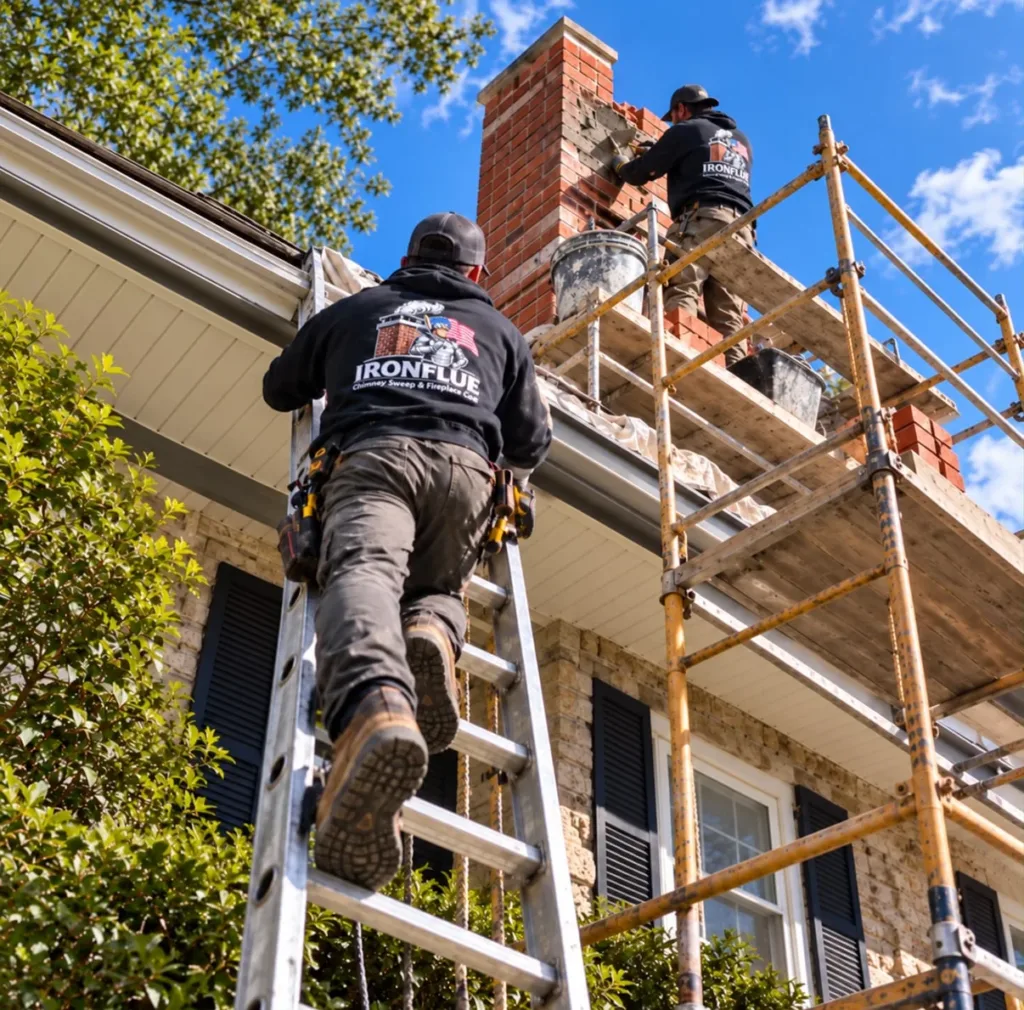
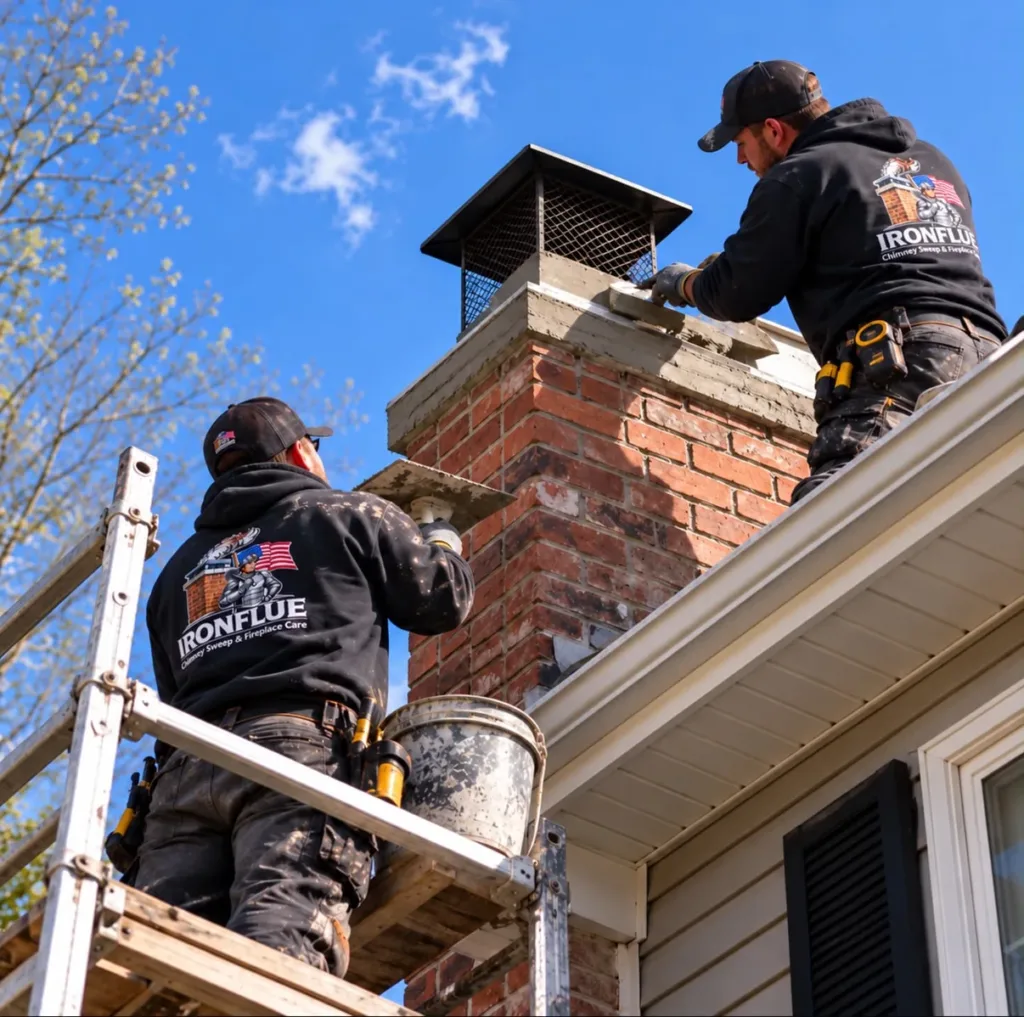
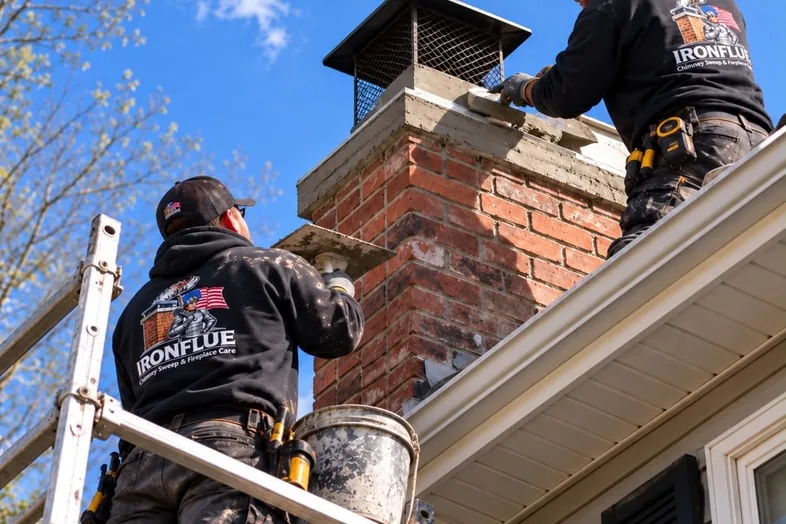
When we inspect a chimney, we photograph what we find and explain it in plain language. Before any repair, you get a written scope, and we confirm the price and scope with you before the work is booked. During the job we protect your home and leave it tidy, and when we’re done we walk you through what was repaired. You can see the work we handle on our chimney repair page.
If your estimate stems from water problems, our guide to the signs of a chimney leak explains where water usually gets in. If you don’t have a recent report to compare an estimate against, a Level 2 camera inspection documents the chimney from the roof, the attic and inside the flue.
Weighing a chimney repair quote in Connecticut, or need one to weigh? Contact IronFlue Chimney and we’ll start with the findings and a written scope you can read line by line.