A chimney liner, also called a flue liner, is the inner skin of the chimney: the clay tile, metal pipe or poured lining that smoke and exhaust actually travel through. You can’t see it from the living room, so the question usually comes up when something changes: a new stove or insert, a furnace swap, a switch to gas, or an inspection report that mentions cracked tiles.
Here’s what a liner does, how the three main types differ, and the situations where a new liner or relining is actually needed.
What does a chimney liner do?
The brick shell of a chimney is built to stand up to weather. The liner is the part built to handle heat and exhaust, and a sound one does three jobs.
- It keeps heat away from the house. The Chimney Safety Institute of America (CSIA) explains that when flue tiles crack and the mortar between them is displaced, it opens a path for flames to reach the wood framing of the house.
- It stands up to corrosive exhaust. Flue gases carry moisture and acids. CSIA notes that modern high-efficiency gas furnaces produce exhaust with high levels of water vapor, which makes conditions inside the flue more corrosive than they used to be.
- It gives the flue the right size. A flue matched to the appliance drafts well. One that’s too large or too small doesn’t, which is covered in more detail below.
Does every chimney need a liner?
Every masonry chimney does. Connecticut’s residential building code, which is based on the 2021 International Residential Code, states that “masonry chimneys shall be lined,” with lining material appropriate for the type of appliance connected. It accepts four options: clay flue lining that meets ASTM C315, listed and labeled lining systems that comply with UL 1777, factory-built chimneys listed for installation inside a masonry chimney, and other approved materials that resist corrosion, softening and cracking from flue gases.
That doesn’t mean every chimney has one. A Journal of Light Construction article on relining points out that chimneys built before the early 1900s seldom have tile liners, which matters in a state with as many older homes as Connecticut. Others have tile liners that have since cracked or broken apart from heat. CSIA’s inspection procedure for masonry fireplaces says these fireplaces generally need a clay flue tile lining, a listed chimney liner system or a factory-built chimney with an approved adaptor plate.
Factory-built (prefabricated) fireplaces work differently. The metal chimney supplied with the unit is its flue, so it’s inspected and maintained rather than fitted with a separate liner. CSIA says a factory-built metal chimney damaged by a chimney fire should no longer be used and must be replaced.
Clay tile, stainless steel or cast-in-place: what’s the difference?
Clay tile liners
Square or rectangular terracotta sections stacked inside the masonry as the chimney goes up. The code requires them to run from at least 8 inches below the lowest inlet, or from the top of the smoke chamber in a fireplace, to a point above the chimney walls. Clay has two known weak spots: CSIA notes that tiles can crack from the thermal shock of a chimney fire, and that clay liners can flake under the corrosive conditions created by modern gas furnaces, leaving debris that can block the flue.
Stainless steel liners
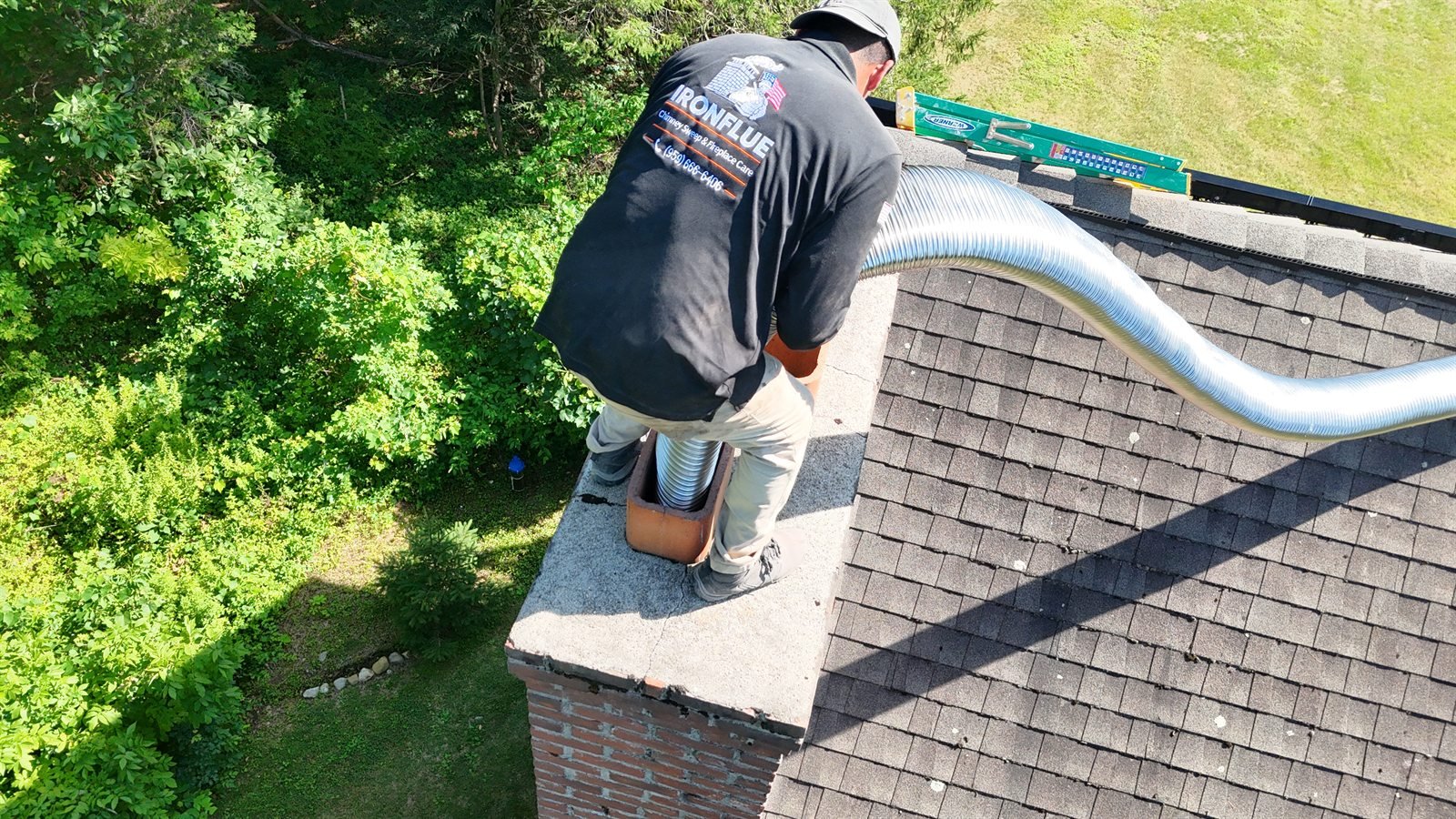
A round stainless pipe, rigid or flexible, run down through the existing flue and connected to the appliance. Look for a system listed to UL 1777, as the code requires. Insulation matters here: CSIA says liners for gas and oil appliances don’t require insulation, but liners serving solid-fuel appliances do, and it recommends insulating every liner on a wood-burning appliance with blanket insulation or an expanded mica or masonry insulation. See our stainless steel liner service.
Cast-in-place liners
A cement-based mix poured or pumped into the chimney around a form, such as an inflatable tube that’s deflated and pulled out once the mix sets. The JLC article describes how the mix fills voids and gaps in the old masonry, which is why poured liners are used to restore badly deteriorated chimneys, and lists fireplaces, wood or coal stoves and oil or gas appliances among their uses. Like any liner, it has to be a listed or otherwise approved system under the code.
When do you need a new chimney liner?
These are the situations where a liner most often becomes the question.
- You’re adding or changing an appliance. CSIA advises that a masonry chimney without a liner will need one for a new appliance, whatever the fuel, and that switching from a wood insert to a gas insert generally means changes such as adding a liner.
- You’re switching to gas or replacing a furnace. Gas exhaust runs cooler than wood smoke and can carry a lot of water vapor. The American Society of Home Inspectors (ASHI) explains that a flue that’s too large won’t heat up enough to draft, and that condensation can form, producing acidic water that can badly damage a chimney in a short time. Our furnace and water heater liners page covers that case.
- Tiles are cracked, gapped or missing. Much of a liner can’t be seen from the firebox. CSIA’s Level 2 inspection procedure has the inspector report any cracks or gaps found in the liner during the video scan.
- There’s been a chimney fire. CSIA says the heat can melt mortar, crack tiles and make liners collapse, and its inspection procedures call for a Level 2 inspection after a chimney fire.
- The chimney has no liner at all. It doesn’t meet the current code for a masonry chimney, and CSIA says any new appliance connected to it will need one.
Why does chimney liner size matter?
A liner is sized to what it serves. The Connecticut code says a chimney flue can’t be smaller in area than the connector from the appliance. For a masonry fireplace, one of the code’s sizing options calls for a round flue with a cross-sectional area of at least one-twelfth of the fireplace opening.
Too large is a problem as well, especially for gas. CSIA notes that after a switch from wood to gas, the old flue may be too large and a new, smaller liner might be needed. That’s also why the Level 2 procedure has the inspector measure the inside of the flue, decide whether it’s properly sized for the appliance’s requirements and, if changes are planned, recommend the proper flue size.
How do you find out whether your liner is still sound?
You can’t judge a liner from the fireplace opening or the yard. Under NFPA 211, CSIA recommends a Level 2 inspection when you plan to line or reline a chimney, when you’re changing to a dissimilar appliance, and after a chimney fire. That level requires a video scan of the flue interior, a look at any offsets where the flue bends, and a measurement of the flue. Our Level 2 camera inspection covers all of that.
If the camera shows a problem, IronFlue Chimney walks you through the photos in plain language and puts the recommended liner repair or relining in a written scope before any work starts. If a new gas insert or stove is part of the plan, we also handle gas fireplace service and wood stove service. Our guide to reading a chimney repair estimate shows how a liner should be described on paper.
Planning a new stove, insert or gas conversion in Connecticut, or wondering what’s inside an older chimney? Contact IronFlue Chimney and we’ll arrange an inspection before you commit to the appliance.