Serving homes & businesses across Connecticut
Sun–Thu 8am–8pm · Fri 8am–4pm
Chimney Liners

Furnace & Water Heater Chimney Liners in Connecticut

Many Connecticut furnaces, boilers and water heaters still vent through an old masonry chimney. When that flue is too large, unlined or cracked, the exhaust cools, condenses and can spill back into the house. We inspect the flue, size a stainless steel liner to the appliances it serves, and install it from the connection at the base to the top of the chimney.
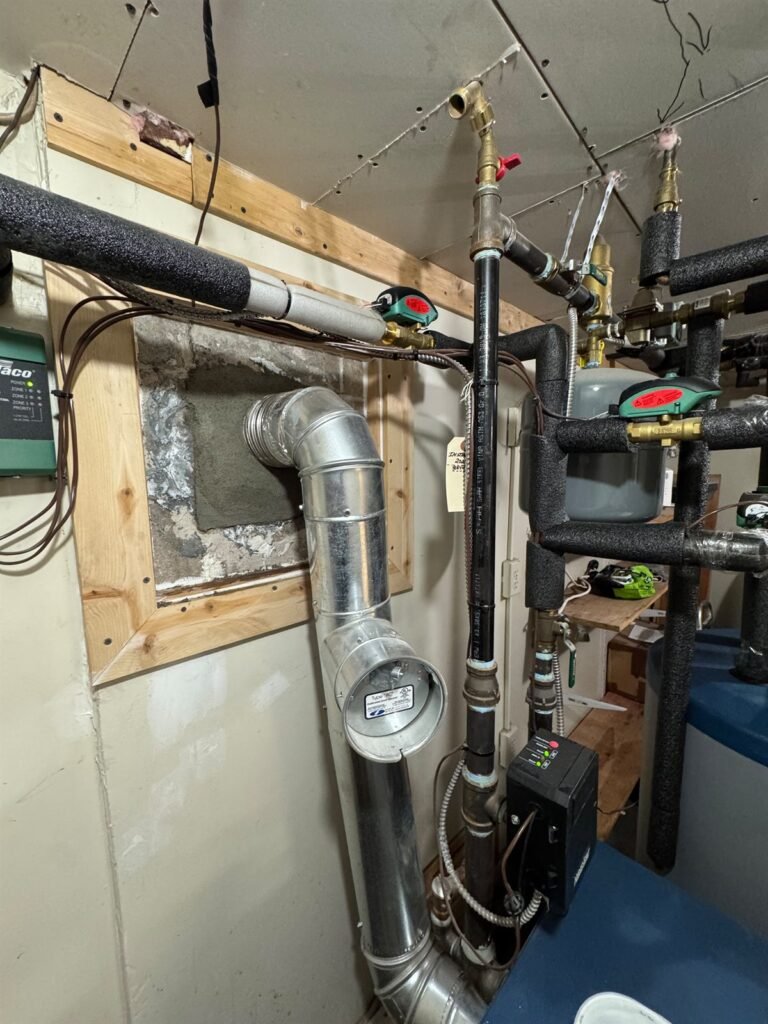
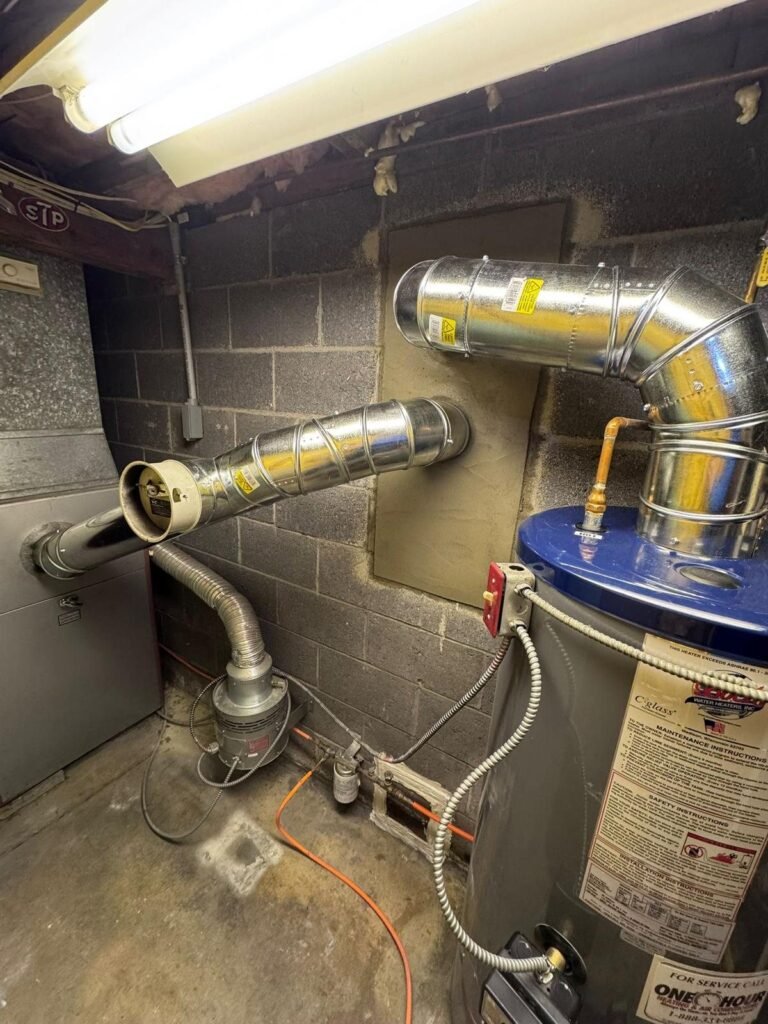
Vent connectors from a water heater and a furnace running into a masonry chimney in a basement
May suit you if
A gas or oil furnace, boiler or water heater that vents into a masonry chimney, especially after a new furnace or boiler was installed, or when the chimney shows staining, crumbling or moisture at the base.
The assessment establishes
Whether the flue is the right size and in sound condition for the appliances venting into it, and what size of liner they need.
Next step
A report with photos and camera footage, then a written scope and price for the liner. Nothing starts until you approve it.
The basics

Why furnace and water heater flues need the right liner

The exhaust from a gas or oil appliance carries water vapor. In a flue that is the right size, it stays warm enough to rise and leave the chimney before it condenses. In a flue that is too large or runs cold, as an outside masonry chimney often does in a Connecticut winter, the exhaust cools on the way up, the draft weakens, and the water condenses inside the chimney. That condensate is acidic, and over time it breaks down clay tiles and mortar.

A common cause is a new high-efficiency furnace or boiler that vents out the side wall through plastic pipe. The water heater is then left venting alone into a flue that was sized for both appliances, a situation often called an orphaned water heater. Appliance installation instructions call for the remaining venting to be checked and resized when an appliance is taken off a shared chimney. A stainless steel liner sized to the appliance that is left fixes the size and gives the exhaust a smooth, warm path out.

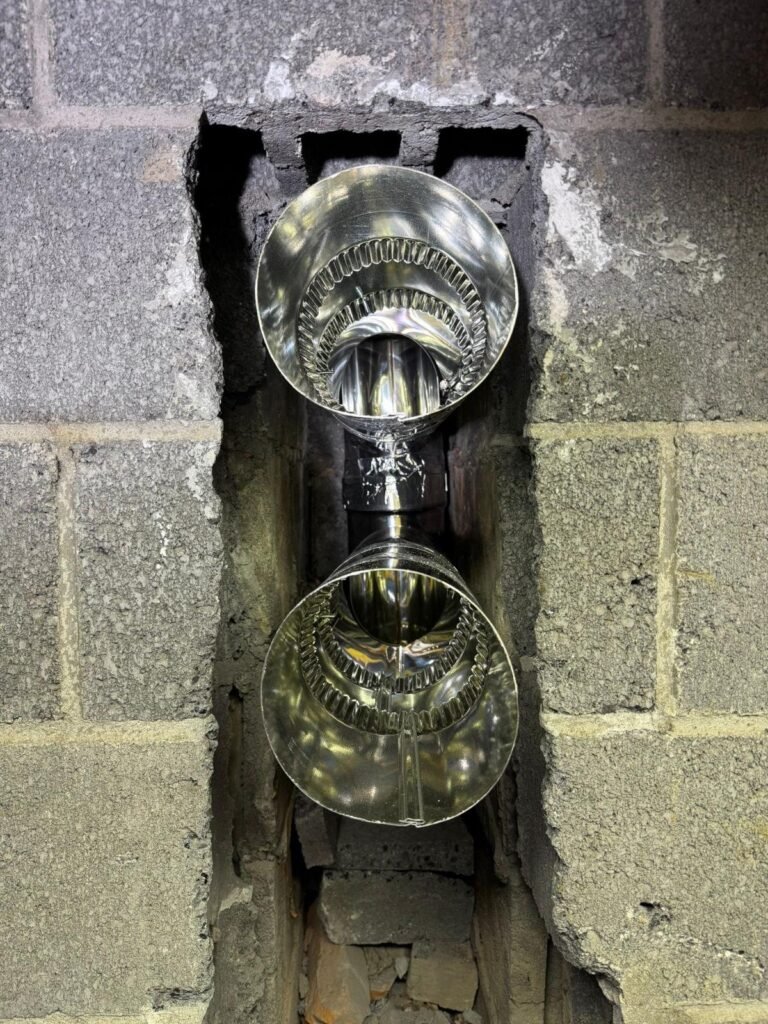
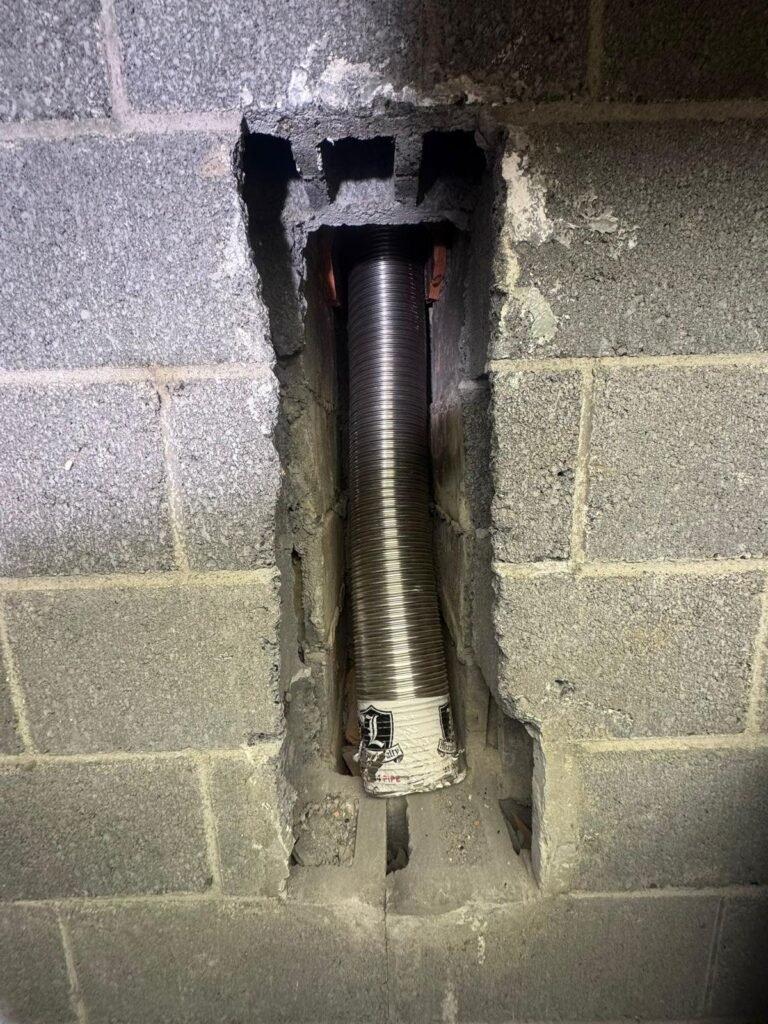
A flexible stainless steel liner installed inside a concrete block chimney, seen through the opening at its baseA stainless liner inside the old flue
The stainless steel tee at the base of a chimney liner, where the appliance connector joins itThe tee where the appliance connects
IronFlue Chimney job photos: a flexible stainless liner in a block chimney, and the tee at its base.
Signs worth a look

Signs the flue may need a liner

Most of these show up at the bottom of the chimney or on the outside, long before anyone looks inside the flue.
A boiler room with a stainless vent connector running from the boiler into the chimney
  1. A new furnace or boiler

    A high-efficiency unit now vents out the side wall, and the water heater is left alone in the old chimney flue.

  2. Moisture or rust at the base

    Water, rust flakes or crumbled tile at the cleanout door, or where the pipe enters the chimney.

  3. White staining on the brick

    A white, chalky film on the outside of the chimney can mean condensation is soaking through the masonry.

  4. Soot or scorching at the water heater

    Marks around the water heater’s draft hood can mean exhaust is spilling back instead of going up the flue.

  5. No liner, or a cracked one

    An inspection found an unlined flue, or clay tiles that are cracked, offset or missing.

If a carbon monoxide alarm goes off, leave the house and call 911 or your gas utility from outside. Once it’s safe, we inspect the chimney the appliance vents into.
What’s included

What a furnace and water heater liner job covers

The written scope lists both columns for your chimney, so nothing is assumed.

Included

  • A camera inspection of the flue, with the footage and photos in your report
  • Measuring the flue and sizing the liner to the appliances it will serve
  • A stainless steel liner running the full height of the flue, from the connection at the base to the top of the chimney
  • The tee or connection at the base, sealed where it enters the chimney
  • A cap on the liner at the top of the chimney
  • A report with photos of the finished liner

Quoted separately

  • Sweeping, booked separately
  • Work on the furnace, boiler or water heater itself
  • Gas line work, which is for a licensed gas technician
  • Breaking out old tiles to make room for the liner, quoted separately if needed
  • Crown, flashing or masonry repairs found on the visit
Options and process

How the job goes

The camera comes first, because the liner size and the work depend on what the flue looks like inside.
Before the visit
Tell us what vents into it

Tell us which appliances vent into the chimney, with the make and model if you have them, and whether any of them was replaced recently.

Appliances
During the visit
Camera and measurements

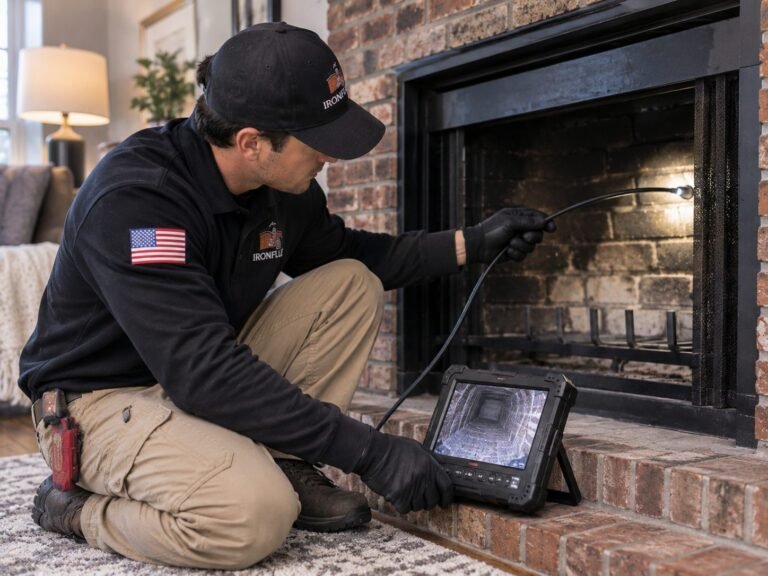
We run a camera through the flue, measure it, check the connection at the base, and show you what we find.

Camera
After the visit
Scope and price, in writing

You get a report with photos and a written scope and price for the liner. Once approved, the installation is booked.

Written quote

How the fix is chosen

  • Reline the existing flue

    When the chimney itself is sound, a stainless liner sized to the appliance runs inside the old flue and takes over the venting.

  • Resize for the appliance left behind

    When a furnace or boiler has moved to side-wall venting, the liner is sized to the water heater that still uses the chimney.

  • Repair the chimney too

    If the inspection finds a failing crown, open joints or damage from condensation, that work is scoped alongside the liner.

Evidence

Real work, shown honestly

5.0
★★★★★

Average from 81 Google reviews

  • Licensed & insured
  • 15 years of hands-on work
  • National Chimney Sweep Guild member
Read all reviews on Google

Furnace and water heater liners across Connecticut

We install furnace and water heater liners in Fairfield, New Haven, Hartford, Middlesex, New London, Litchfield, Tolland and Windham counties. Many older Connecticut homes still vent a furnace, boiler or water heater into a masonry chimney, and cold outside chimneys are where condensation does the most damage.

See your service area for local details.

Cost

What sets the price

We don’t publish one price, because chimneys and appliances differ. These four things move the quote.

Number of appliances

One water heater, or a furnace and a water heater sharing the flue, changes the liner size and the connection at the base.

Height of the chimney

The liner runs the full height of the flue, so a taller chimney takes more liner.

Condition of the old flue

Broken or offset tiles may have to be removed before the liner can go in.

Roof access

A steep roof or a tall chimney takes more setup at the top.

How the quote works

The inspection comes first. You then get a written scope and price for the liner, with the photos that show why, and decide before anything is booked.

The price we quote is the price you pay.

Questions about a quote?
(959) 666-6406

Sun–Thu 8am–8pm · Fri 8am–4pm · Sat closed

Financing

Financing is available

Larger projects such as liners, rebuilds and major repairs can be financed. Ask when you request service and we’ll walk you through the options for your project.

Questions

About furnace and water heater liners

What people ask about lining a chimney for a furnace, boiler or water heater.

Sun–Thu 8am–8pm · Fri 8am–4pm · Sat closed

Why does my water heater need a liner after the furnace was replaced?

A new high-efficiency furnace usually vents out the side wall, so the water heater is left alone in a chimney flue that was sized for both. Its smaller, cooler exhaust doesn’t draw well in that much space, and the moisture in it condenses inside the chimney. A liner sized to the water heater gives it a flue it can vent through properly.

Does a gas or oil furnace chimney need a liner?

It needs a flue that is the right size and in sound condition for that appliance. Many older Connecticut chimneys are unlined, or have clay tiles that have cracked over the years, and that is where a liner comes in. An inspection shows which one you have.

What are the signs of condensation damage in a chimney?

White staining on the outside brick, crumbling mortar or pieces of tile at the base, rust or water at the cleanout door, and damp patches on walls next to the chimney. The damage usually starts inside the flue, so it is often well along by the time it shows outside.

What kind of liner do you install?

A stainless steel liner, sized to the appliances that vent into the chimney and to the height of the flue. The size and type are in the written scope before anything is ordered.

Do you work on the furnace or water heater itself?

No. We line and repair the chimney the appliance vents into. The furnace, boiler or water heater, and the gas line, are for your heating contractor or a licensed gas technician.

Is an inspection needed first?

Yes. The flue has to be seen and measured before a liner can be sized, so every liner job starts with a camera inspection. NFPA 211 calls for a Level 2 inspection when an appliance is replaced or the venting changes, and a Level 2 camera inspection is $129.

Request service

Request a furnace or water heater liner visit

Tell us which appliances vent into the chimney, whether a furnace, boiler or water heater was replaced recently, and what you’ve noticed: moisture at the base, staining on the brick or a carbon monoxide alarm.

Sun–Thu 8am–8pm · Fri 8am–4pm · Sat closed

After you send it
  1. 1We call you back to talk through what you’re seeing.
  2. 2Together we set a visit time that works for you.
  3. 3On site we look, photograph and explain before anything is quoted.

Sending a request doesn’t book an appointment. We’ll call you back to talk it through and confirm a time.

No obligation. We never share your details.