
Chimney Tuckpointing & Masonry Repair in Connecticut
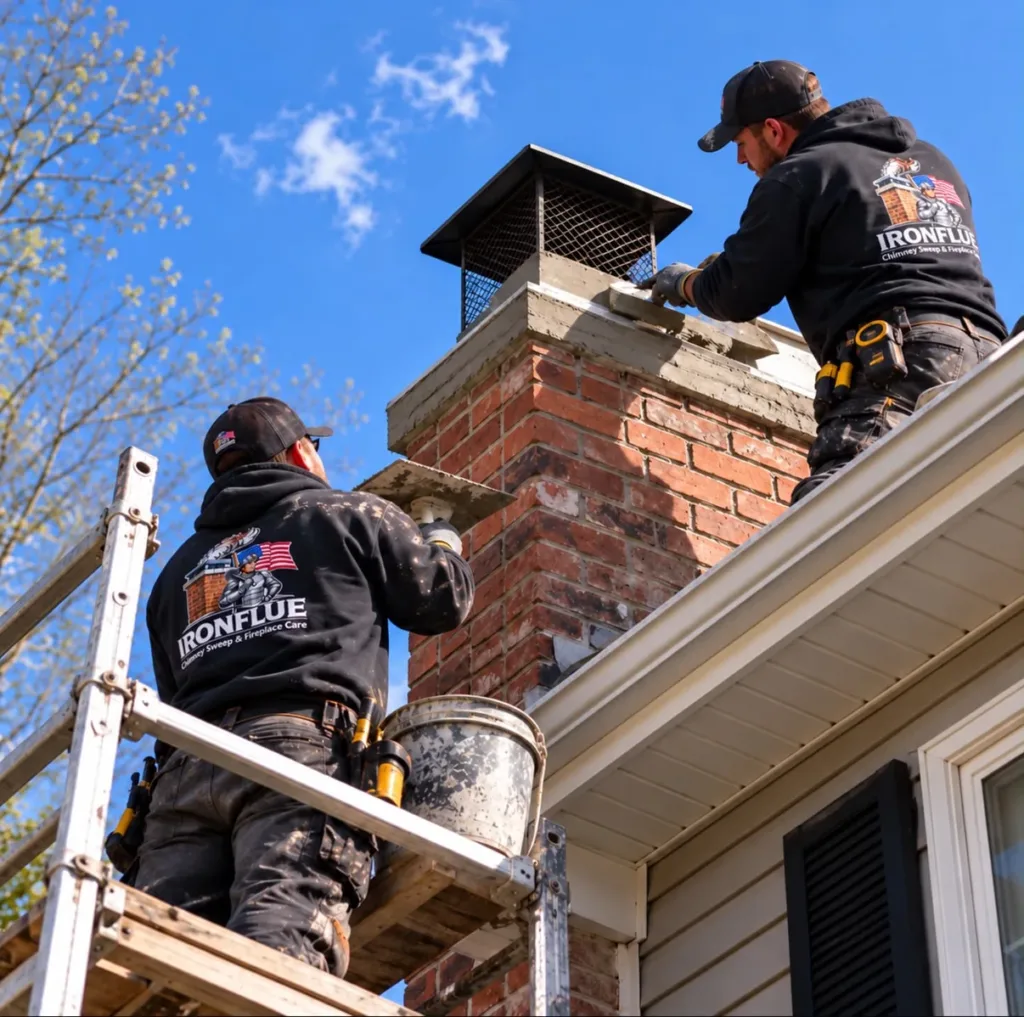
- May suit you if
- A chimney whose bricks are still sound but whose mortar joints are crumbling, recessed or cracked, with a few spalled or cracked bricks, or white staining from water moving through the masonry.
- The assessment establishes
- How much of the mortar has worn, which bricks need replacing, what mortar suits your brick, and whether the masonry is sound enough to repair rather than rebuild.
- Next step
- A visit with photos, then a written scope and price. Nothing starts until you approve it.
What repointing does, and why the mortar matters
Mortar holds the bricks in place and is the first line of defense against water. It is meant to be the weaker part of the wall, so it wears first: rain washes it out, and water that gets into the joints freezes and cracks them. Once joints are recessed or open, water reaches the brick behind them, and the damage speeds up. Repointing removes the worn mortar from the joints and packs them with new mortar, restoring the seal before the bricks start to fail.
The mortar has to suit the brick. Many older Connecticut chimneys are built with softer brick and lime-rich mortar, and a modern mortar harder than the brick can trap water and break the brick faces around it. Matching the strength, color and joint profile keeps the repair sound and makes it blend in. Bricks that have cracked or lost their faces are cut out and replaced with matching brick.
Related guide: Chimney repair or rebuild? How to tell which one you need
Signs a chimney needs repointing
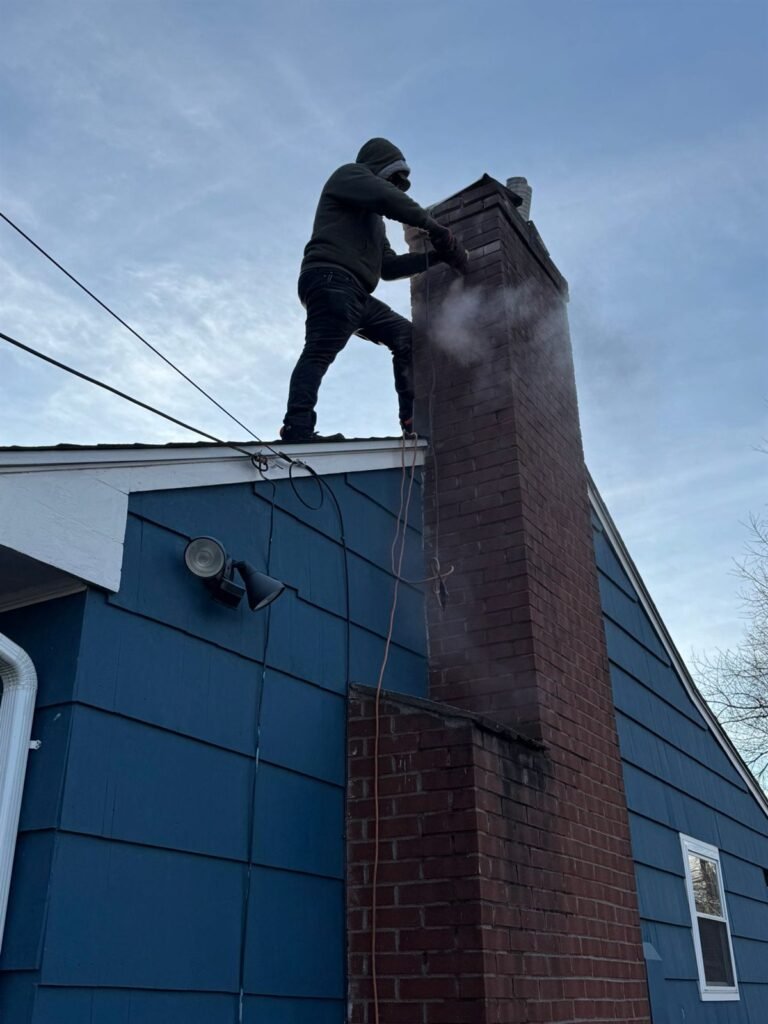
- 1Recessed or missing mortar
Joints that sit back from the brick face, or gaps where the mortar has washed out entirely.
- 2Crumbling or sandy joints
Mortar that crumbles or turns to sand when you scrape it with a key.
- 3Cracked joints
Hairline or open cracks running along or across the mortar joints.
- 4Spalled or cracked bricks
A few bricks with flaking faces or cracks, while the rest of the chimney is still sound.
- 5White staining on the brick
White, powdery deposits on the masonry, a sign that water is moving through the brick and mortar.
If bricks are loose, falling, or the chimney leans, repointing isn’t enough. Keep the area below clear and have the chimney assessed for a rebuild.
What tuckpointing and masonry repair cover
Included
- Assessment of the joints and bricks, with photos
- Raking out worn mortar to sound material
- Repointing with mortar matched to the brick’s strength, color and joint profile
- Cutting out and replacing cracked or spalled bricks with matching brick
- Cleaning mortar residue from the brick faces
- Protection of the roof and the grounds, cleanup, and photos of the finished work
Quoted separately
- Rebuilding sections where the bricks are loose or unsound (see Partial Rebuild)
- Crown, cap or flashing repairs, quoted separately if needed
- A water-repellent treatment, applied once the new mortar has cured if you choose it
- Interior repairs to walls or ceilings damaged by past leaks
How the job goes
Tell us about crumbling joints, flaking brick or leaks, and send photos if you have them. No fires for 24 hours before the visit.
We check the mortar and brick from the roof, test the joints, note which bricks need replacing, and photograph what we find.
You get a written scope and price. Once approved, the work is booked around the weather, and you get photos of the finished chimney.
How the approach is chosen
- Spot repointing
Only some joints have worn, often on the weather side or near the top. Those areas are repointed and the rest is left alone.
- Full repointing
The mortar has worn across the chimney. All the joints are raked out and repointed, so the whole chimney is sealed again.
- Brick replacement
Individual cracked or spalled bricks are cut out and replaced. If many bricks have failed, a rebuild is the better repair.
Real work, shown honestly
Average from 81 Google reviews
- Licensed & insured
- 15 years of hands-on work
- National Chimney Sweep Guild member
Tuckpointing and masonry repair across Connecticut
We repoint chimneys and replace damaged brick in Fairfield, New Haven, Hartford, Middlesex, New London, Litchfield, Tolland and Windham counties. Repointing is best done before winter, so open joints can’t let water in to freeze, and new mortar needs mild weather to cure.
Town pages with local detail: Ansonia, Berlin, Bethel, North Canaan, Seymour and Southbury.
See your service area for local details.
What sets the price
How much is worn
Spot repointing a few areas costs less than repointing the whole chimney.
Size of the chimney
A taller or wider chimney has more joints to repoint.
Height and roof pitch
Tall chimneys and steep roofs need more staging and safety setup.
Bricks and matching
How many bricks need replacing, and how hard the brick and mortar are to match.
How the quote works
The assessment comes first. You then get a written scope and price, with any crown, flashing or waterproofing listed separately, so you can decide piece by piece.
The price we quote is the price you pay.
Financing is available
Larger projects such as liners, rebuilds and major repairs can be financed. Ask when you request service and we’ll walk you through the options for your project.
About tuckpointing and masonry repair
Sun–Thu 8am–8pm · Fri 8am–4pm · Sat closed
What is tuckpointing?
Strictly, it is a repointing technique that uses a contrasting line of mortar, but most people use it to mean repointing: removing worn mortar from the joints between bricks and replacing it with new mortar. Either way, the aim is to seal the joints again before the bricks start to fail.
How do I know if my chimney’s mortar needs repointing?
Look for joints that sit back from the brick face, gaps, cracks, or mortar that crumbles when scraped with a key. White staining on the brick is another sign that water is getting into the masonry. An assessment confirms how much of the chimney needs it.
Why does the mortar have to match the brick?
Mortar is meant to be softer than the brick, so it wears instead of the brick. Many older chimneys have soft brick, and a modern mortar harder than the brick can trap water and break the brick faces. Matching the mortar protects the chimney as well as its look.
Can’t cracks in the mortar just be sealed with caulk?
Not as a lasting repair. Caulk or a surface patch over worn joints doesn’t bond with the masonry the way mortar does, and it can trap water behind it. Raking out the joints and repointing them is the repair that lasts.
Will repointing stop water getting into my chimney?
If the water is coming through worn joints, yes. Water can also enter through a cracked crown, failed flashing or porous brick, so we check those during the assessment, and a water-repellent treatment can be added once the new mortar has cured.
When is repointing not enough?
When bricks are loose, cracked through or falling, or the chimney leans. New mortar can’t hold failed brick together, and that section needs rebuilding. We tell you which applies during the assessment.
Other rebuilding work, and what goes with it
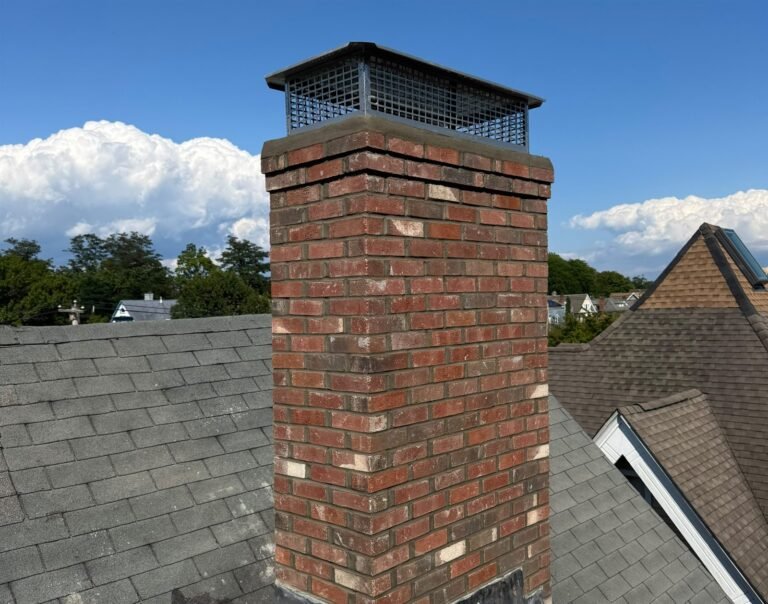
Chimney Rebuilding
Partial rebuilds, full rebuilds, and tuckpointing and masonry, and how to tell them apart.
See chimney rebuilding →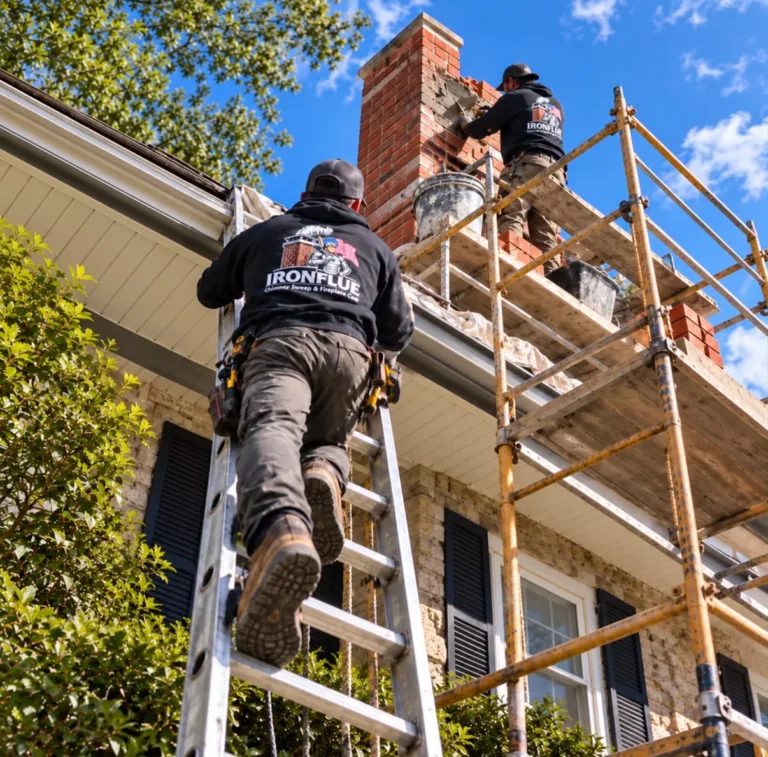
Partial Rebuild
When the bricks themselves are loose or broken, the damaged section is rebuilt.
Partial rebuild →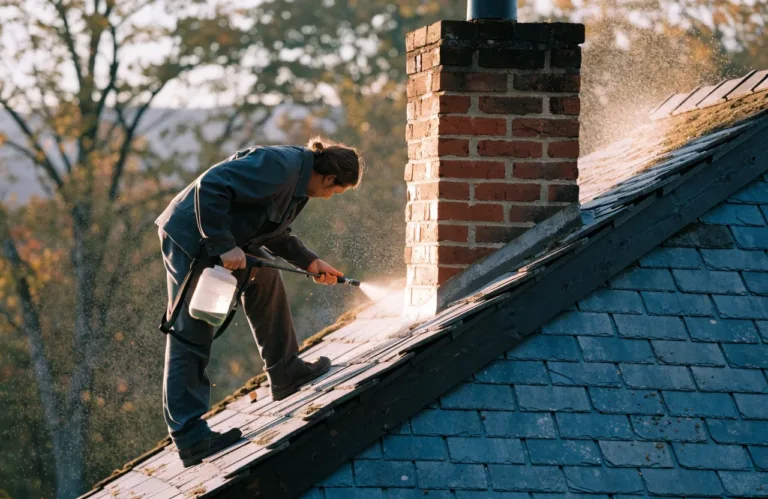
Waterproofing
A breathable water repellent, applied once the mortar has cured, helps keep the brick dry.
Waterproofing →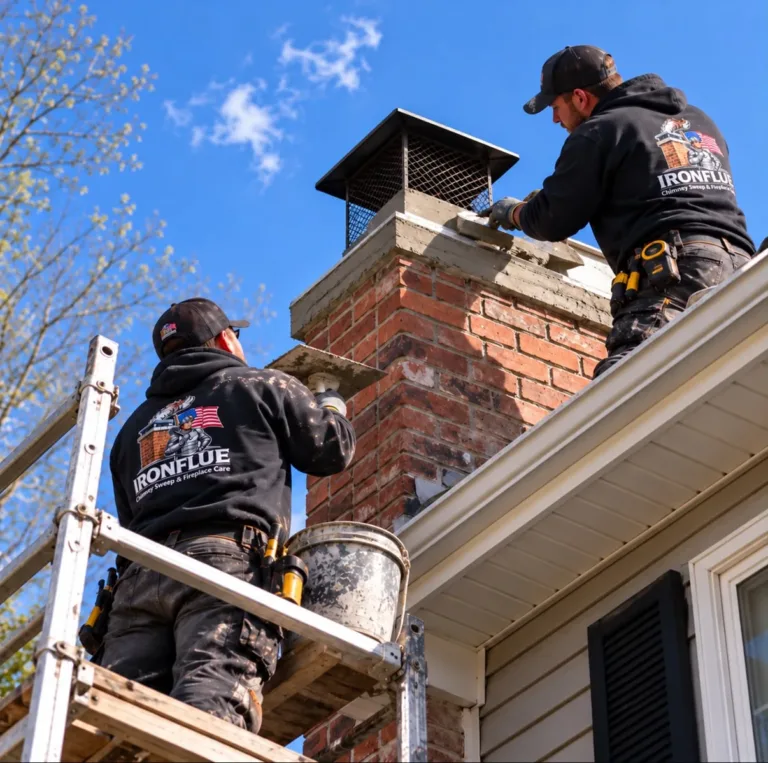
Chimney Repair
Masonry, crowns, flashing, caps, smoke chambers and waterproofing, and how to tell them apart.
See chimney repair →Request a masonry assessment
Sun–Thu 8am–8pm · Fri 8am–4pm · Sat closed
- 1We call you back to talk through what you’re seeing.
- 2Together we set a visit time that works for you.
- 3On site we look, photograph and explain before anything is quoted.
No obligation. We never share your details.