Stainless Steel Chimney Liners in Connecticut

- May suit you if
- A clay liner that is cracked or missing, a new wood stove, insert or gas appliance, a furnace or water heater left in a flue that is now too big for it, or a chimney that was never lined.
- The assessment establishes
- What the flue needs: the liner’s size, type and grade for the appliance and fuel, whether it needs insulation, and how it will connect at the bottom and the top.
- Next step
- A written scope and price after the flue is measured and inspected. Nothing is ordered until you approve it.
What a stainless liner does, and how it is chosen
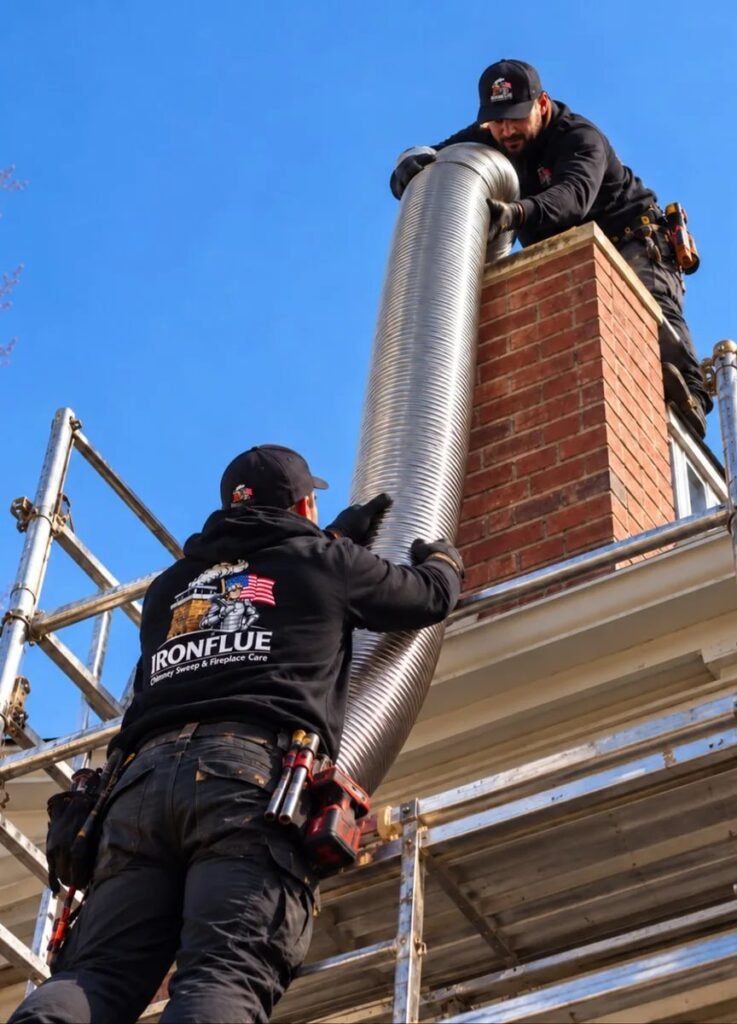
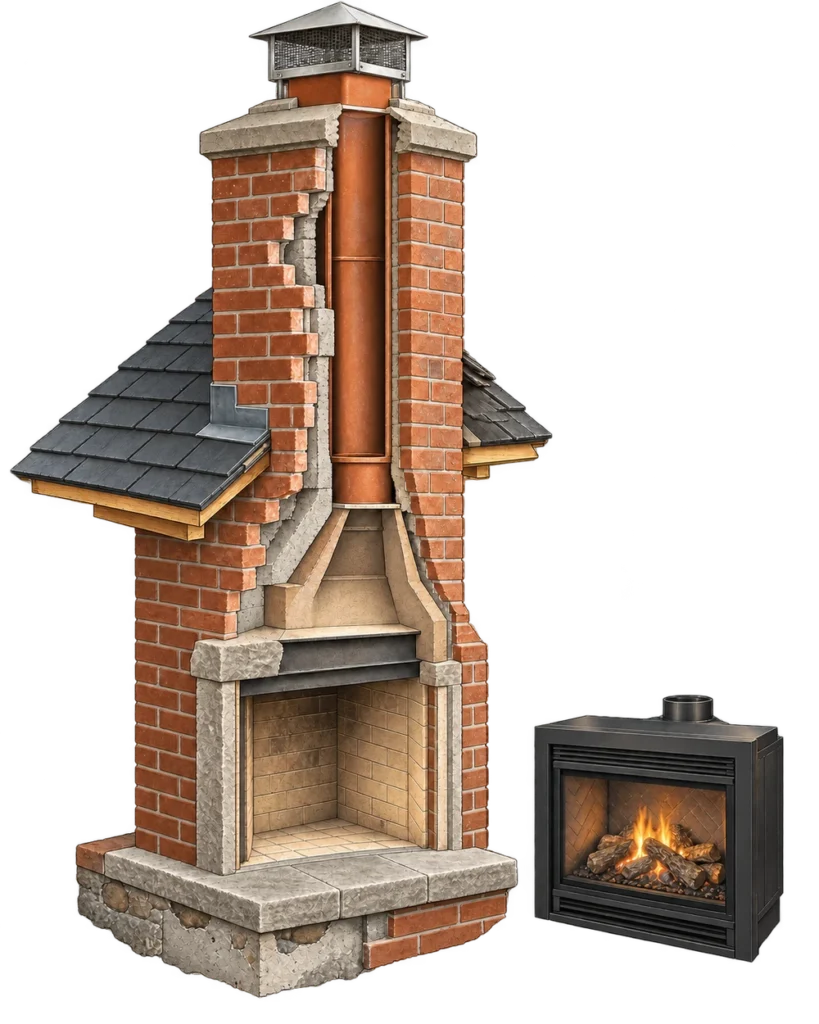
The liner is the inner wall of the chimney. It keeps heat and corrosive smoke or exhaust off the masonry and the wood framing around it, and it gives the appliance a flue of the right size to draw properly. NFPA 211 calls for masonry chimneys to be lined, and a stainless steel liner is the usual way to reline one when the original clay tiles have failed or don’t suit the appliance.
A liner is chosen for the job, not off a shelf. Its size follows the appliance it serves: too large and the exhaust cools, draws poorly and leaves more creosote or condensation; too small and it can’t carry the exhaust away. Its grade of stainless follows the fuel, a rigid liner suits a straight flue and a flexible one a flue with offsets, and some installations need an insulation wrap to keep the flue warm or meet the required clearance to combustibles. Liners should be listed to UL 1777 and installed to the maker’s instructions.
Related guide: Do I need a chimney liner? Types, sizing and when to reline
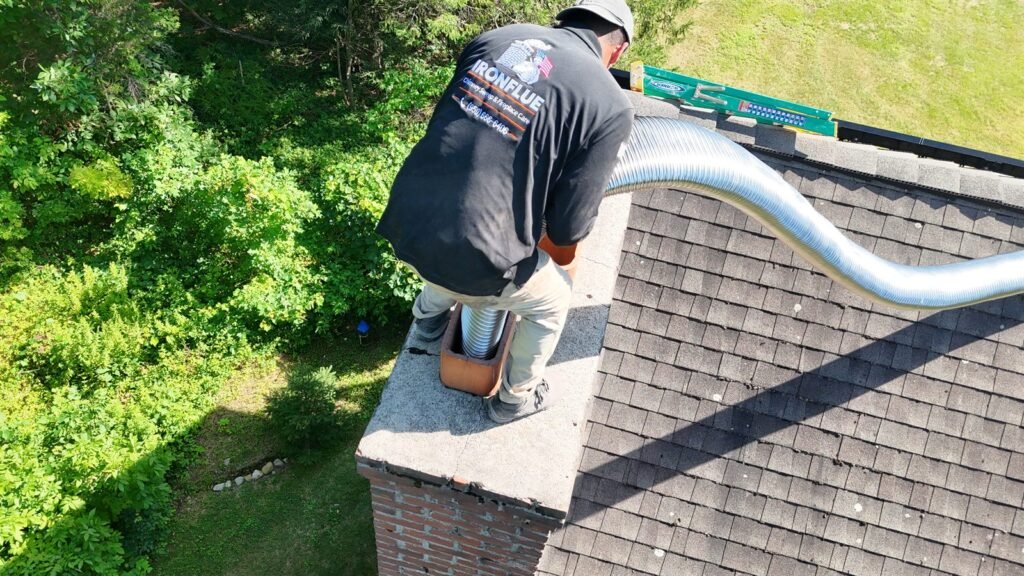
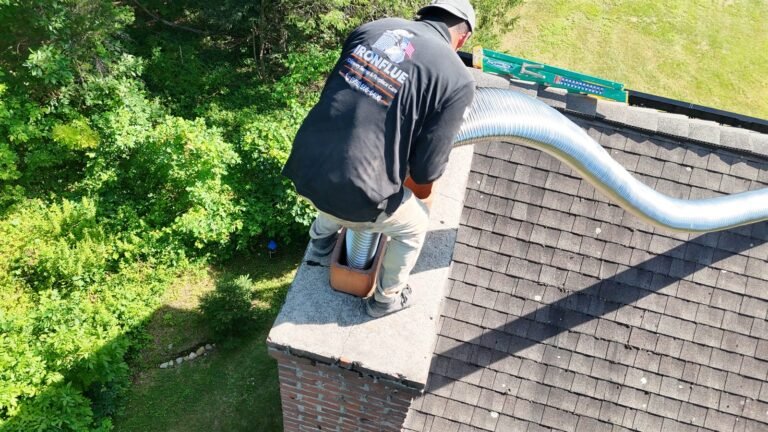
The liner runs the full height of the flueWhen a stainless liner is the answer

- 1The clay tiles have failed
An inspection found cracked, missing or shifted clay tiles, more than a repair can put right.
- 2A new stove or fireplace insert
Most insert and stove makers call for a liner sized to the appliance, run from the appliance to the top of the chimney.
- 3A switch to gas
A gas insert or appliance vents into a liner sized and rated for gas exhaust, which is wetter and more corrosive than wood smoke.
- 4A water heater left on its own
When a new high-efficiency furnace vents out the side of the house, the water heater left in the old flue often needs a smaller liner.
- 5A chimney that was never lined
Some older chimneys were built without a liner at all, which leaves the masonry exposed to heat and exhaust.
Don’t use a fireplace or stove with a flue known to be cracked or unlined until it has been assessed. Damaged flues can let heat, sparks or carbon monoxide reach places they shouldn’t.
What a stainless liner installation covers
Included
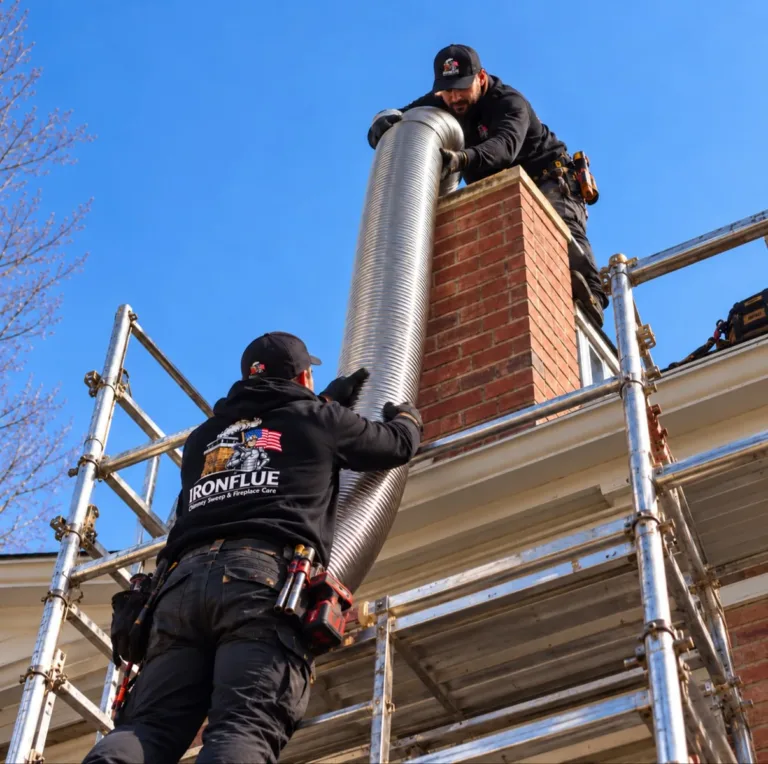
- Measuring and inspecting the flue, with photos, so the liner is sized for the appliance
- Supplying a listed stainless steel liner of the right size, type and grade for the fuel
- Insulating the liner where the installation calls for it
- Connecting the liner to the appliance or the fireplace at the bottom
- A top plate and a cap at the top of the chimney
- Protection of the room and the roof while we work, and photos of the finished installation
Quoted separately
- Breaking out old clay tiles if the flue is too narrow for the liner, quoted separately if needed
- The appliance itself, and its gas or electrical connections
- Crown, flashing or masonry repairs found on the visit, quoted separately
- Sweeping, if the flue has to be cleaned before it can be measured
How the job goes
Tell us what the flue serves or will serve, with the make and model if you have them. No fires for 24 hours before the visit.
We inspect the flue, measure its size and height, check the top and bottom connections, and photograph what we find.
You get a written scope and price. Once approved, the liner is ordered to size and installed, and you get photos of the finished job.
How the liner is chosen
- Flexible liner
Bends through offsets in the flue, which most older chimneys have. Used for most stoves, inserts and gas appliances.
- Rigid liner
Sections joined in a straight run, for flues without offsets. Often chosen for an open fireplace or a straight, tall flue.
- Insulated liner
Wrapped to keep the flue warm and draw better, and where the chimney needs it to meet the required clearance to combustibles.
Real work, shown honestly
Average from 81 Google reviews
- Licensed & insured
- 15 years of hands-on work
- National Chimney Sweep Guild member
Stainless steel liners across Connecticut
We install stainless steel chimney liners in Fairfield, New Haven, Hartford, Middlesex, New London, Litchfield, Tolland and Windham counties. Relining is roof work that suits dry weather, so if a new stove, insert or furnace has an install date, tell us early and we’ll plan the liner around it.
Local notes for Bristol, Cheshire, New Haven, Waterbury, Weston and Wolcott.
See your service area for local details.
What sets the price
Height and diameter
A taller chimney or a larger liner means more material.
Type and grade
Flexible or rigid, the grade of stainless for the fuel, and whether insulation is needed.
Room in the flue
If old clay tiles leave too little room for the liner, they have to be broken out first.
Roof access
Steep roofs and tall chimneys take more staging to install from the top.
How the quote works
The inspection and measurements come first. You then get a written scope and price for the liner, with any tile removal, masonry or appliance work listed separately, so you can decide piece by piece.
The price we quote is the price you pay.
Financing is available
Larger projects such as liners, rebuilds and major repairs can be financed. Ask when you request service and we’ll walk you through the options for your project.
About stainless steel chimney liners
Sun–Thu 8am–8pm · Fri 8am–4pm · Sat closed
Why use stainless steel for a chimney liner?
It stands up to the heat of a wood fire and the corrosive, wet exhaust of gas and oil appliances, it can be sized exactly to the appliance, and it can be installed in an existing chimney without rebuilding it. That makes it the usual choice for relining.
What size liner do I need?
It depends on the appliance. For a stove, insert or furnace, the size follows the maker’s instructions and the appliance’s outlet. For an open fireplace, it follows the size of the fireplace opening. A liner that is too big or too small won’t draw properly, so we measure before quoting.
Should the liner be flexible or rigid?
Flexible liners bend through offsets in the flue, which most older chimneys have, so they are the most common. Rigid liners suit straight flues. The choice follows your chimney’s shape and the appliance, and we explain it in the scope.
Does a stainless liner need insulation?
Sometimes. Insulation keeps the flue warmer so it drafts better and builds up less creosote or condensation, and in some chimneys it is needed to meet the required clearance between the flue and nearby wood. The liner maker’s instructions say when it is required.
Does a stainless liner still need to be swept?
Yes, if it serves a wood fireplace, stove or insert. A correctly sized liner builds up less creosote, but it still needs a yearly inspection and sweeping as needed. Gas liners need a yearly check too.
Can a stainless liner go in any chimney?
Most chimneys, yes. The flue has to be large enough for the liner and any insulation. If the old clay tiles leave too little room, they may have to be broken out first, which is quoted separately.
Other liner work, and what often goes with it

Chimney Liners
Stainless liners, liner repair and relining, and liners for furnaces and water heaters, and how to tell them apart.
See chimney liners →
Liner Repair & Relining
Limited damage to clay tiles can sometimes be repaired; widespread damage means relining.
Liner repair & relining →
Level 2 Camera Inspection
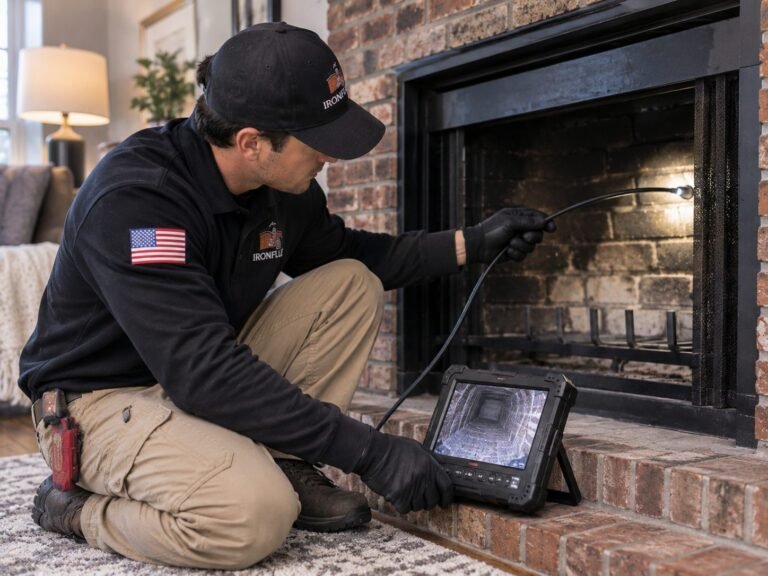
A camera through the flue shows the condition of the tiles and what the new liner needs.
Level 2 inspection →
Wood Stove & Insert Service
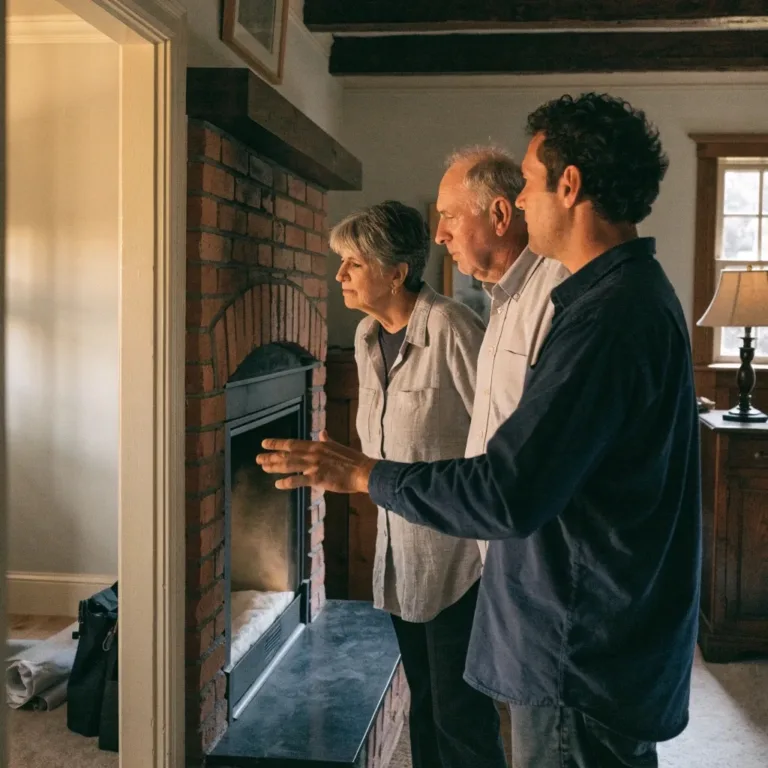
A stove or insert that vents into a new liner is checked and serviced at the same time.
Stove & insert service →Request a liner quote
Sun–Thu 8am–8pm · Fri 8am–4pm · Sat closed
- 1We call you back to talk through what you’re seeing.
- 2Together we set a visit time that works for you.
- 3On site we look, photograph and explain before anything is quoted.
No obligation. We never share your details.