Most chimney leaks don’t drip. They show up as a brown ring on a ceiling, a damper that has started to rust, or a white haze on the brick. The Chimney Safety Institute of America (CSIA) says water does more damage to masonry chimneys than fire, and that the damage is usually slow, which is why it’s easy to overlook until the repair is a big one.
Below are the six signs to look for, what each one looks like, and where the water behind it most likely gets in.
What are the signs of a chimney leak?
1. Stains on the ceiling or wall next to the chimney
Look for tan or brown rings, bubbling paint or loose wallpaper where ceilings and walls meet the chimney, on every floor it passes through. Stains on the top-floor ceiling put the flashing high on the list of suspects. Flashing is the metal seal between the roof and the chimney, and CSIA notes that when it fails, rain runs down the chimney into living spaces, damaging ceilings and walls and rotting rafters and joists.
2. Water or dampness in the firebox
Wet ash, a damp hearth floor or streaks down the back wall of the fireplace mean water is getting into the chimney itself. The usual suspects are at the top: an uncapped flue (the passage the smoke travels up) or a cracked crown. CSIA describes the chimney cap as the part that keeps rain out of the flue, and a good cap also keeps out birds and animals and stops sparks from landing on the roof.
3. A rusty damper or other rusted metal
The damper is the metal plate you open before a fire and close after it. If it’s rusty or sticks, moisture is reaching it regularly; CSIA lists rusted dampers among the typical results of chimney water damage. If a furnace or water heater vents into the chimney, note any rust or stains around its draft hood too: the American Society of Home Inspectors (ASHI) names them as signs of a venting problem.
4. White, powdery deposits on the brick
That white bloom is efflorescence: salts that water dissolves inside the masonry and leaves on the surface when it evaporates. According to the Brick Industry Association (BIA), efflorescence on an established structure that was free of it before usually means a new source of water, and where it shows up can hint at where that water is entering. Photograph it before you scrub it off.
5. Flaking brick, soft mortar or a cracked crown
Brick faces that pop off in thin flakes (called spalling), mortar joints that crumble when you press them, and cracks across the crown on top all suggest masonry that has been wet for a while. BIA lists cracking, spalling and disintegration from repeated freeze-thaw cycling among the damage that excess water does to brick masonry.
6. Streaks outside or damp wood in the attic
Outside, look for dark streaks below the crown or where the chimney narrows (its shoulder). If you can reach the attic safely, check the rafters around the chimney with a flashlight after a rain. CSIA’s Level 2 inspection procedure has inspectors look for water damage in the attic, particularly just below the flashing, and note staining where the chimney’s shoulder tapers.
Where does water get into a chimney?
Nearly every chimney leak comes in through one of five places. Knowing them makes an inspector’s findings easier to follow.
- The crown. The concrete or mortar slab that covers the top of the masonry around the flue. Cracks let water straight in. CSIA recommends a crown that projects two inches past every side so water drips clear of the brick, and describes a cast crown with an expansion joint as a long-lasting alternative to a basic mortar wash. See crown repair.
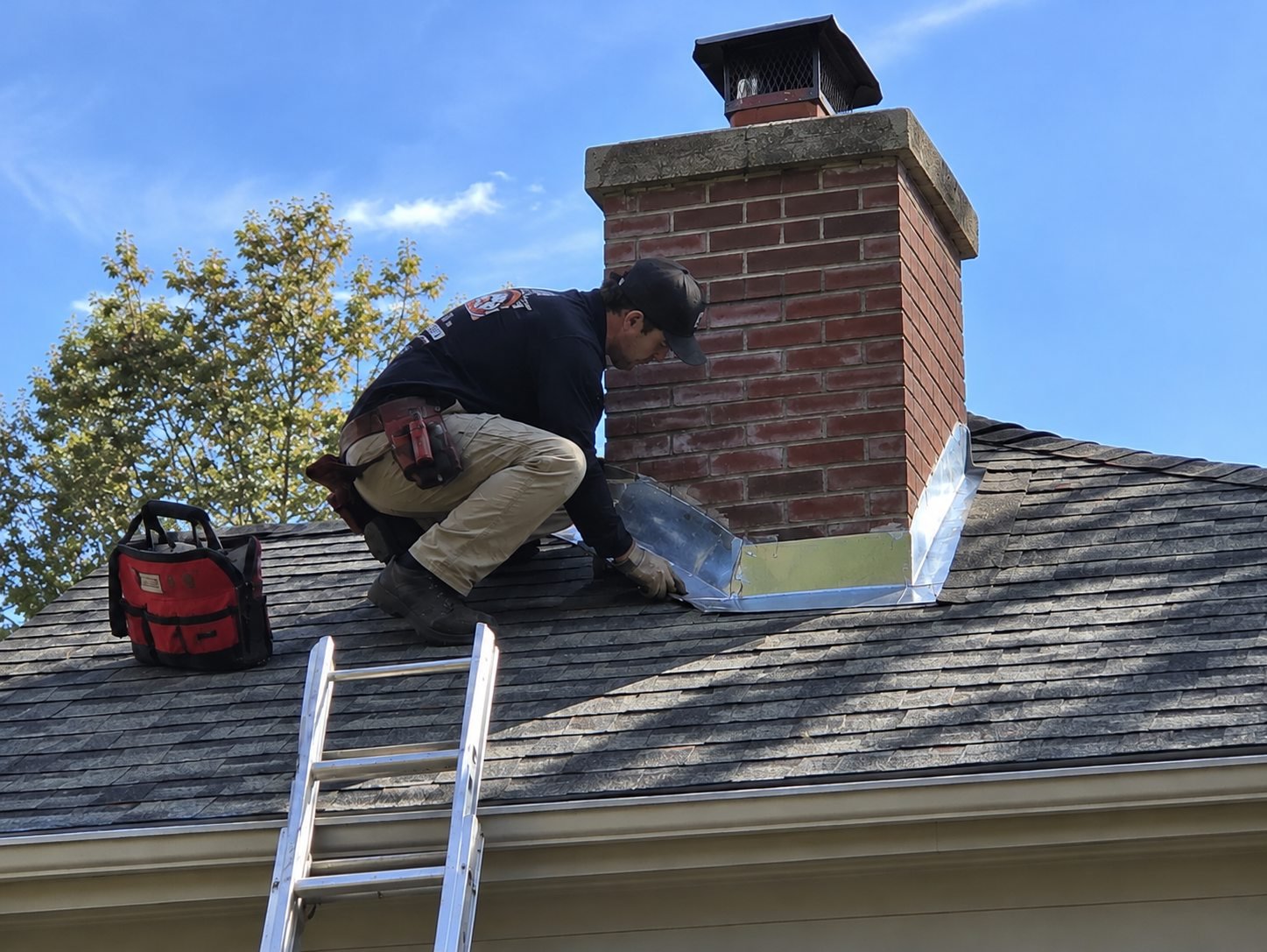
- The flashing. Metal that seals the joint where the chimney passes through the roof, sometimes paired with a cricket: a small peaked section behind a wide chimney that sheds water around it. Lifted edges, rusted metal and dried-out sealant all let water through. See flashing and leak repair.
- The cap and flue opening. With no cap, rain and snow fall straight down the flue. A bent or damaged cap, or a cracked flue tile at the top, opens the same path. See caps and dampers.
- Porous brick and mortar. CSIA compares common brick to a sponge that soaks up water and wicks it toward the inside of the chimney, and notes that defective mortar joints or the wrong brick or mortar make it worse. See chimney waterproofing.
- Condensation. Not all chimney water comes from the sky. ASHI explains that when a gas appliance vents into a flue that’s too large, the flue doesn’t heat up enough, and water vapor in the exhaust can condense into acidic moisture that wears the flue down.
Why do Connecticut winters make small chimney leaks grow?
Water that soaks into brick, mortar or a cracked crown expands when it freezes, pressing the crack a little wider. When it thaws, more water gets in, and the cycle repeats. That’s the freeze-thaw damage BIA describes, and it’s how a hairline crack noticed in October can become a loose piece of crown by April.
Connecticut supplies plenty of both ingredients. NOAA’s state climate summary puts typical winter low temperatures at around 17°F in the northern part of the state and above 25°F along the southern coast, with 40 to 55 inches of precipitation a year and seasonal snowfall from under 30 inches on the shoreline to more than 50 in the Northwest Hills. Snow sitting on a crown can melt on a sunny afternoon and refreeze overnight.
The damage doesn’t stay on the outside. CSIA lists cracked flue liners, rotted wood and ruined wall coverings among the effects of chimney water damage, so a problem visible on the brick may already reach further inside.
Is it a rain leak or condensation?
When the water appears is one of the best clues to where it’s coming from. See which of these sounds most like your chimney.
Only during or right after rain
Water is most likely entering from the top or at the roofline: the cap, the crown or the flashing. Water in the firebox points up the flue; stains on a ceiling beside the chimney point toward the flashing.
A day or more after a storm, or as snow melts
Solid masonry holds water and gives it up slowly; BIA notes that moisture stored in it evaporates gradually during drier weather. Damp patches that appear late or linger suggest porous brick and mortar, or a crown that holds water.
In dry weather, with the heat running
Moisture, rust or stains around a furnace or water heater connection when it hasn’t rained point toward condensation in the flue. A U.S. Department of Energy technical brief notes that vent corrosion can come from condensing flue gases or from exterior leaks, and that poor flashing can mask signs of condensation, so both may need checking.
What should you do before the chimney inspection?
- Keep a log. Date, weather and what you saw: during rain, after it, during snowmelt or with the heat on.
- Photograph everything. Stains, the firebox, the damper and the outside of the chimney from the ground. Pencil a line and the date around the edge of a ceiling stain so you can tell whether it grows.
- Protect the room. Set a tray or old towels in the firebox, and move rugs and furniture away from damp walls.
- Pause fires if the firebox or damper is wet. Wait until the source has been found.
- Stay off the roof. Binoculars from the yard show the crown, cap and flashing well enough to describe them.
- List everything that vents into the chimney. Fireplace, wood stove, furnace, boiler or water heater, and when each was last serviced.
What does an inspector check when you report a leak?
Tracing a leak takes more than a glance up the flue. CSIA’s Level 2 procedure takes the inspector onto the roof to examine the crown, flashing and any cricket, and to check for a bond break where the top flue tile passes through the crown (an NFPA 211 requirement that lets the flue expand). It also covers the accessible attic and the point where an appliance connects to the chimney. If you’re seeing any of the signs above, a Level 2 camera inspection covers all of those areas.
At IronFlue Chimney, we photograph what we find and explain it in plain language, and you get a written scope before any repair starts. Our guide to reading a chimney repair estimate covers what that scope should spell out.
Noticed stains, rust or flaking brick on a Connecticut chimney? Get in touch with IronFlue Chimney, tell us what you’ve seen and when it shows up, and we’ll arrange a visit to trace the water to its source.