“Once a year” shows up on every chimney checklist, and it’s the right place to start. The full answer has two parts, though: how often a chimney needs to be looked at, and how closely. The second part is what inspection levels are for.
The standard answer: at least once a year
The rule comes from NFPA 211, the National Fire Protection Association’s standard for chimneys, fireplaces, vents and solid-fuel-burning appliances. As quoted in the Chimney Safety Institute of America (CSIA) homeowner FAQ, it says chimneys, fireplaces and vents “shall be inspected at least once a year for soundness, freedom from deposits, and correct clearances.”
Soundness means the structure and the flue liner, the clay, metal or cast lining that keeps smoke and heat inside the chimney, are intact. Freedom from deposits means soot, creosote and debris aren’t building up or blocking the flue. Correct clearances means the chimney and any connected appliance keep a safe distance from wood framing and other combustible materials.
The U.S. Fire Administration gives the same interval in its heating fire safety advice: have chimneys and vents cleaned and inspected at least once a year. NFPA 211 itself asks for cleaning, maintenance and repairs “if necessary,” so the yearly visit is a check, not an automatic overhaul.
Does a chimney you rarely use still need a yearly inspection?
Yes. CSIA applies the annual guidance to chimneys that see little use, for two plain reasons: animals can nest in an idle flue, and a chimney can deteriorate whether or not anyone lights a fire under it.
There’s a less obvious reason too. CSIA’s article on preventing chimney fires notes that most chimney fires go undetected. Slow-burning ones don’t get enough air or fuel to be dramatic, yet they can reach very high temperatures and do as much damage as the loud kind, often coming to light only at a later inspection.
Gas fireplaces and furnace flues count too
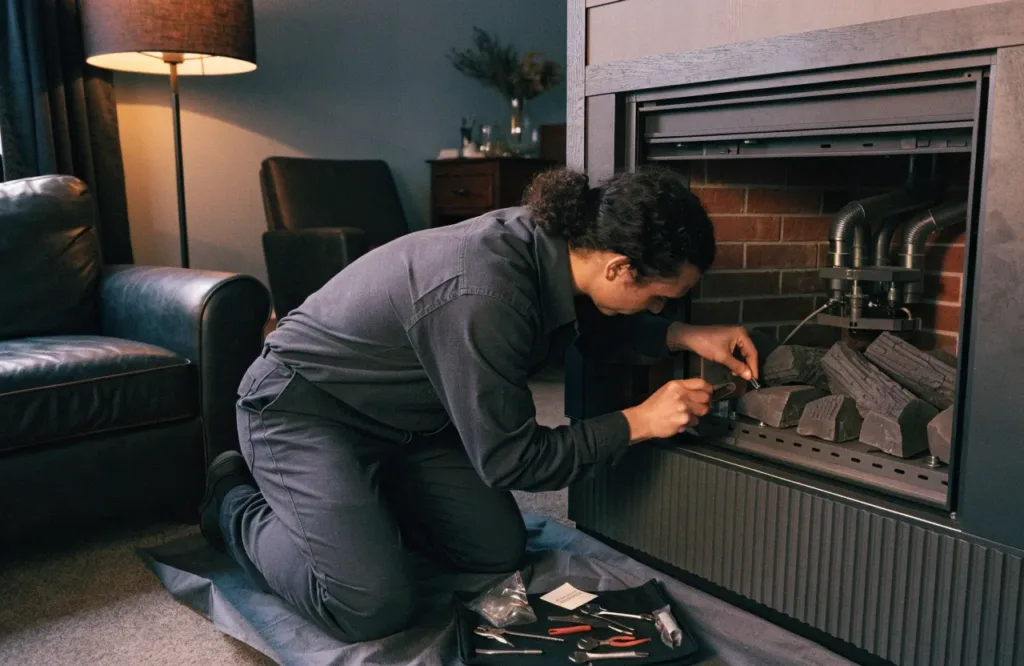
A chimney that only vents a gas furnace, boiler or water heater still falls under the yearly rule. CSIA tells homeowners to schedule annual inspections for all their chimneys, gas furnaces included, and gives specific reasons: a bird’s nest or fallen debris can block a gas flue, and a modern furnace may not vent properly through an older flue. If you have a gas fireplace, the yearly check pairs naturally with gas fireplace service.
What do Level 1 and Level 2 inspections mean?
NFPA 211 adopted standard levels of chimney inspection in January 2000, as CSIA reported in its announcement of the new industry standard. A Level 2 includes everything in a Level 1. A level isn’t a grade of quality. It describes how much of the system the inspector needs to reach to answer the question in front of them.
Level 1: the routine yearly check
CSIA’s Level 1 procedure (PDF) calls it the recommended level for routine cleanings and annual inspections, and the right one when “nothing is changing”: you’ll keep using the chimney the way you have been. It also fits when an appliance is replaced with a new one of a similar type.
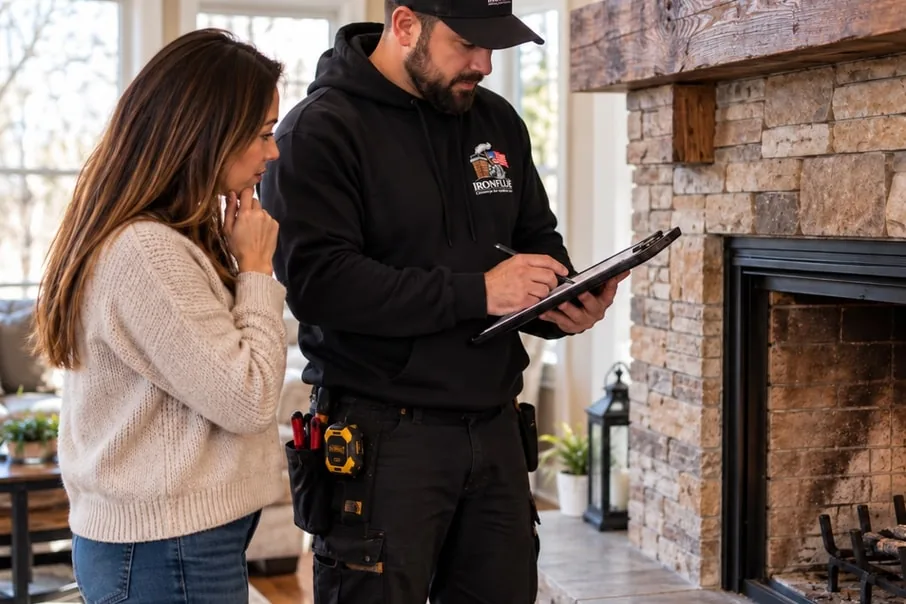
A Level 1 covers the readily accessible parts of the chimney, fireplace or appliance, plus accessible parts of connected appliances and the chimney connection. In CSIA’s definition, readily accessible means reachable without tools to open panels and without ladders. The inspector confirms the flue isn’t blocked and judges how clean it is, typically by looking up it with a light, and checks the appliance, the damper (the plate that closes off the flue when the fire is out), clean-out doors and clearances. A camera scan is optional at this level. Our Level 1 chimney inspection is built around this routine visit.
An inspection and a sweep are separate jobs that often share a visit; our guide to chimney sweep vs chimney inspection explains where one ends and the other begins.
Level 2: when something has changed or may be damaged
A Level 2 takes in everything in a Level 1 and adds all accessible portions of the fireplace, chimney and connected appliances, which can mean opening panels with common tools and using ladders. Under CSIA’s Level 2 procedure (PDF), the inspector goes onto the roof and into accessible attics, basements and crawl spaces.
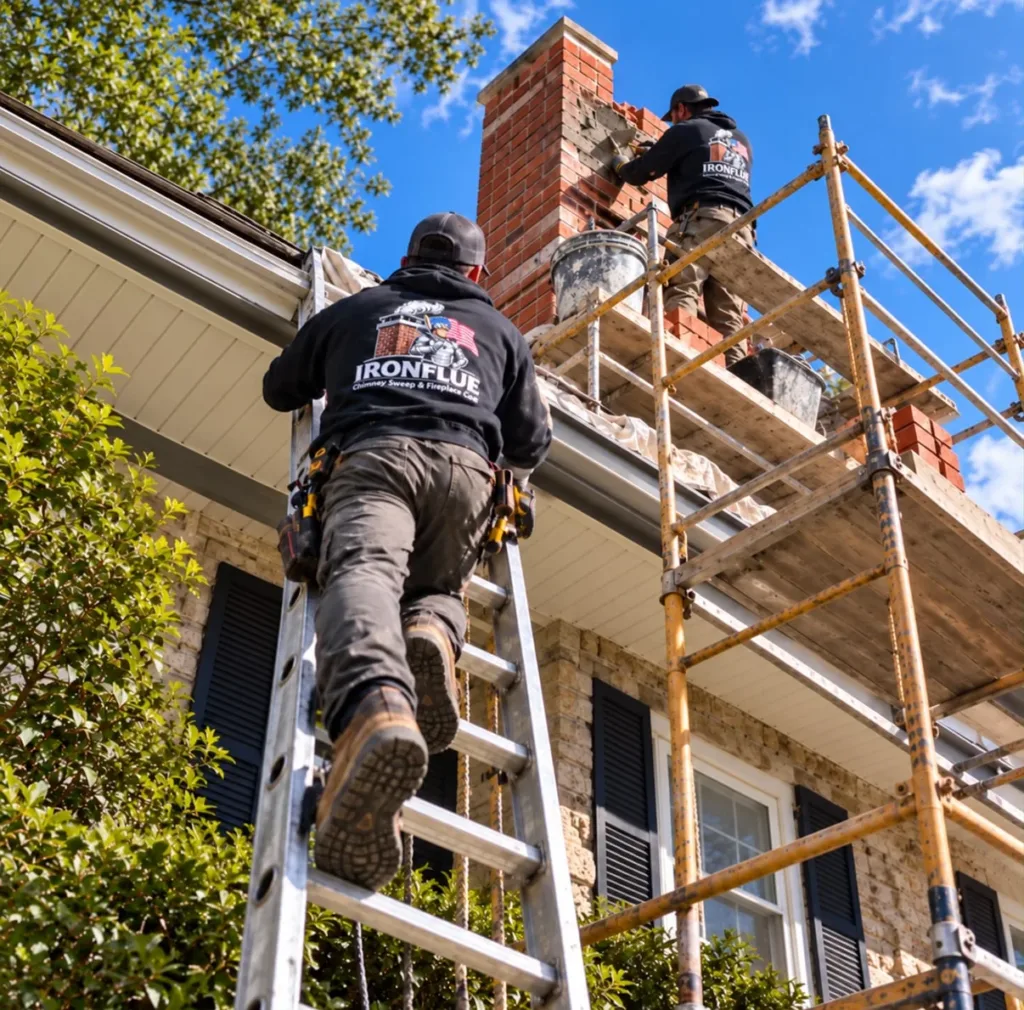
Two things set it apart. First, a video scan (or a similar method) of the chimney interior is required, to look for cracks or gaps in the liner, unused openings into the flue, and trouble at offsets, where the flue bends. Second, it takes a full look at the top of the chimney and the attic: the crown (the concrete or mortar cap that seals the top of a masonry chimney), the flashing (the metal that seals the joint between chimney and roof), the cricket if there is one (a small peaked structure behind the chimney that sheds water around it), clearances where the chimney passes through floors and roof, and whether the flue is the right size for the appliance. Our Level 2 camera inspection follows this scope.
When should you book before the year is up?
The annual date is a minimum. CSIA’s Level 2 procedure lists the situations that call for a closer look, and together they make a practical checklist for booking early:
- A chimney fire, or signs of one. CSIA lists a loud cracking and popping noise, a lot of dense smoke and an intense, hot smell as reported indications.
- A building fire, storm or seismic event. Anything likely to have damaged the chimney, even if nothing looks wrong from the yard.
- An operating malfunction. CSIA includes any malfunction likely to have caused damage to the chimney.
- A new appliance or a different fuel. Adding an appliance, or replacing one with a dissimilar one (different fuel, efficiency or type), changes how the chimney is used.
- Planned lining or relining. The Level 2 measures the flue and confirms the size the new installation needs.
- A property sale. CSIA recommends a Level 2 when a property is being sold; our real estate chimney inspection is set up for that timeline.
Animals can also nest in a flue, so sounds from inside the chimney or nesting material in the firebox are worth a call before your next fire. And if you can’t find any record of the last inspection, treat the chimney as due.
Can a Level 1 inspection turn into a Level 2?
Yes, and it helps to know why before it happens. CSIA’s Level 2 procedure says a Level 2 is also recommended when a Level 1 isn’t sufficient to determine whether the venting system is serviceable. If the inspector can’t confirm the flue is sound from what’s readily accessible, the next step is a closer look rather than a guess.
The same applies to evidence of a past chimney fire. CSIA’s Level 1 procedure tells the sweep to photograph and document those signs before sweeping, then recommend a Level 2 at that point.
When we recommend moving up a level, we show you photos of what we found and explain in plain language what the next inspection would answer, so you can decide with the evidence in front of you.
What you should receive after an inspection
CSIA’s procedures for both levels end the same way: the inspector discusses the findings with you, gives you a copy of the report and asks for your signature on it. A useful report also tells you:
- Which level was performed and which flues and appliances it covered.
- What was found, component by component, from the firebox and damper up to the crown and cap.
- Any areas that couldn’t be reached, and why. CSIA’s Level 2 procedure asks inspectors to note those exceptions with a reason.
- Whether sweeping or repair is recommended, and which finding each recommendation addresses.
If repair is on the table, we put the scope in writing before any work is booked. That written scope, alongside this year’s report, gives next year’s inspection something concrete to compare against.
If your Connecticut home is due, or something on the list above has happened since the last visit, get in touch with IronFlue Chimney and tell us what you burn and when the chimney was last checked. We’ll confirm the right level, scope and price before you book.