A gas fireplace spares you the firewood, the ash bucket and most of the soot. It doesn’t spare you the upkeep. Behind the glass sit a burner, a gas valve, a pilot assembly and a vent that carries combustion gases out of the house, and each of them deserves a yearly look. Here’s what that service involves, what you can safely handle yourself, and where your part stops.
Why a gas fireplace still needs a yearly service
NFPA 211, the national standard for chimneys, fireplaces and vents, calls for them to be inspected at least once a year, and the Chimney Safety Institute of America (CSIA) tells homeowners to schedule yearly inspections for all their chimneys, gas furnaces included. Its reasoning is practical: gas is generally a clean-burning fuel, but a bird’s nest can still make a flue unusable (CSIA homeowner resources). Our guide to how often a chimney should be inspected covers the yearly rule in more depth.
The Hearth, Patio & Barbecue Association (HPBA), the hearth industry’s trade group, says gas fireplaces, stoves and inserts need routine maintenance to keep working properly, and that the best person for it is a technician trained in gas fireplaces and their venting (HPBA gas maintenance tips). British Columbia’s gas safety regulator puts it more bluntly: have all home heating devices serviced annually, whatever the fuel, to prevent fires and carbon monoxide poisoning (Technical Safety BC bulletin).
Vented, direct-vent or vent-free: which one do you have?
What a service covers depends on how your fireplace gets rid of its exhaust. The U.S. Consumer Product Safety Commission (CPSC) draws the basic line: vented gas fireplaces use a vent system to remove combustion products from the home, while unvented ones release them directly into the room (CPSC statement, 2013). In practice you’ll meet three setups:
- Direct-vent. The Department of Energy’s Building America Solution Center describes a direct-vent fireplace as one with its own combustion-air inlet that brings outside air straight to the firebox, sealed behind tight-fitting glass so room air isn’t used for burning. Most are gas-fueled, and the same page calls them much less likely to spill combustion gases into the home (Building America Solution Center).
- Gas logs or an insert in a masonry chimney. These vent through an existing flue, so the chimney is part of the appliance. CSIA warns that modern furnaces can have problems when vented through older flues built for other equipment, and the same question applies here: is this flue right for this appliance? If it isn’t, relining the chimney may be part of the answer.
- Vent-free. No vent at all. The Building America page advises choosing a vented model over an unvented one if you want a fireplace. IronFlue Chimney doesn’t service vent-free units.
What does a gas fireplace service include?
There’s no single national checklist, but the published ones agree closely. Putting HPBA’s list together with the Technical Safety BC bulletin, a yearly service typically covers:
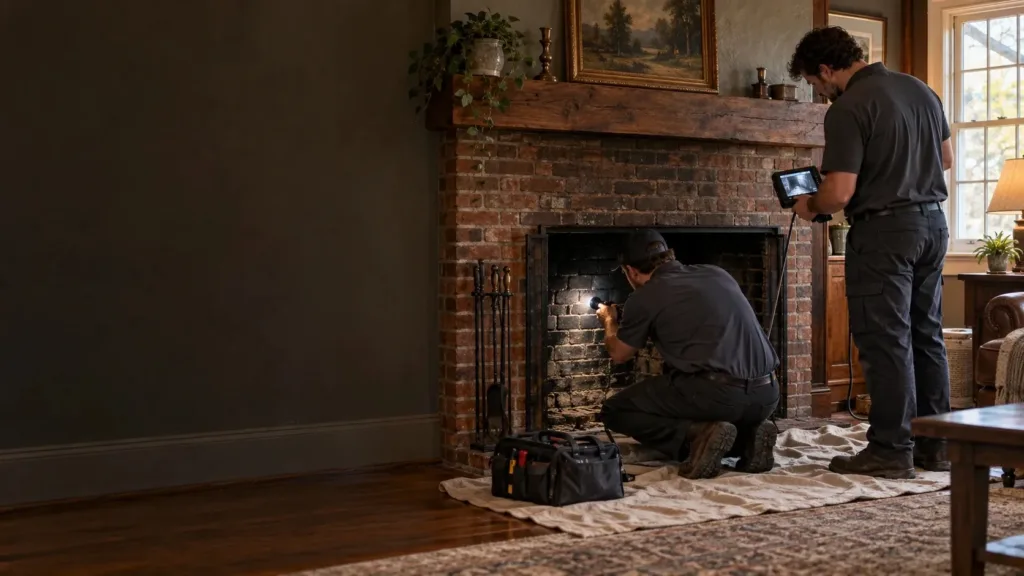
- The vent and its termination. The full vent run is checked for condition and operation, along with the cap where it ends outside. HPBA’s version is simply to make sure the vents are unobstructed.
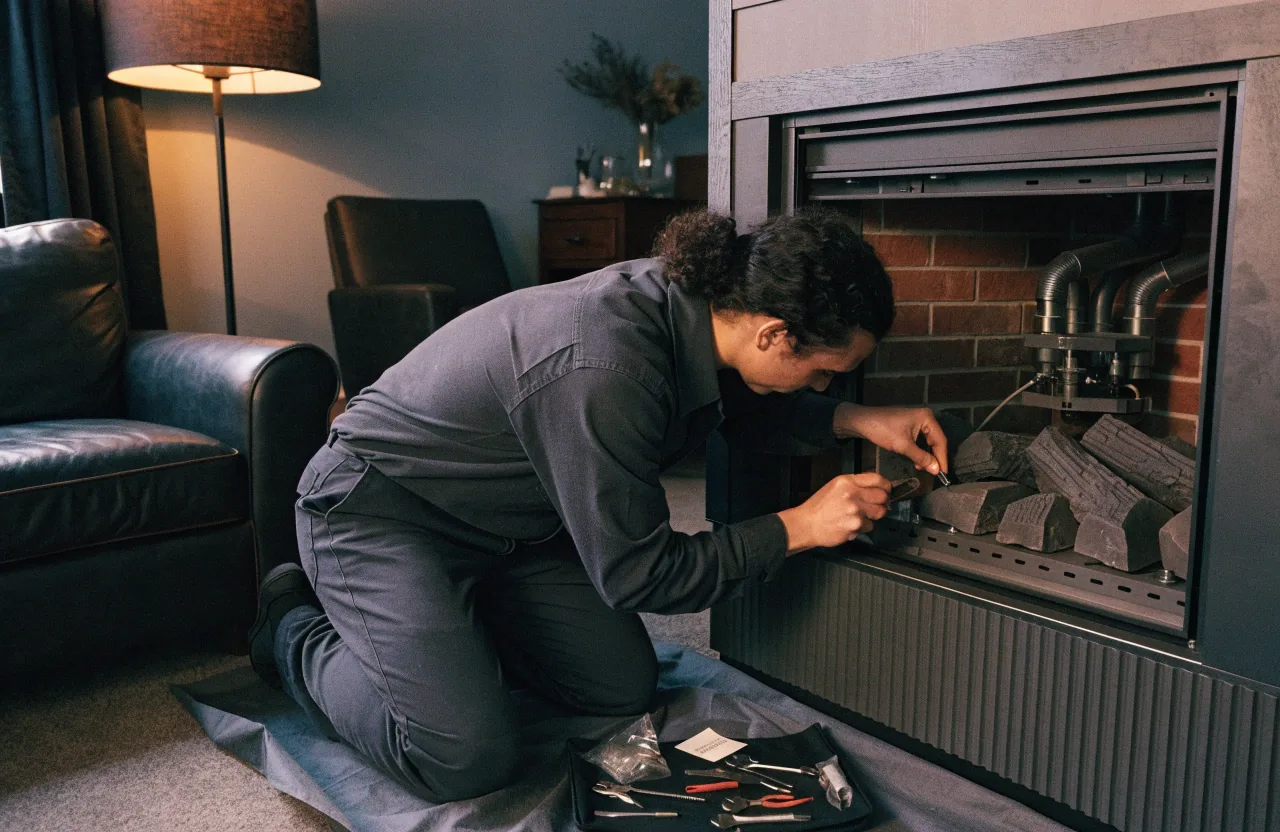
- Burner and air passages. The burner, the venturi (the tube where gas and air mix) and the air openings are inspected. HPBA adds cleaning the burner, the control compartment, the fan and its air-circulation passages, and checking for condensation.
- Gas valve, controls and pilot. The gas valve, gas components and pilot system are inspected, and HPBA lists having the technician check the gas lines.
- Glass, gaskets and relief flaps. The glass and unit are cleaned to the manufacturer’s guidelines, and the explosion-relief flaps and glass gaskets are checked for a proper seal.
- Logs and accessories. Log placement is checked against the manual, and fans, thermostats, remotes and safety controls are run to confirm they work.
Several of these steps are specific to your model, so keep the owner’s manual where the technician can find it. Our gas fireplace service covers the vent and the glass (the burner, pilot and gas valve are for a licensed gas technician), and we photograph anything worth your attention and explain it in plain language. If the vent cap turns out to be packed with nesting material, that’s a job for animal and blockage removal.
Pilot lights, thermocouples and thermopiles in plain terms
Many gas fireplaces have a standing pilot, a small flame that stays lit so the main burner can ignite. Sitting in that flame is a thermocouple: two different metals joined together that produce a small electric current when heated. As InspectAPedia, a building-inspection reference, explains, that current keeps the gas valve open, and the device exists to stop the gas supply if the flame goes out or never lights (InspectAPedia on thermocouples). A thermopile is several thermocouples combined in series, and it controls the gas valve with an electrical signal.
The practical upshot: these parts are a safety system. If the pilot won’t stay lit or the burner keeps shutting off, the system is telling you something, and the fix is a service visit, not repeated relighting. Never wedge, tape or otherwise hold a gas control in the “on” position.
How to look after the glass front
The glass on a gas fireplace gets hot enough to burn. In 2011 the CPSC received a petition prompted by reports of children seriously burned after touching glass fronts. The industry’s ANSI standards were then updated: under the new standard, due to take effect in January 2015, vented gas fireplaces whose glass exceeds 172°F must be installed with a protective barrier that prevents contact with the glass and isn’t a burn hazard itself. The CPSC chairman’s 2013 statement noted the separate standard for unvented fireplaces hadn’t yet been updated, and pointed to industry guidance encouraging owners of existing glass-front fireplaces to retrofit a barrier.
HPBA recommends telling family and guests that the glass gets very hot, and using a safety screen or barrier. For cleaning, wait until the unit is cool and use the product your manufacturer specifies. If the glass is cracked or chipped, or the gasket around it no longer seals, switch the fireplace off and book a repair. CSIA’s inspection procedure lists damaged glass and door gasketing among the appliance problems an inspector looks for (CSIA Level 2 SOP, PDF).
What you can safely do between services
- Watch the flame. HPBA says unusual odors or flames are often a sign the fireplace isn’t operating properly. Turn it off and have it checked.
- Keep the outside vent clear. The U.S. Fire Administration advises keeping fireplace vents clear of snow and debris. Check the outside cap after heavy snow.
- Give it room. Keep combustibles, flammables and anything that could be damaged by high heat away from the fireplace, as the Technical Safety BC bulletin recommends.
- Test the CO alarms. HPBA lists checking carbon monoxide detector batteries. CPSC recommends battery-operated or battery-backup CO alarms on every level of the home and outside sleeping areas, ideally interconnected so that when one sounds, they all sound.
- Clean the glass, gently. Only when cool, and only with the cleaner your manual names.
- Keep the paperwork. Hold on to the owner’s manual and your service records, so each visit starts from what was found last time.
Where your part stops: gas piping, valves and the vent
Leave the burner, gas valve, pilot assembly and vent pipe to a trained technician. The gas supply piping is another trade again. Connecticut’s Public Utilities Regulatory Authority (PURA) says gas line repairs must follow local regulations and be done by a licensed plumber where required or by the gas company, and that you should never turn gas back on once it has been shut off for a safety concern (PURA: if you smell natural gas). The Department of Consumer Protection’s definition of licensed gas hearth work likewise excludes fuel piping and its servicing (CT DCP hearth product licenses).
Carbon monoxide is colorless and odorless, as the U.S. Fire Administration notes, so an alarm is your only warning. CPSC lists headache, dizziness, weakness, nausea, vomiting, sleepiness and confusion as symptoms of poisoning. If you suspect it, get outside to fresh air immediately and then call 911 (CPSC carbon monoxide center).
Has your Connecticut gas fireplace gone a season or more without a service? Tell us the make and model, and we’ll confirm the scope and price before booking, then walk you through what we found once the work is done.