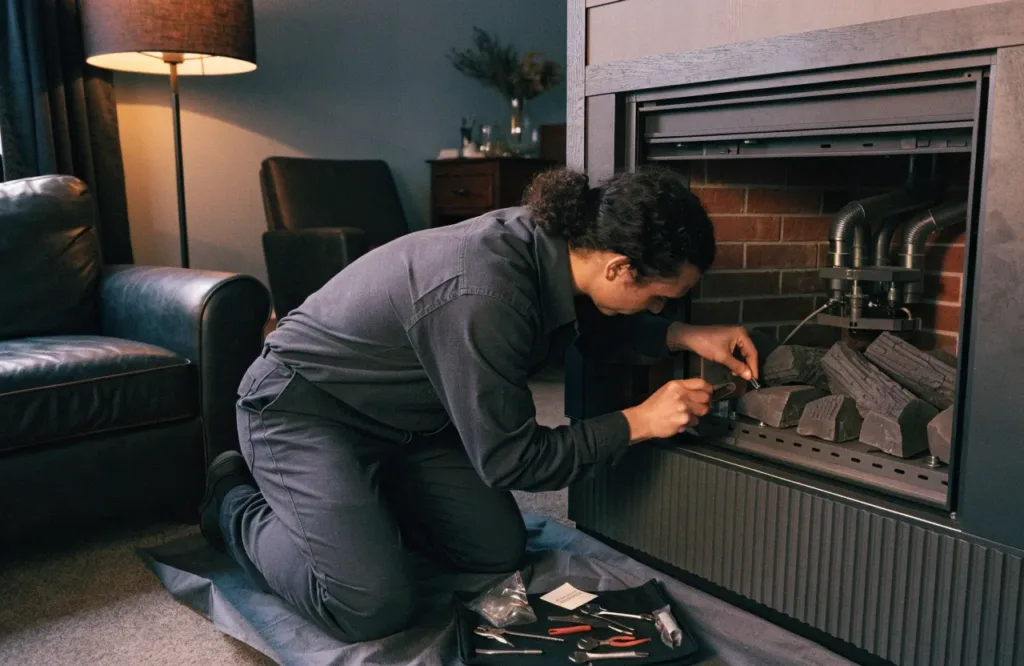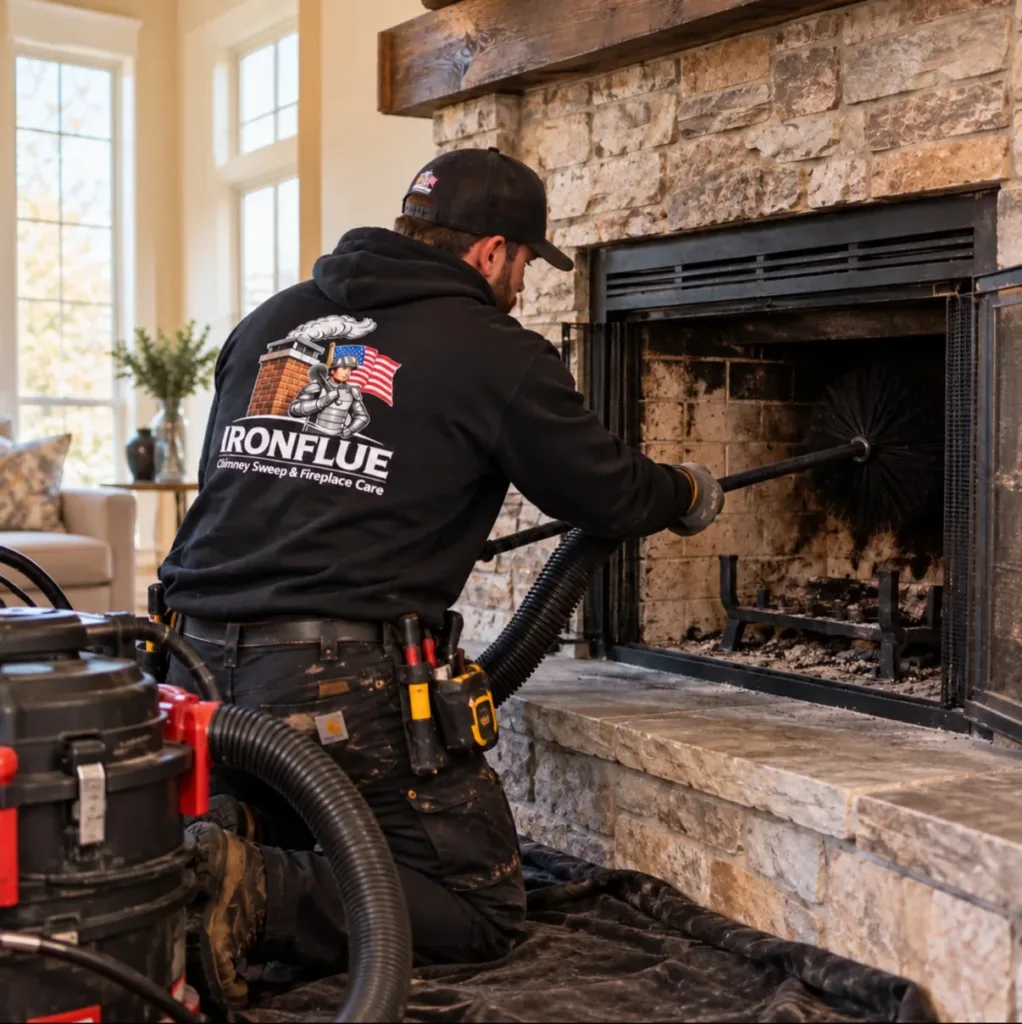
A fireplace that puffs smoke into the room is telling you something about air: where it’s coming from, where it’s going and how warm the chimney is. Most causes fall into a short list, and you can work through them simplest first.
How is a fireplace supposed to draw?
A chimney runs on buoyancy. Hot combustion gases are lighter than the surrounding air, so they rise up the flue and pull fresh air in through the fireplace opening behind them. Natural Resources Canada calls this natural draft: heat, not a fan, moves the smoke outdoors, and the draft weakens when the chimney is cold (Government of Canada, combustion spillage).
An open fireplace asks a lot of that system. The Government of Canada’s Burn It Smart guide to fireplaces (PDF) explains that to keep smoke inside the firebox, a large volume of room air has to flow quickly through the opening and up the chimney. Anything that weakens that flow, from a cold flue to a kitchen fan, shows up as smoke in the room.
Regular smoke isn’t something to live with. EPA’s Burn Wise program says a properly installed, correctly used appliance should produce very little smoke.
Is the damper fully open?
Start with the simplest cause. The damper is the metal plate above the firebox that closes off the flue when the fireplace isn’t in use. The CSIA homeowner FAQ warns that a closed or partly closed damper can send smoke into the house and create a fire hazard.
Don’t trust the handle alone; look at the plate itself with a flashlight. If it sticks or won’t open all the way, have it fixed before the next fire (see chimney caps and dampers).
Cold flue or wet wood: why a fire smokes from the start
If smoke rolls out for the first few minutes and then settles down, the flue is probably cold. Natural Resources Canada explains that a cold chimney has weak draft, so smoke can spill at start-up until it warms, and that a cold flue also causes condensation.
Chimneys that run up the outside wall of a house have it worst. Burn It Smart says outside chimneys don’t function well: cold air can flow down them into the room when no fire is burning, and it’s hard to start a fire without filling the house with smoke.
Two habits help. Crystal Lakes Fire Protection District in Colorado advises warming up the chimney before lighting a fire on cold days, and says smoke rising straight up shows the flue is warm enough to draw. Burn It Smart recommends plenty of finely split dry kindling and plain newspaper, so the fire takes off quickly instead of smoldering.
If the smoke lasts the whole fire, look at the wood. CSIA explains that unseasoned wood produces cooler smoke because much of the fire’s energy goes into driving off water, and EPA says wood burns best below 20 percent moisture. Burn It Smart’s test is simple: firewood should burn without hissing and sizzling. Our winter fireplace prep guide covers buying dry firewood in Connecticut.
Negative pressure: when the house pulls air down the chimney
If the fireplace smokes more when the range hood or a bath fan is running, the house is competing with the chimney for air. Natural Resources Canada explains that exhaust fans and central vacuums pump air out of a house sealed tight for winter, and that this depressurization can pull air back down a chimney. Burn It Smart adds that the only simple fix is not running fans while the fireplace is in use.
Two fireplaces in one house can do this to each other. CSIA describes the pattern: the fireplace in use exhausts household air until the house is under negative pressure, and the easiest path for replacement air is down the unused chimney, carrying smoke from the active fire into the room. CSIA’s preferred fix is supplying make-up air elsewhere in the house; its secondary fix is a top-mount damper, kept closed, on the fireplace you use least.
The building code points the same way. The 2021 residential code in the 2022 Connecticut State Building Code calls for fireplaces to have an exterior air supply unless the room is mechanically ventilated and kept at neutral or positive pressure.
Natural Resources Canada describes a simple check: with the fire going, hold an incense stick near the damper, then turn on every exhaust fan and check again. If the smoke now drifts into the room, have a professional look at the house and chimney together.
Is the flue the right size and the chimney tall enough?
Some fireplaces smoke because of how they were built. The flue has to be large enough for the fireplace opening it serves. Under one of the sizing options in that same code chapter, a round flue needs a net cross-sectional area of at least one-twelfth of the fireplace opening, a square flue one-tenth, and a long rectangular flue (2:1 or more) one-eighth. Bigger isn’t automatically better: Natural Resources Canada notes that an oversized chimney can’t maintain adequate draft.
Height and position matter too. The code requires a chimney to rise at least 3 feet above the highest point where it passes through the roof, and at least 2 feet higher than any part of the building within 10 feet. Natural Resources Canada warns that a chimney ending at the wrong height or location can sit in a high-pressure zone. If an addition or a taller roofline now sits within 10 feet of your chimney, that rule is worth checking.
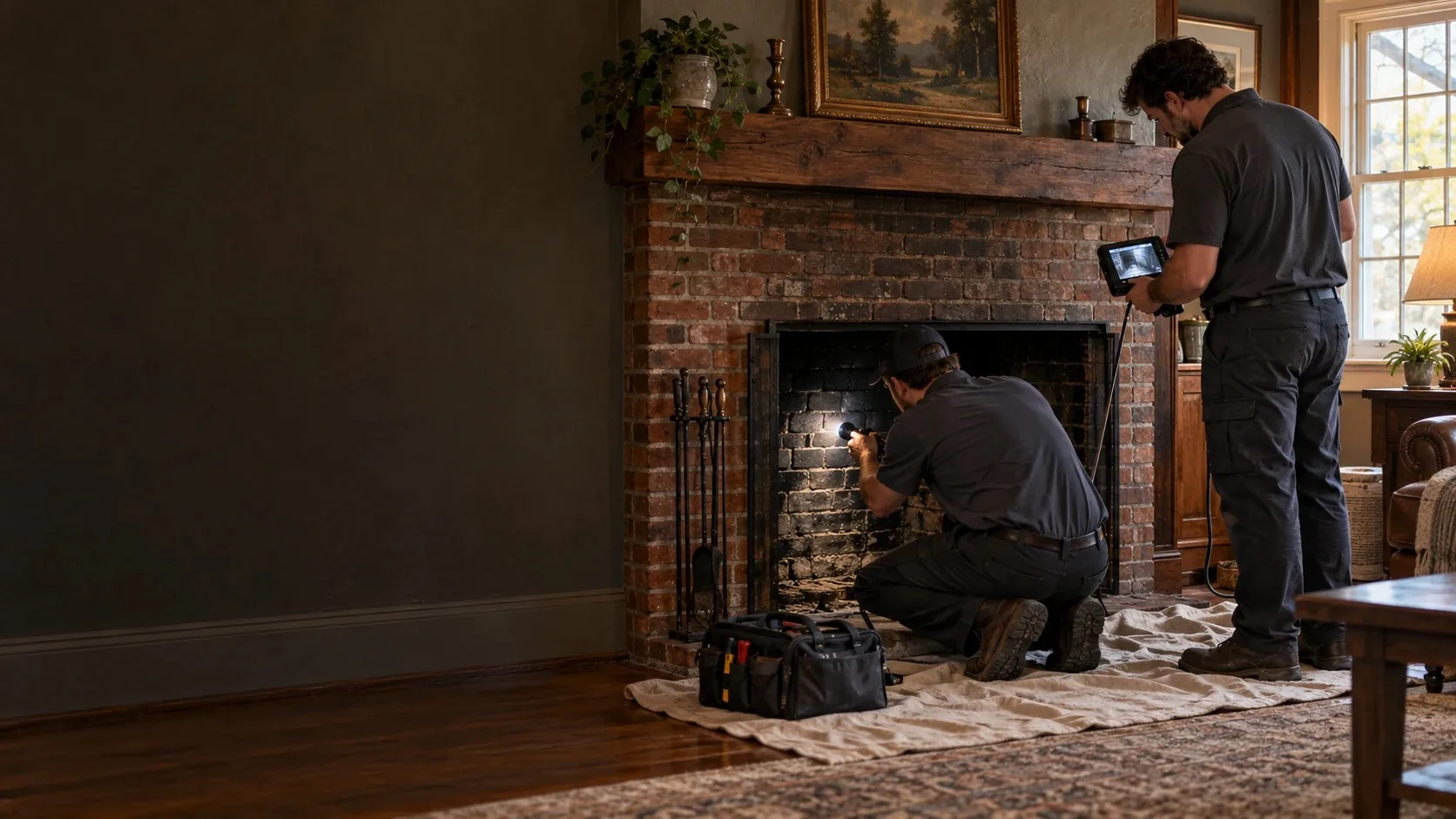
You can’t measure this from the living room. CSIA’s Level 2 procedure (PDF) has the inspector measure the flue liner, judge whether it suits the appliance, note any offsets and check the termination height. CSIA recommends that level when a routine Level 1 can’t settle whether the system is serviceable, so a Level 2 camera inspection is the visit for a suspected design problem.
Could something be blocking the chimney?
A partial blockage cuts draft much like a half-closed damper. Natural Resources Canada lists bird nests, dead animals, broken bricks, collapsed liners and ice among the things that block chimneys. CSIA notes that clay liners can flake off under corrosive conditions and leave debris in the flue, and that blockages can direct toxic fumes back into the house (CSIA, avoiding carbon monoxide hazards).
If you’ve heard scratching or chirping, or the smoking started suddenly after the fireplace sat unused, say so when you book; animal and blockage removal is handled separately from a routine sweep.
Fixing a smoky fireplace, in order
Work from the free fixes to the structural ones:
- Open the damper fully. Confirm it with a flashlight, not the handle.
- Turn off the fans. Range hood and bath fans, for as long as the fire is burning.
- Warm the flue and start fast. Dry kindling, newspaper and seasoned wood, so the fire flames quickly instead of smoldering.
- Run the smoke test. If smoke changes direction when the fans come on, the house needs make-up air.
- Book an inspection and sweep. To rule out a blockage, a restrictive cap or heavy buildup; a chimney sweep clears what the inspection finds.
- Fix what the inspection finds. A top-mount damper, an outside air supply, a cap that suits the flue, a liner sized to the fireplace, or more chimney height.
When the flue is damaged or the wrong size, liner repair and relining addresses both. For a fireplace that has never drawn well, Burn It Smart describes another route: an EPA-certified insert connected to a new stainless steel liner running to the top of the chimney. Whatever the fix, we photograph the cause, explain it in plain language and put the repair scope in writing first.
When is a smoky fireplace a safety problem?
Smoke in the room means combustion gases are in the room too. Natural Resources Canada describes carbon monoxide (CO) as colorless, odorless and extremely toxic, and warns that a dying fire’s smoldering embers can release high concentrations of it, sometimes after everyone is asleep. Its spillage warning signs include repeated headaches, combustion odors in the house and dark stains on the wall above a fireplace.
Make sure CO alarms are in place. The U.S. Fire Administration advises installing them in a central location outside each separate sleeping area and on every level of the home (USFA, carbon monoxide). CSIA adds that persistent flu-like symptoms or chronic fatigue are worth raising with a doctor. And if the smoke came with loud popping or a roar from the chimney, read our guide to the signs of a chimney fire.
Is your Connecticut fireplace still smoking? Send IronFlue Chimney a note describing when it happens (first lighting, windy nights, with the range hood on), and we’ll suggest the right visit and confirm price and scope before booking.