A chimney fire doesn’t always announce itself. Some roar loudly enough for the neighbors to hear. Others burn quietly inside the flue and are only discovered months later, when someone looks up the chimney with a light or a camera. Here’s how to recognize both, and what to do in the first few minutes.
What is a chimney fire?
A chimney fire is creosote burning inside the flue, the passage that carries smoke up and out of the house. Creosote is the residue that forms when smoke cools and condenses on the flue walls. The Chimney Safety Institute of America (CSIA) explains in its article on preventing chimney fires that one starts when enough creosote has collected and the flue gets hot enough to ignite it.
It’s a different thing from the fire you lit in the fireplace. That fire belongs in the firebox; a chimney fire is fuel stuck to the walls of a passage that was never meant to burn. CSIA says masonry chimney fires can reach temperatures of around 2,000°F.
Signs of a chimney fire while it’s burning
A fast-burning chimney fire is hard to miss. CSIA and several fire departments’ public safety pages describe the same cluster of signs:
- Noise. Loud cracking and popping, or a low rumble that CSIA compares to a freight train or a low-flying airplane. Portland Fire & Rescue adds a loud roar and sucking sounds.
- Smoke where it shouldn’t be. Dense smoke in the room or pouring from the top of the chimney, sometimes with flames shooting out of the top (CSIA).
- Smell. An intense, hot smell that’s different from a normal wood fire (CSIA).
- Heat and movement. Shaking stovepipes and hot spots on the wall or chimney (Portland Fire & Rescue), or vibration (Livermore Fire Protection District, Colorado).
- Falling debris. Flakes of soot or chunks of creosote dropping into the fireplace (Livermore), or ash and debris flying out of the chimney top (Crystal Lakes Fire Protection District, Colorado).
CSIA notes that a dramatic chimney fire can be loud enough for neighbors or passersby to notice, so a knock at the door about flames above your roof deserves to be taken seriously.
Slow-burning chimney fires: the signs you find later
Not every chimney fire is dramatic. CSIA explains that some burn slowly because they don’t get enough air or fuel to become loud or visible, and they often go unnoticed until a later inspection. Their temperatures are still very high, and CSIA says these quiet fires can damage the chimney and nearby parts of the house just as badly as the loud ones.
Here is the evidence a sweep or inspector looks for, based on CSIA’s list:
- Puffy creosote. Deposits that look honeycombed or puffed up instead of lying flat on the flue wall.
- Warped metal. A damper, smoke chamber connector or metal chimney bent out of shape.
- Damaged flue tiles. Cracked or collapsed clay liner tiles, or tiles with large pieces missing.
- A heat-marked cap. A rain cap that is discolored or distorted, or a heat-damaged TV antenna attached to the chimney.
- Debris outside. Creosote flakes or pieces on the roof or the ground, and roofing damaged by hot creosote.
- Masonry and smoke marks. Cracks in the outside masonry, or signs that smoke escaped through mortar joints or the tile liner.
A few of these you can spot from the yard, such as a scorched or bent cap, or black flakes on the shingles or in the garden bed below. The rest need someone on the roof and a camera inside the flue. If you notice any of them, stop using the fireplace or stove until the chimney has been checked.
What should you do during a chimney fire?
People come first, the chimney second. Fire department guidance lines up on the order:
- Get everyone out of the house, pets included. Portland Fire & Rescue says to get everyone out quickly, and Crystal Lakes Fire Protection District warns that a chimney fire can turn into a house fire very fast.
- Call 911 once you’re outside, from a cell phone or a neighbor’s phone (Portland Fire & Rescue).
- If you can do it safely as you leave, cut off the fire’s air supply by closing the doors and air intakes on a wood stove (Portland; Crystal Lakes).
- Don’t pour water down the chimney. Livermore Fire Protection District warns that it can cause steam explosions or damage the flue.
- Call even if the fire seems to have gone out. Livermore says firefighters can check the roof, attic and outside of the house for escaped embers, and Crystal Lakes says its crews use a thermal imaging camera to look for continued burning.
When the fire trucks leave, the fire is out, but the chimney hasn’t been checked. CSIA points out that firefighters are there to contain, control and suppress the fire; cleaning, inspecting and evaluating the chimney afterward is outside their training.
What causes chimney fires, and when do they happen?
Heating fires are a winter problem. National Fire Protection Association figures for 2014–2018, published by Portland Fire & Rescue, show that failure to clean was the leading factor contributing to home heating fires, at 25 percent, and that 48 percent of home heating fires happened in December, January and February.
Behind most creosote is smoke that cools and lingers. CSIA explains that the longer smoke stays in the flue, the more creosote forms, and that a cooler-than-normal chimney, unseasoned wood and a fire starved of air all add to it. Creosote also takes different forms, from flaky to tar-like to a hard glaze; our guide to chimney sweep vs chimney inspection describes them and how each one is cleaned.
How do you prevent a chimney fire?
Prevention comes down to two jobs: keeping deposits from building up, and finding them when they do.
- A yearly inspection. NFPA 211, the national standard for chimneys, calls for chimneys, fireplaces and vents to be inspected at least once a year, as quoted in the CSIA homeowner FAQ, with cleaning and repair as needed.
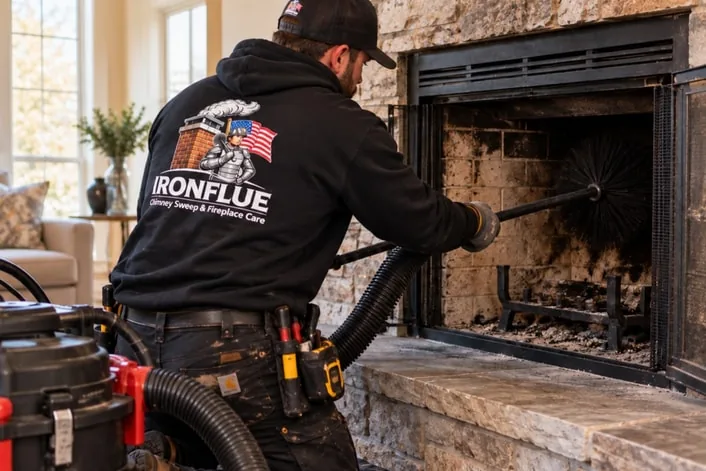
- Sweeping before buildup becomes fuel. CSIA says experts consider 1/8 inch of sooty buildup in a masonry fireplace enough to fuel a chimney fire capable of damaging the chimney or spreading to the house. A chimney sweep removes it from the firebox, smoke chamber and flue.
- Hot fires with dry wood. EPA’s Burn Wise program says wood burns best below 20 percent moisture, and that for most appliances a smoldering fire is neither safe nor efficient.
- Don’t choke a stove. Livermore advises against overloading the firebox or closing the damper too early.
- A cap on top. Livermore recommends a chimney cap with a spark arrestor to keep out debris, animals and moisture. See chimney caps and dampers if yours is missing or damaged.
What happens after a chimney fire?
Don’t light the fireplace or stove again until the chimney has been swept and evaluated. That is CSIA’s advice in its guidance after a chimney fire, because heat can cause joint failure, metal fatigue and structural cracking in places you can’t see by looking down from the roof or up from the firebox.
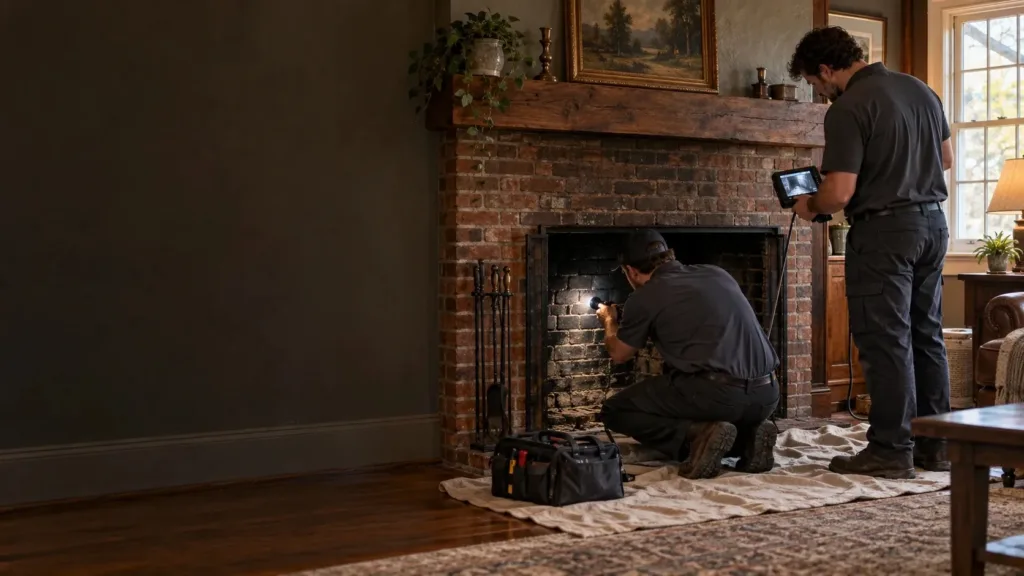
A chimney or building fire is one of the events CSIA lists as a reason for a Level 2 inspection, the deeper level that requires a video scan of the chimney interior (CSIA Level 2 procedure, PDF). The sweep comes first, to expose the flue. Then a camera is run through it to check flue tiles for cracks, mortar joints for heat damage and, in a metal chimney, joints and seams for separation, warping or buckling. Our Level 2 camera inspection follows that sequence, and we photograph what we find and explain it in plain language.
What comes next depends on the damage. CSIA says high heat can melt mortar, crack tiles, collapse liners and damage the outer masonry, and that cracked tiles and displaced mortar can open a path for flames to reach the wood framing of the house. Repairs, according to CSIA, range from replacing a few flue tiles to installing a new liner to rebuilding the chimney entirely. Where the liner is the problem, liner repair and relining restores a sound flue; where the masonry is cracked or loose, a partial rebuild may be needed. You get the scope in writing before any work starts.
If you heard a roar from the chimney, or found black flakes on the roof or a bent cap, Connecticut homeowners can get in touch with IronFlue Chimney to have it checked before the next fire. We’ll confirm the scope and price before the visit is booked.