Plenty of people book “a chimney cleaning” expecting someone to tell them whether the chimney is safe, or book “an inspection” expecting the soot to be gone afterward. The two jobs are related and often happen on the same day, but they answer different questions. A sweep answers “is it clean?” An inspection answers “is it sound, clear and safe to keep using?”
Chimney sweep vs chimney inspection: the short difference
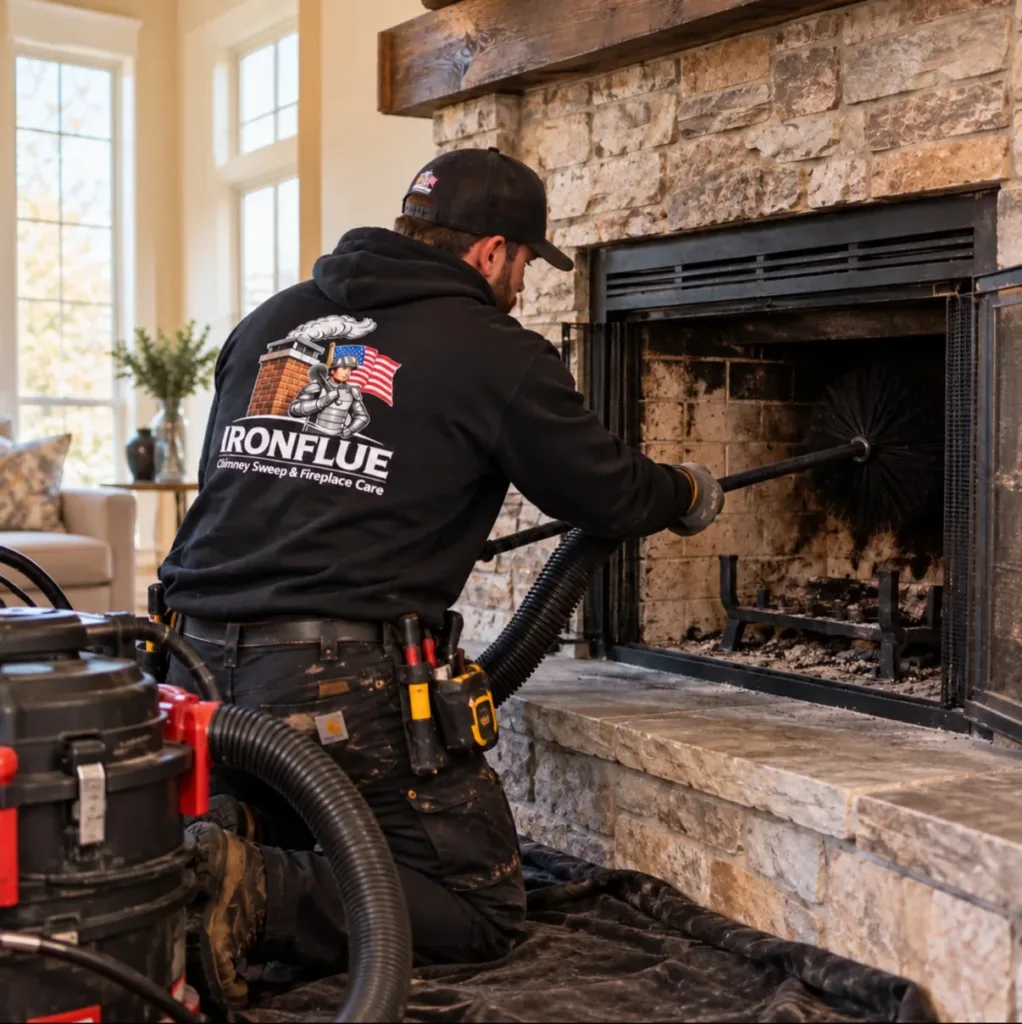
Sweeping is cleaning. A sweep physically removes soot, creosote and debris from the system. Creosote is the black or brown residue that forms when smoke cools and condenses on its way up the chimney, and CSIA’s article on preventing chimney fires is blunt about it: whatever form it takes, creosote is highly combustible.
An inspection is an evaluation. The national standard for chimneys, NFPA 211, requires a yearly inspection that covers the structure’s soundness, whether deposits are present and whether clearances to combustibles are correct, according to the CSIA homeowner FAQ. Cleaning, maintenance and repair follow only when they’re needed. So the inspection is the fixed yearly event, and cleaning is one of the things it may call for.
Put simply, a chimney can be spotless and still have a cracked liner, or be structurally sound and overdue for cleaning. Neither job, on its own, tells you about the other.
What does a chimney sweep include?
A proper sweep cleans the whole path the smoke travels, not just the part you can see. CSIA’s homeowner FAQ is specific: a complete sweeping includes the flue (the passage that carries smoke up and out) and the smoke chamber (the sloped area above the damper that funnels smoke from the firebox into the flue), not just the firebox.
The method depends on what’s in there. Mechanical sweeping, with brushes run through the flue, removes loose soot and creosote. CSIA says crusty creosote that fractures when struck can often be removed with rotary cleaning, while gummy creosote usually needs a chemical treatment applied by a professional. CSIA’s Level 1 procedure (PDF) also describes sweeping from either the top or the bottom of the chimney, with the sweep listening for odd sounds that could point to a separation in the chimney.
Our chimney sweep and cleaning service covers that full path: firebox, smoke chamber and flue.
What does a chimney inspection include?
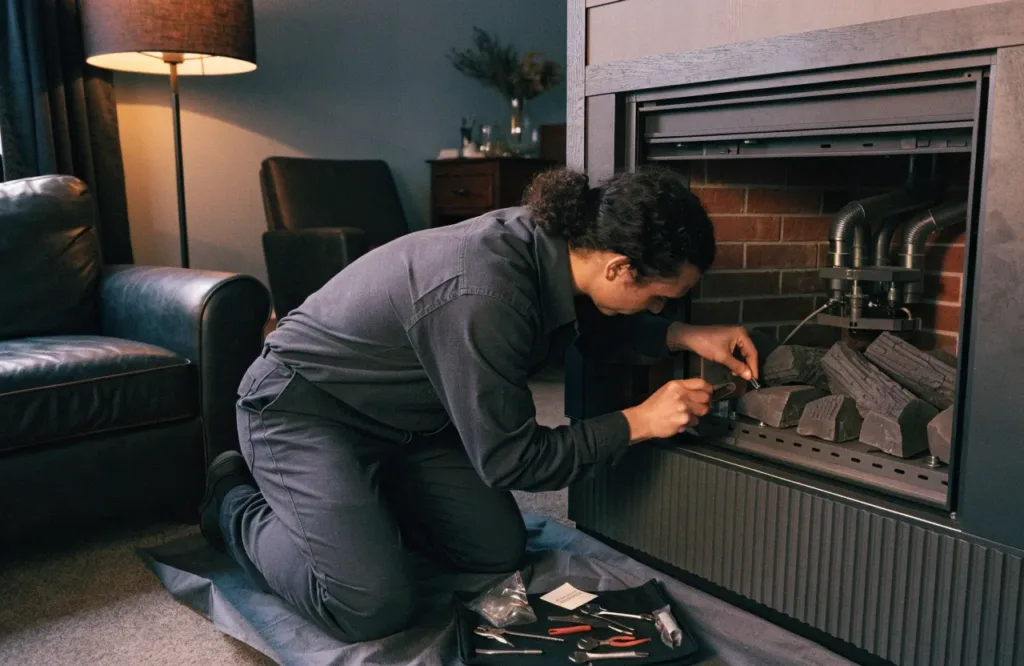
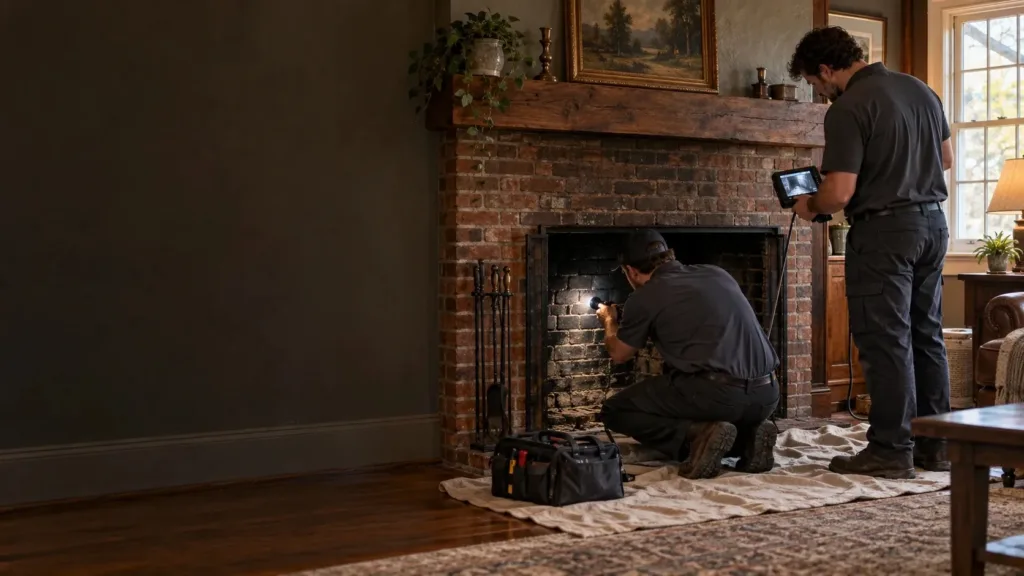
At the routine level, called Level 1, the inspector examines the readily accessible parts of the chimney, the fireplace or stove, and the connection between them. CSIA’s Level 1 procedure lists what that covers:
- Whether the flue is blocked, and how clean it is, usually judged by looking up it with a light.
- The condition of the appliance or firebox: cracks, rust, warped baffles, damaged glass, worn door gaskets, firebrick in poor condition.
- Whether the damper, the plate that closes off the flue, opens and closes freely.
- Clearances from the appliance to combustible materials, checked against the manufacturer’s instructions or local code.
- The joint where the connector meets the chimney, signs of water entry there, and whether clean-out doors close securely.
- When the work is done from the roof: the general condition of the crown and flashing, and whether a rain cap is obstructed.
The result is a report. CSIA’s procedure has the inspector discuss the findings with you and give you a copy. Our chimney inspection page describes the visit, and a Level 1 inspection is the one most homes need each year.
If the question is bigger, after a chimney fire, a storm or a change of appliance for example, the inspection moves up to a Level 2 camera inspection. Our guide on how often a chimney should be inspected explains the inspection levels and what triggers each one.
How often do you need a sweep vs an inspection?
The inspection runs on a fixed schedule: once a year. Sweeping doesn’t; it follows the buildup. That’s the most practical difference between the two, and it’s why “annual chimney cleaning” isn’t quite the right way to think about it.
Masonry fireplaces: the 1/8-inch guideline
CSIA recommends sweeping a masonry fireplace at 1/8 inch of sooty buildup, and sooner if any glaze, the hardened and shiny form of creosote, is present. CSIA explains that experts consider 1/8 inch enough to fuel a chimney fire that could damage the chimney or spread to the house. Its Level 1 procedure uses the same line: sweep, or recommend sweeping, any chimney with 1/8 inch or more.
Factory-built fireplaces: any appreciable buildup
For factory-built (prefabricated metal) fireplaces, CSIA sets the bar lower: sweep when any appreciable buildup occurs. The reason goes beyond fire risk. The deposit is acidic and can corrode the prefab components.
What makes buildup happen faster
How quickly you reach that point depends on how you burn. CSIA lists the factors that speed creosote formation: a restricted air supply (closed glass doors, a damper not fully open, too little make-up air), unseasoned wood, cooler-than-normal chimney temperatures, and, with wood stoves, closing the air inlets too early or too far or overloading the firebox for a long burn. On the firewood side, the EPA’s Burn Wise program says wood burns best below 20 percent moisture and should be seasoned for at least six months. Two identical fireplaces can need very different sweeping schedules because of habits like these.
What do the different forms of creosote look like?
Depth isn’t the only thing an inspector weighs; the kind of deposit matters too. CSIA describes creosote in three forms:
- Crusty and flaky. CSIA says deposits that fracture when struck can often be cleared with rotary cleaning.
- Tar-like, drippy and sticky. The gummy form, which usually calls for a chemical treatment applied by a professional.
- Shiny and hardened. This is glaze. Under CSIA’s guidance, any glaze moves the sweeping date up, even before buildup reaches 1/8 inch.
Some sweeps number these as first-, second- and third-degree creosote. CSIA’s own material describes them as forms rather than stages and notes that all of them often occur in the same chimney. Whatever the label, a good report says which form was found, because it changes how the flue gets cleaned.
When are a sweep and an inspection booked together?
Often, and for good reason. CSIA’s homeowner FAQ notes that you can request a Level 1 inspection along with a sweep, and its Level 1 procedure names that level as the recommended one during routine cleanings. The two also depend on each other in practice: if a flue is too dirty to see, the procedure says it has to be swept before the inspector can evaluate the flue liner. At IronFlue Chimney the sweep and the inspection are booked and priced as separate jobs.
A fireplace you use all winter
A sweep plus a Level 1 on the same visit is the usual pairing. The inspection checks the system; the sweep clears what a season of fires left behind.
A fireplace you barely lit
The yearly inspection still applies. If it finds less than 1/8 inch of soot and no glaze, the sweep may not be needed this time.
A new stove or a fuel change
A change of appliance or fuel calls for a Level 2 inspection. Sweeping is added if the flue has deposits to remove first.
Can a sweep alone tell you the chimney is safe?
Not reliably. A flue can come out clean without anyone having checked the liner, the crown, the flashing or the clearances to wood framing. CSIA puts it plainly: chimney inspections often reveal hidden problems with a chimney structure that could be potentially hazardous.
It works the other way as well. An inspection that finds 1/8 inch of buildup or any glaze hasn’t solved anything by itself; the deposits stay in the flue until someone removes them.
At IronFlue Chimney, findings come with photos explained in plain language, so you can see the difference between “dirty” and “damaged” for yourself.
Not sure whether this year calls for a sweep, an inspection or both? Connecticut homeowners can reach IronFlue Chimney here. Tell us when the chimney was last cleaned and how often you burn, and we’ll confirm the scope and price before anything is scheduled.