Chirping behind the damper, or twigs and nest material landing in the firebox, usually means something has moved into the chimney. What you should do next depends on what it is. Federal and Connecticut rules treat a nesting bird, a raccoon family and a bat colony very differently, and the wrong move can trap an animal inside or put you on the wrong side of the law.
What should you do first if there’s an animal in the chimney?
These first steps are safe whichever animal turns out to be up there.
- Keep the damper closed. The damper is the hinged metal plate that seals the flue (the passage smoke travels up) above the firebox. Connecticut’s Department of Energy and Environmental Protection (DEEP) recommends keeping it shut while swifts are nesting so birds can’t fly into the house and get trapped or injured.
- Close the fireplace doors or screen. DEEP warns against taking a trapped flying squirrel out through the fireplace, because it might escape into the room.
- Don’t light a fire to drive it out. The Chimney Safety Institute of America (CSIA) lists animal and bird nests among the flue obstructions that can force carbon monoxide, fumes and soot into living spaces. There may also be young in the flue that can’t leave on their own.
- Don’t cap or seal the top yet. DEEP says to make sure no animal is trapped inside before you block an opening, and to cap a raccoon chimney only after confirming the animals have left.
- Skip poisons. DEEP says using poisons to get rid of a bat colony is illegal without a special permit.
Which animal is in your chimney?
Sound, season and what you see around dusk are the best clues. Three patterns cover most cases:
Chirping in late spring and summer
DEEP says chirping or “chittering” inside the chimney may mean nesting chimney swifts. Their nesting season runs from May through July.
Chirping from the fireplace in spring
The Internet Center for Wildlife Damage Management (ICWDM) says spring chirping from the fireplace is usually a mother raccoon raising her young above the damper.
Bats at dusk, droppings near openings
DEEP says bats in a building are often spotted flying out at dusk, with droppings and stains near the openings they use.
Chimney swifts: why the law says wait
Chimney swifts once nested in hollow trees. DEEP’s guide Renovate with Swifts in Mind explains that most of those old trees are gone, so the birds now nest and roost in chimneys, often returning to the same one year after year between trips to and from South America. Stone, brick and clay flue tiles with mortared joints give them the surfaces they need. DEEP notes the species has been declining since the 1960s.
The chimney swift appears on the federal list of birds protected by the Migratory Bird Treaty Act. The U.S. Fish and Wildlife Service (USFWS) explains that the act prohibits the take of protected species, including killing and capturing them, without its authorization. On bird nests, USFWS says it is illegal to destroy a nest with eggs or chicks in it, and that removal permits are usually issued only when a particular nest is causing a human health or safety concern. DEEP’s summary for homeowners is simple: a federal permit is required to disturb an active swift nest.
In practice: leave the nest alone, keep the damper closed and don’t use the fireplace until the birds are done for the season. DEEP also points out that, unlike creosote (the tar-like residue wood smoke leaves on flue walls), swift nests don’t create a fire hazard.
Plan chimney work around them. DEEP suggests having the chimney cleaned in mid-March, after the wood-burning season ends and before the swifts arrive. If you’d rather they didn’t come back, fit a cap after they’ve left for the year.
Raccoons in the chimney: often a mother and her young
According to DEEP, raccoons denning in flues and attics are often females looking for a safe place to give birth and raise young. Births run from late March through May, with weaning and pup rearing in June and July. DEEP says a denning female may be tolerated until the young are old enough to leave, at around 8 weeks.
If waiting isn’t an option, DEEP describes evicting raccoons by harassment: repellents such as vinegar or ammonia, combined with light and noise from a portable radio. Once you’ve confirmed the raccoons are gone, cap the chimney or repair the opening so the problem doesn’t repeat.
Two precautions apply. DEEP advises anyone working in a flue or den site with raccoon droppings to wear a respirator with HEPA filters and gloves, because the droppings can carry roundworm spores. Connecticut licenses Nuisance Wildlife Control Operators who can evict or trap raccoons and make repairs, and DEEP’s Wildlife Division (860-424-3011) can refer you to one.
Squirrels and birds that fall into the chimney
Not every animal in a chimney chose to stay. ICWDM says that, contrary to popular belief, only raccoons, chimney swifts and bats can get back out of a chimney flue, which makes an open chimney a trap for other animals. It names ducks, owls, pigeons and starlings among the birds that find their way in.
For a gray squirrel stuck in the flue, DEEP suggests lowering a heavy rope down the chimney so the animal can climb out, and dropping the other end to the ground so you don’t have to go back on the roof to retrieve it. If a roof isn’t somewhere you’re comfortable working, leave that step to a professional.
Bats in the chimney: Connecticut’s timing rules
Bats get special treatment in Connecticut. DEEP’s Living with Bats page says 8 of the 9 bat species found in the state are on its endangered, threatened or special concern list; the big brown bat is the only one that isn’t.
DEEP calls permanent physical exclusion essential: the bats leave through a one-way exit and can’t get back in. Timing is critical. Exclusion should not be done from June through mid-August, when flightless young could be trapped and die in the roost. If bats need to be trapped or handled, the specialist must be licensed by DEEP’s Wildlife Division.
How a chimney cap keeps animals out
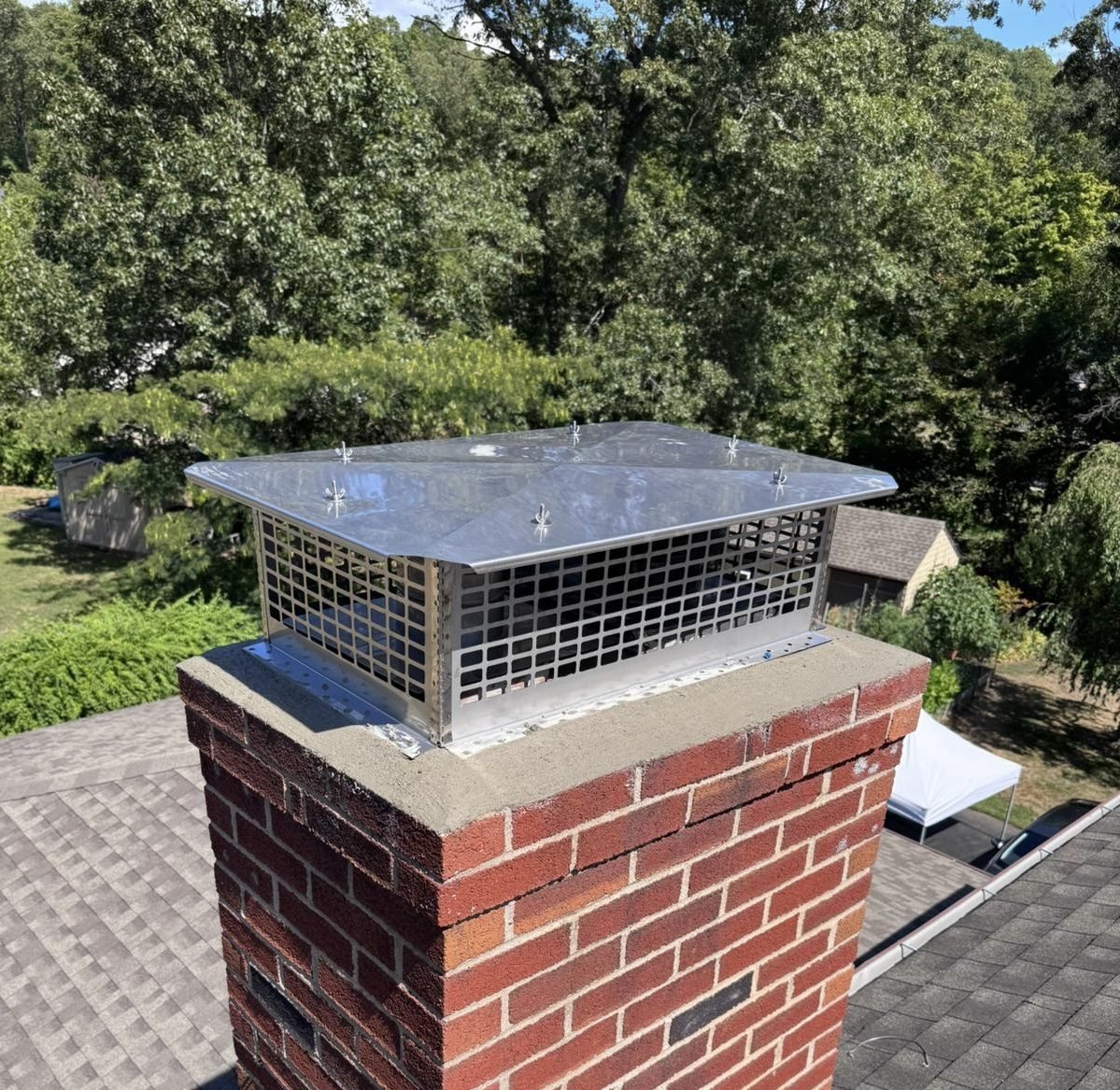
A chimney cap is the cover over the top of the flue. ICWDM says a properly installed cap helps keep wildlife out while still letting gases escape. It recommends stainless steel caps over galvanized ones, which rust, and warns against covering a flue with hardware cloth: the mesh rusts and can catch snow, which can push carbon monoxide back into the house, especially with a gas furnace. Fit matters too. CSIA’s Level 2 inspection procedure has the inspector confirm a rain cap isn’t obstructed and doesn’t restrict the top of the chimney. Our page on chimney caps and dampers covers the options.
DEEP offers a middle path for homeowners who want to keep their swifts: a cap that keeps rain out but leaves the sides open, or a slate cap on brick risers at least three bricks tall. DEEP notes that wire caging is only needed if you have squirrels or raccoons. One firm exception: if your flue has a stainless steel liner, DEEP says not to leave it open to birds. They can’t grip the stainless steel and become trapped, so a lined chimney should be capped.
Whichever cap you choose, install it only once you’re sure the animal is out, and for swifts, after the nesting season.
What happens after the animal is gone?
An empty nest is still a blockage. CSIA counts the buildup of nest materials and debris among the hazards for chimneys and connector pipes, so the flue should be cleared before the next fire. That’s the job of our animal and blockage removal service, and a chimney sweep can take care of soot and creosote at the same visit. If you’re not sure whether you need a sweep, an inspection or both, our guide to chimney sweep vs chimney inspection explains the difference.
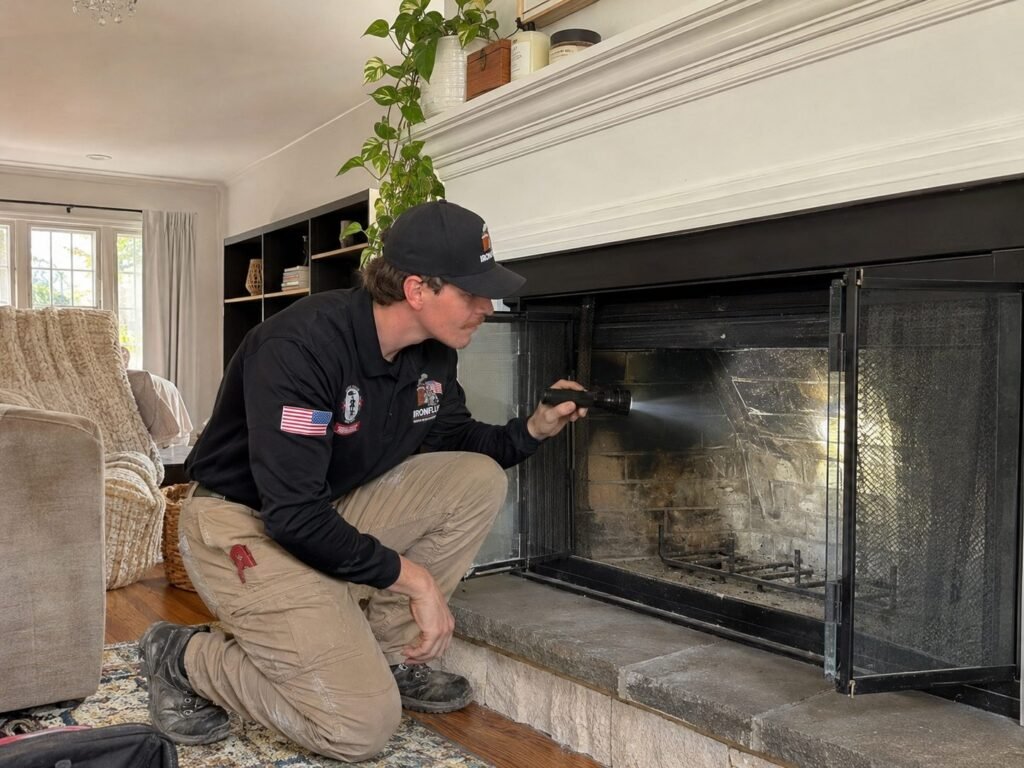
Once the animal is out, we clear the nest material, check the flue and fit a cap if you want one. We photograph what we find and explain it in plain language, and if the chimney needs repairs, you get a written scope before any work starts. A Level 1 inspection is the routine check that confirms the chimney is ready to use again.
Hearing something in your chimney? Tell us what you’re hearing and when it started. We’ll plan the visit around the animal and the season, and confirm price and scope before we book.